
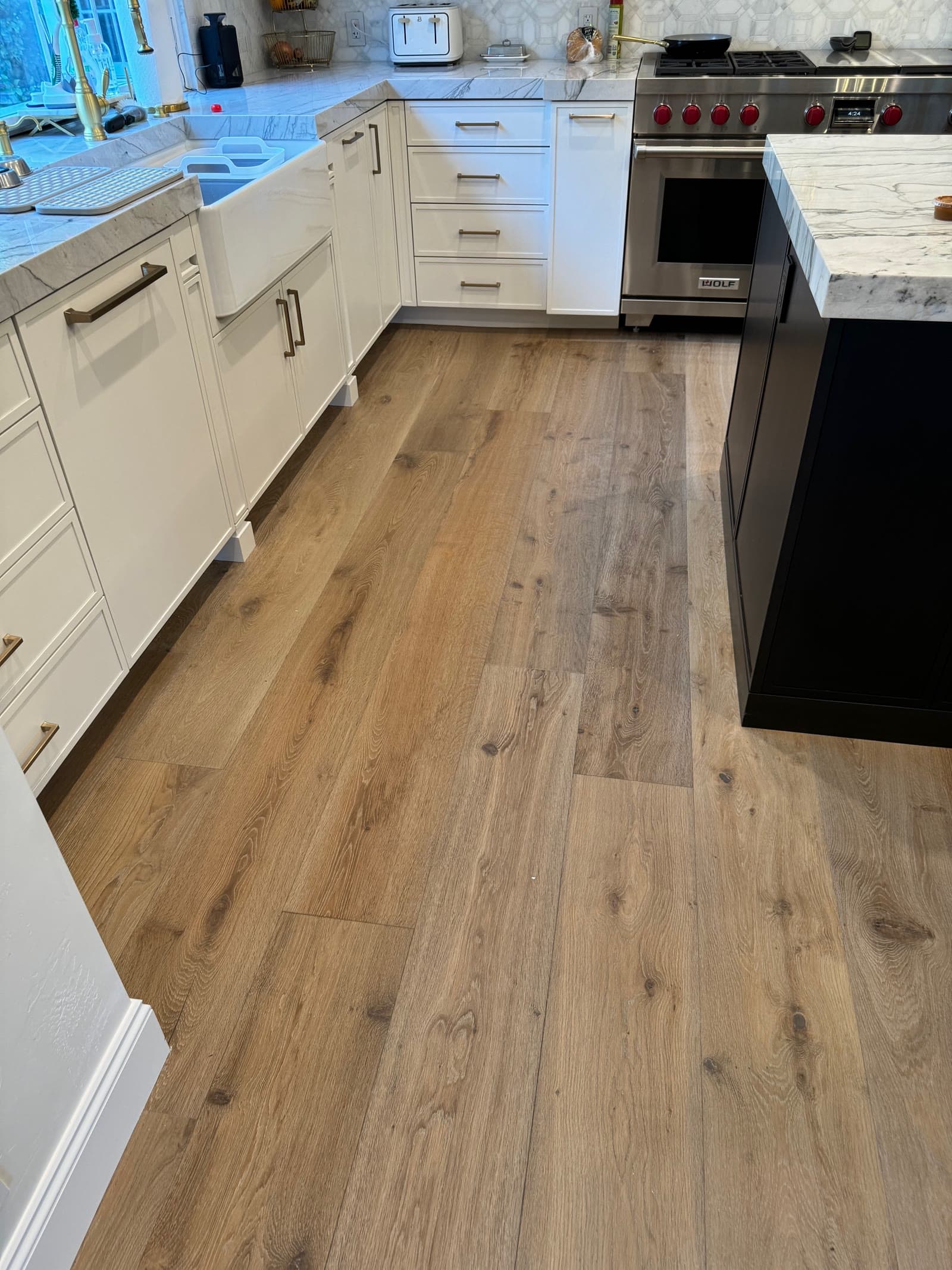
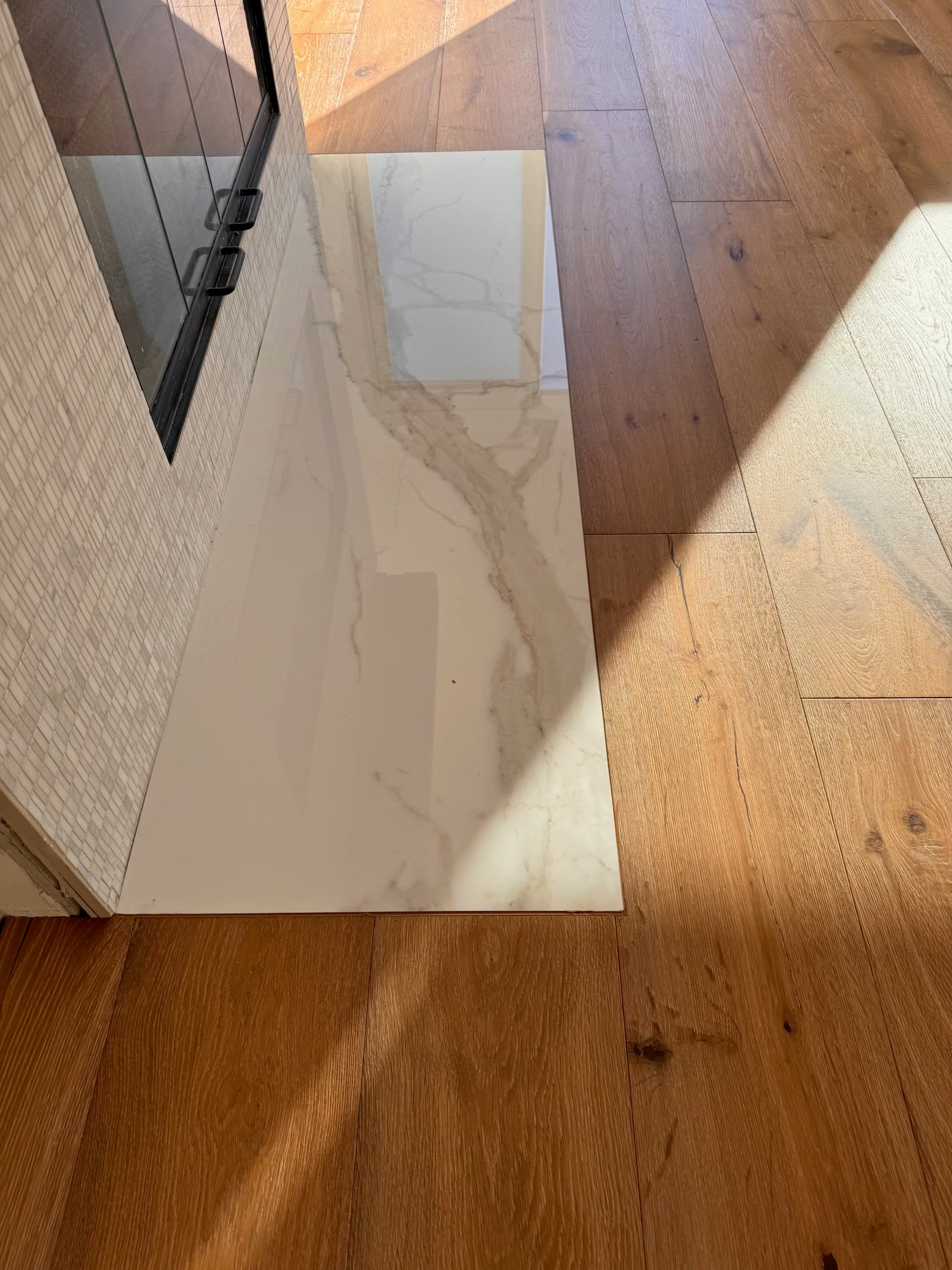
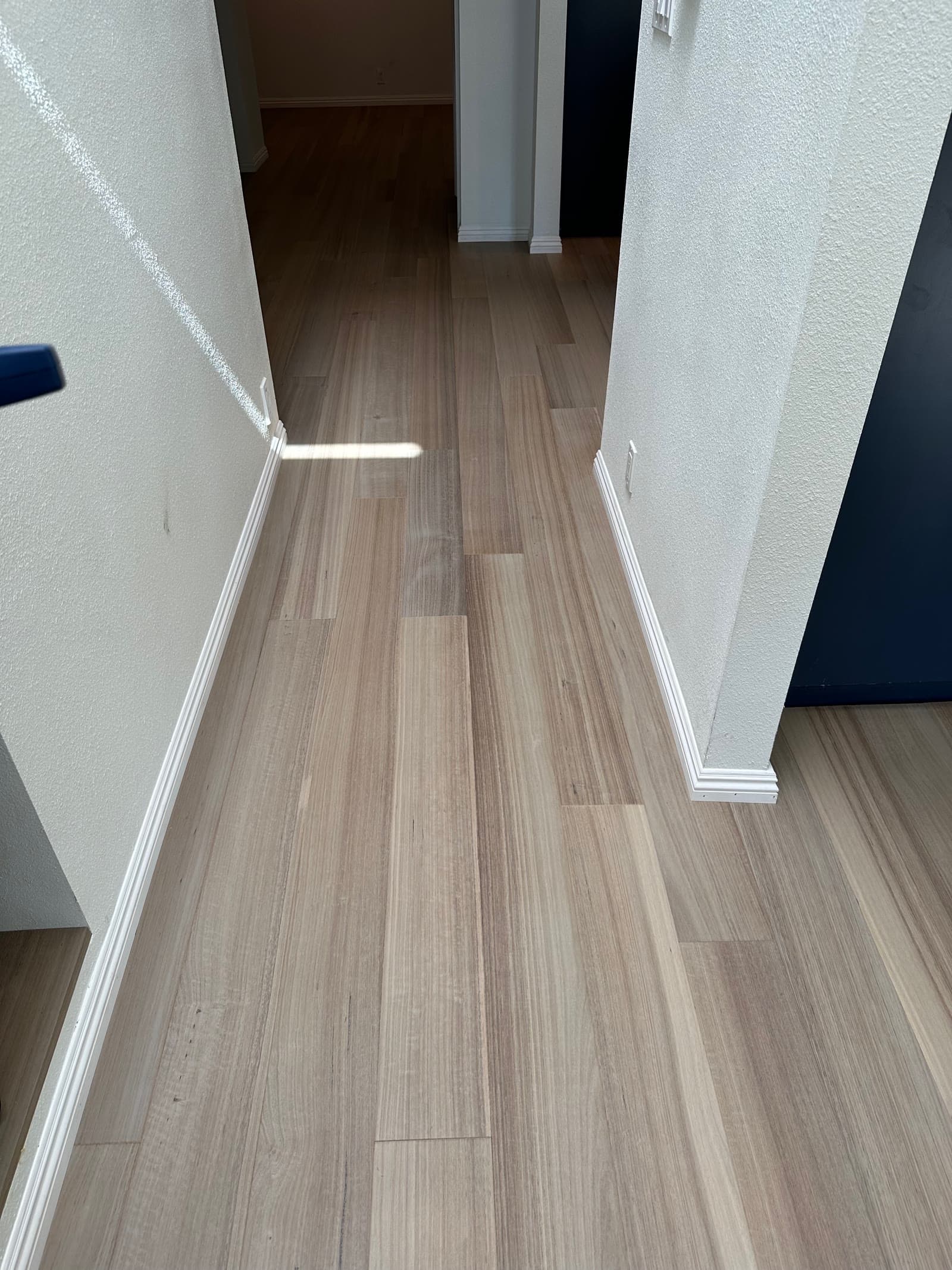
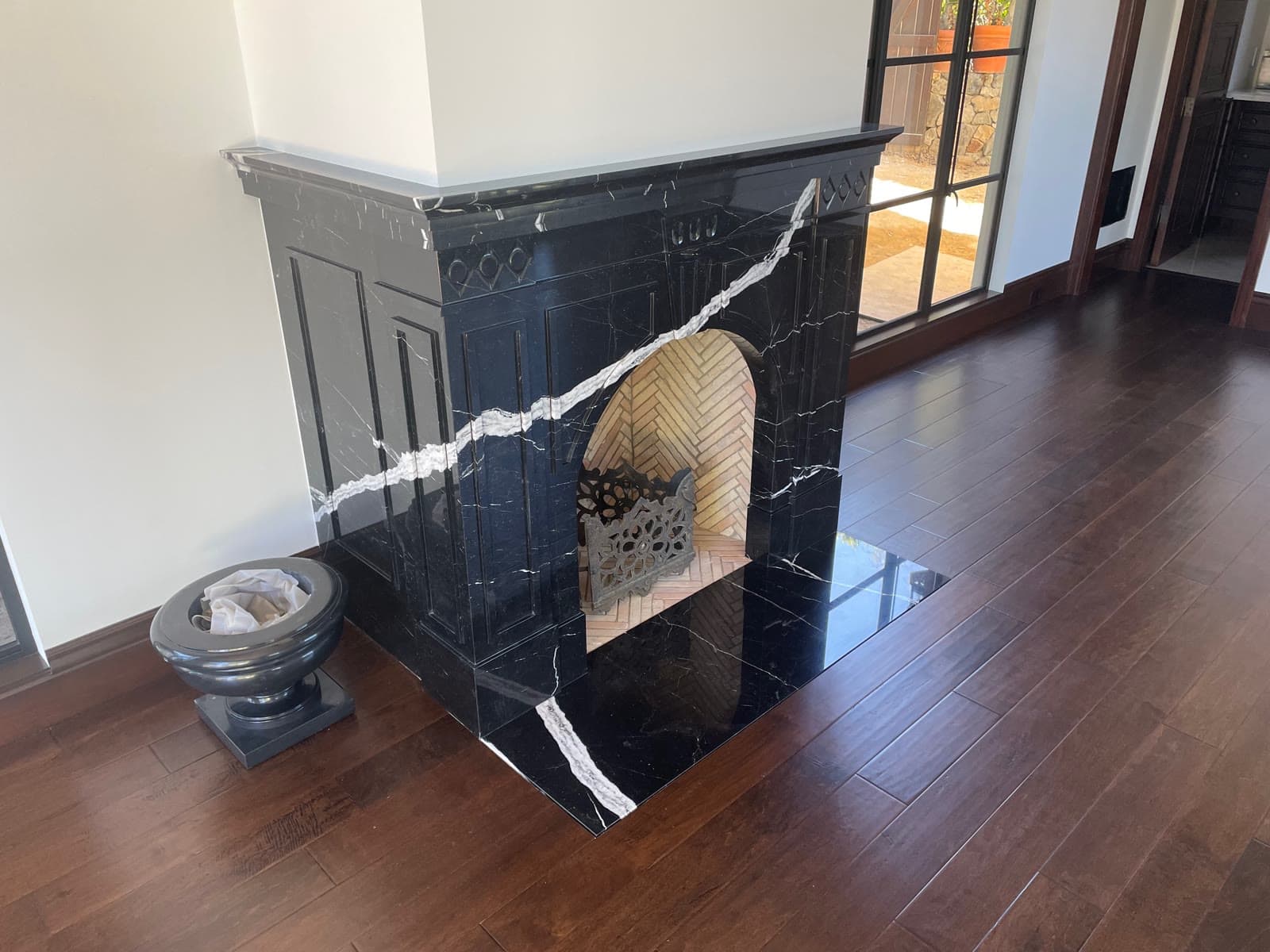
Solid vs. engineered hardwood in a coastal climate
San Diego County has two very different climates, and the right floor changes with them. Homes near the water in Del Mar, La Jolla, and Carlsbad sit in damp air all year. Engineered hardwood suits them. Its core is built in layers that cross each other, so it barely moves as the seasons change.
Inland, in Escondido, Poway, and Valley Center, winters are damp and summers are dry. That's a much bigger swing. Solid hardwood does well there, and it has one big advantage. You can sand and refinish it several times over its life. Engineered wood only takes one or two passes, depending on how thick the top layer is.
We walk the house before we suggest either one. A concrete slab, a raised foundation, heat piped under the floor, and how much sun the room gets all change the answer.
What subfloor preparation actually involves
Most hardwood floors that fail were let down by the subfloor, not the wood. It has to be flat, dry, and clean. Getting it there's the boring part, and it's most of the job.
Every wood maker sets a flatness limit. For glue-down engineered it's often 3/16 of an inch over 10 feet. We measure against that number, then grind the high spots and fill the low ones until the floor meets it. On concrete we take moisture readings before anything goes down. Laying wood over a wet slab voids most warranties, and the boards will cup within a few months.
We read moisture with professional meters, not a hardware-store gauge, and we write the numbers down. That paperwork matters. If a manufacturer ever pushes back on a warranty claim, or a dispute ends up in front of a judge, documented readings from proper equipment are the evidence that settles it. Most installers can't produce that.
The wood is delivered early and sits in the house until it matches the air inside. That happens before we install it, not after.
There's a self-interested reason we're this careful. Where an installation warranty is offered, Stone is the one who honors it — if a floor fails because the slab was wet or the subfloor was never flattened, he's coming back to pull it up and do it again. Prep is where that risk gets removed.
Why the owner does the installation
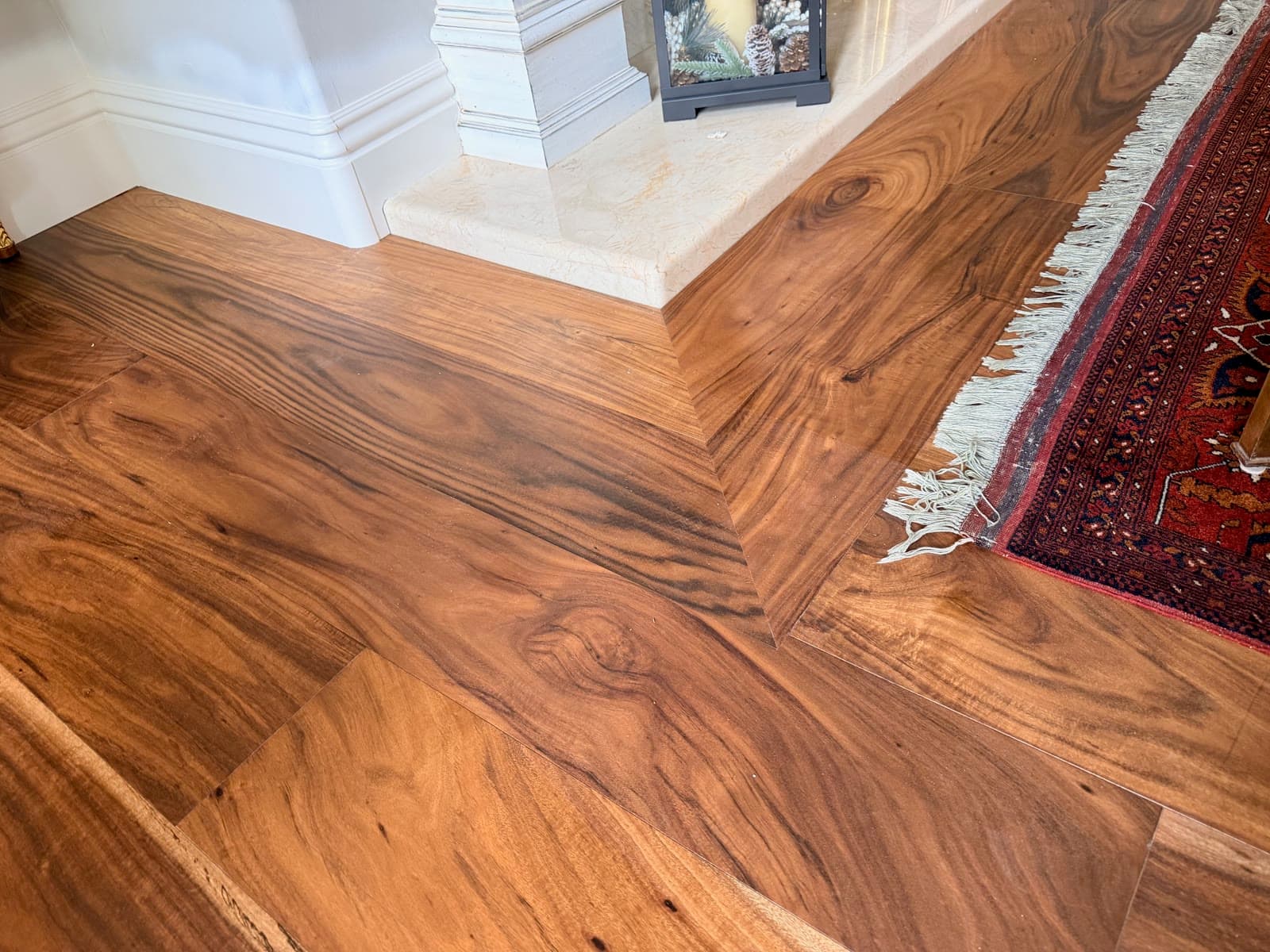
In flooring, the gap between good and great is all in the hands doing it. How the boards are mixed and staggered. How tight the rows stay. How the transitions and stair edges are cut.
Stone Peters is on every job with the same handful of guys who have worked with him for years. Big flooring stores work the other way. A salesperson quotes it, then whichever crew is free that week shows up to lay it. That gap is where the showroom promise and the finished floor stop matching.
What drives the cost
We quote after walking the space, because the things that move the number are things nobody can see in a photo. Here is what they are, in the order they matter, so you know what will drive your estimate before anyone comes out.
- What comes out first
- Pulling carpet is a morning. Pulling tile that was thin-set straight onto a slab is days of demolition, dust containment, and haul-away, and it is the single biggest swing in a hardwood quote.
- How flat the subfloor is
- Grinding high spots and pouring self-leveling compound is its own line item. A slab that is already within tolerance skips it entirely; one that is out by half an inch across a room does not.
- Solid or engineered, and how wide
- Wider boards cost more per square foot and are less forgiving of an out-of-flat subfloor, so a wide plank often brings more prep with it.
- Site-finished or prefinished
- Finishing in the house adds sanding, staining, and several coats with cure time between them. It buys you a seamless surface with no bevels and a floor that can be recoated in place.
- The perimeter, not the field
- Open rectangular rooms are quick. Cost accumulates at doorways, hearths, curved walls, stair edges, and built-ins, because each one is a cut nobody can make twice.
Numbers you can hold us to
- Waste factor on a straight-laid plank floor runs about 5 to 10 percent, so material is ordered above the measured square footage rather than at it.
- Subfloor flatness tolerance for most manufacturers is 3/16 inch over 10 feet. Out of tolerance voids most warranties.
- Slab moisture testing is required before glue-down and is not optional on any job we take.
How long it takes
Most whole-floor jobs of 1,000 to 2,000 square feet run 3 to 7 working days for prefinished material. Site-finished floors add roughly 3 to 5 days for sanding, coats, and cure before furniture goes back.
We do not publish prices, because a real number needs a real look at your floor. Estimates are free and in person. Stone measures, takes the moisture readings, and writes it up itemized before anything is ordered.
Where we install hardwood
Before you decide
Hardwood questions
How long does hardwood floor installation take?
It depends on the square footage, how much the subfloor needs fixing, and whether the boards come finished or get finished in your house. Floors finished on site need time to dry and harden before the room goes back to normal. Most whole-floor jobs of 1,000 to 2,000 square feet run 3 to 7 working days with prefinished material, and site-finished floors add roughly 3 to 5 days for coats and cure. Stone gives you the actual dates before anything starts.
Can hardwood go over a concrete slab?
Yes, and most San Diego County homes sit on a concrete slab. The usual answer is engineered hardwood glued straight to it. Solid hardwood also works if we build a proper plywood base on top of the slab first. Either way the slab has to pass a moisture test. That test is not optional. Skipping it is the number one reason hardwood floors fail around here.
Do I need to move my own furniture?
We move the furniture on most house jobs. Tell us at the estimate if you have a piano, a safe, a big fish tank, or anything that needs special gear. We would rather plan for it than find it on day one.
Is engineered hardwood real wood?
Yes. The top of an engineered board is real hardwood. Under it sits a plywood or fiberboard core that holds its shape well. That makes it different from laminate and vinyl, which use a printed picture of wood. Compared to solid hardwood, the only real difference is how many times you can sand it. That depends on how thick the real wood layer is.