
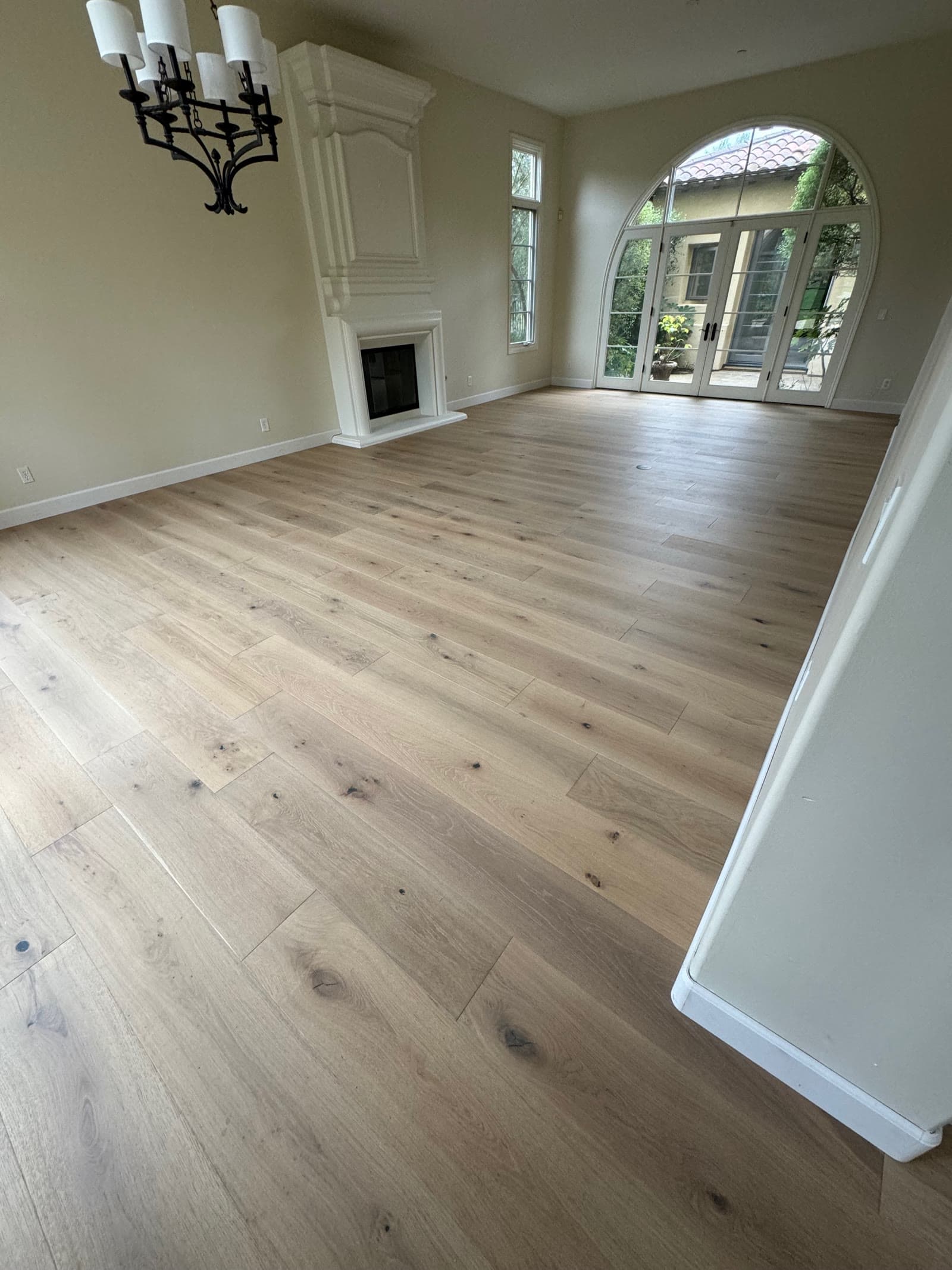
One architectural language, and it sets the floor
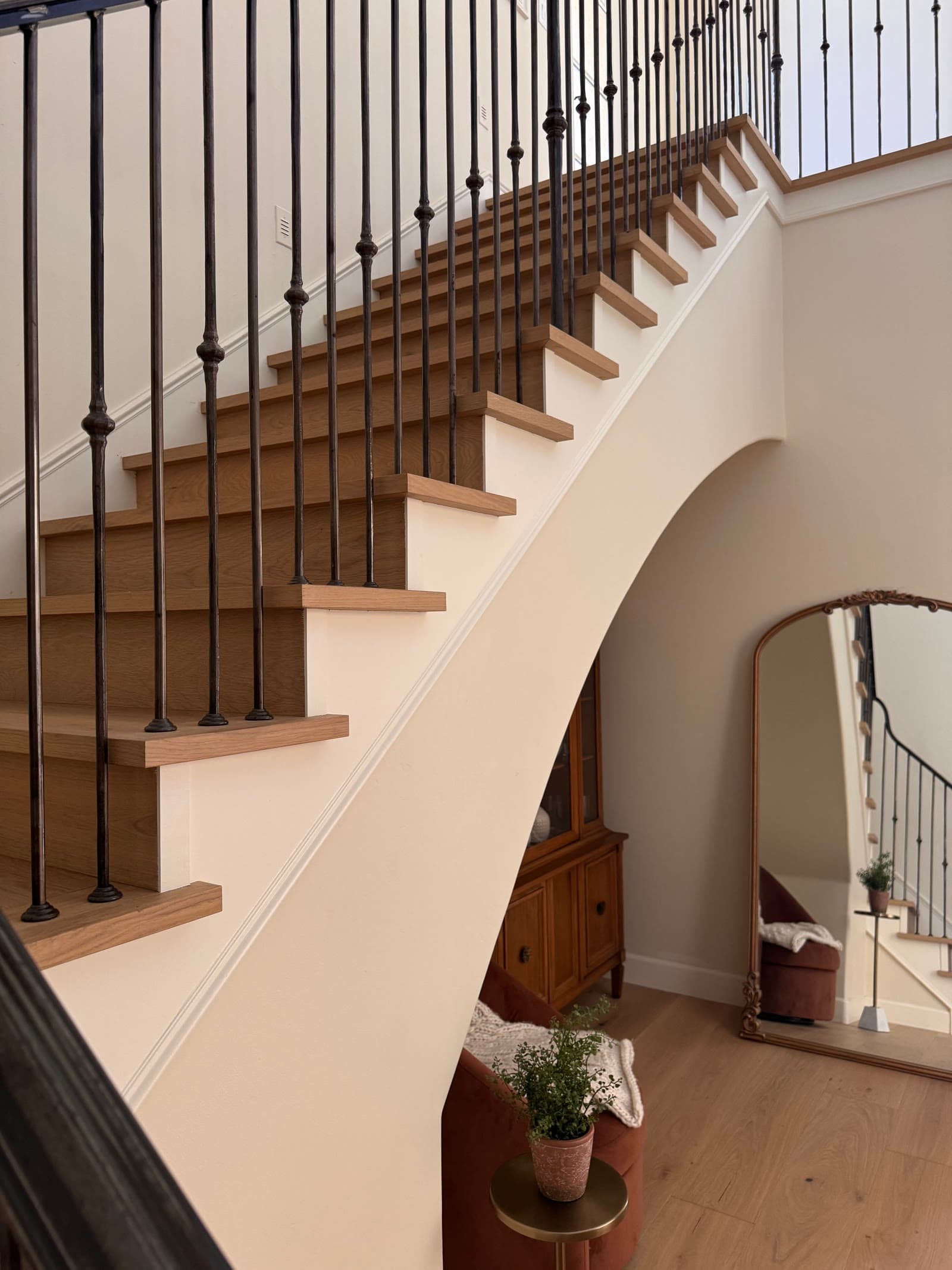
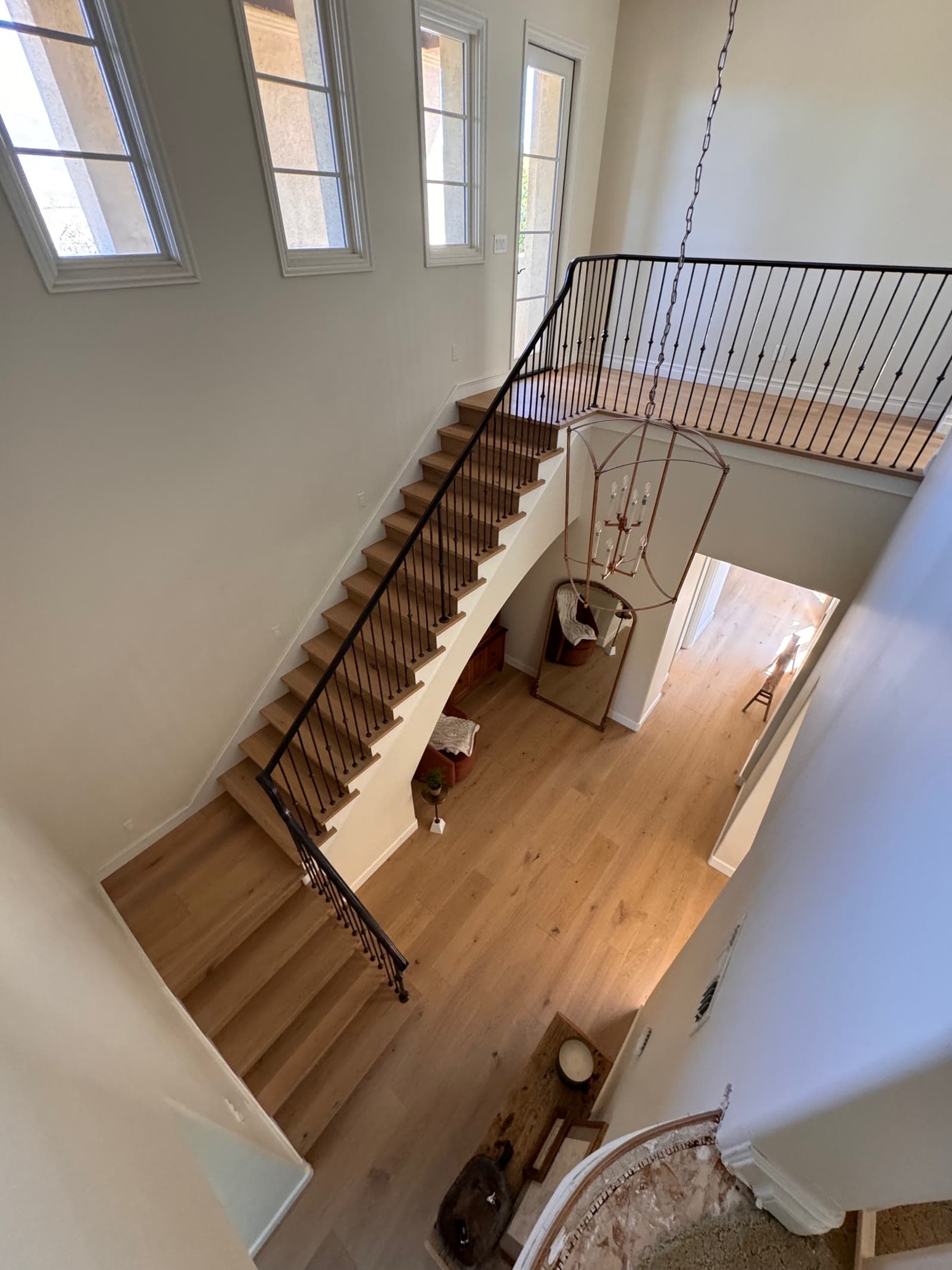
Santaluz was built to a design code, and it shows. Earth-toned plaster, clay tile roofs, deep-set windows, courtyards, and arched openings run through the whole community. The interiors follow: limestone fireplaces, plaster returns instead of drywall corners, iron balustrades.
That narrows the floor considerably, and in a good way. A wide-plank white oak in a light, low-sheen finish sits inside that language without arguing with it. A high-gloss red-toned board fights it. We have laid enough of these to know which samples will look right in the room and which look right only in the showroom.
Arched openings and plaster returns also change the cutting. There is no square jamb to butt a board against, so the plank gets scribed to a curve. It is slow, and it is the difference between a floor that looks built and a floor that looks delivered.
Early-2000s slabs, and what they need first
Most of Santaluz went up from about 2000 onward, which means post-tension slab-on-grade under nearly every house. Those slabs are structurally sound and almost never flat enough to glue a wide plank straight onto.
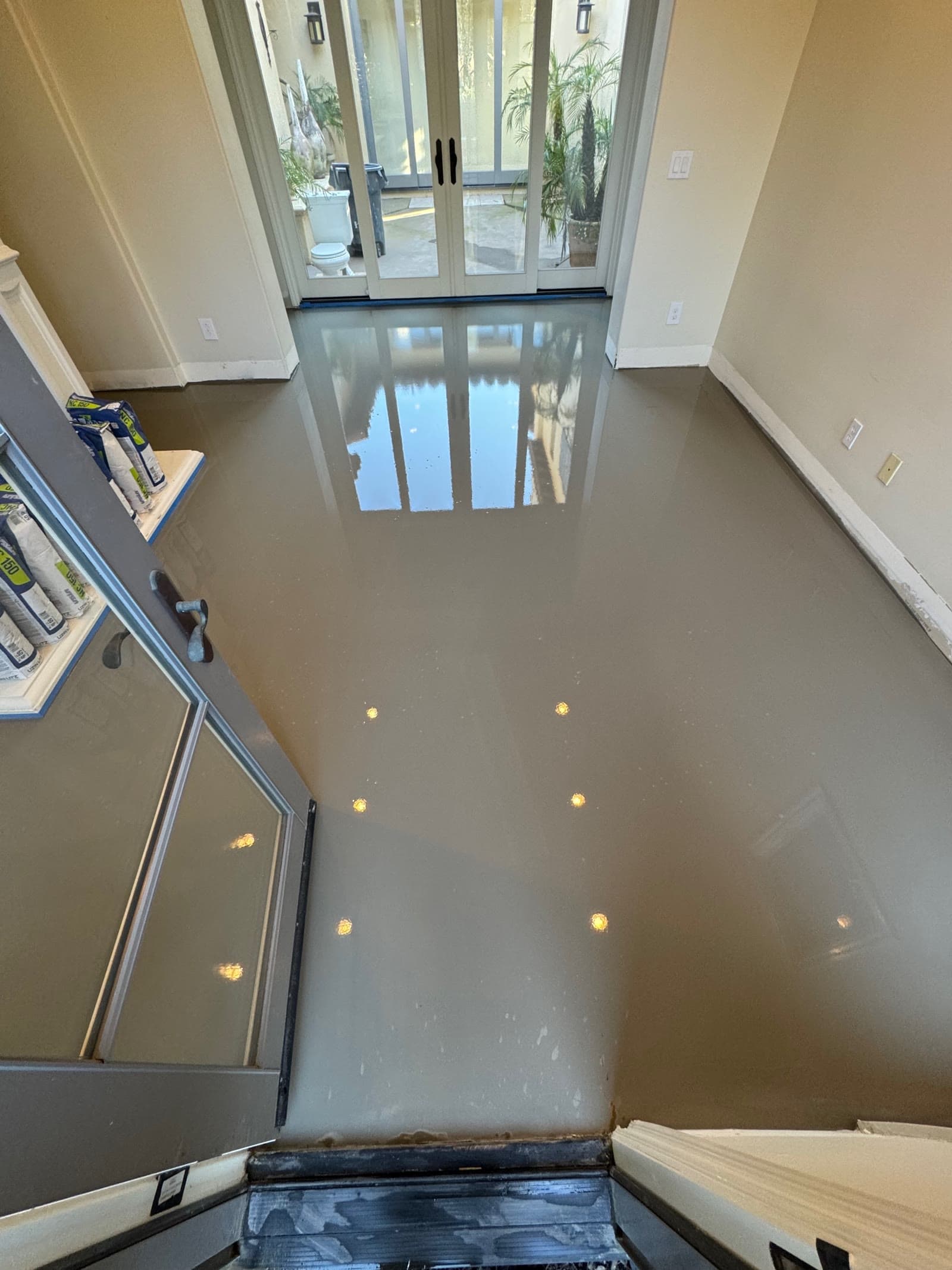
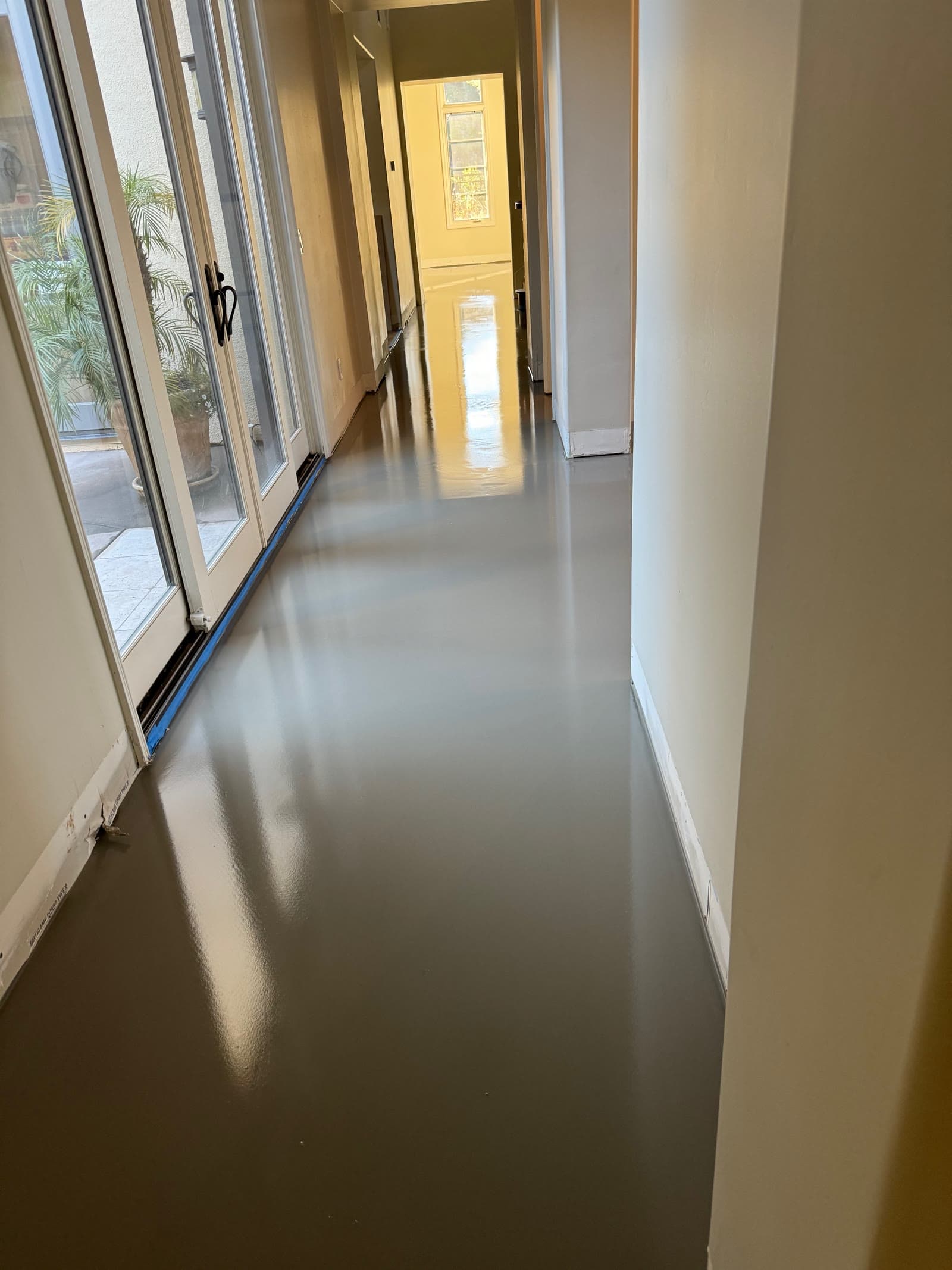
So the first day is usually not a flooring day. We grind the high spots, pour self-leveling compound into the low ones, and let it cure. Both Santaluz jobs in the gallery start with that photo, because it is the part of the job that decides whether the floor is still tight in ten years.
Post-tension also means no mechanical fastening into the slab without knowing where the cables run. Glue-down and floating are the two options, and which one you get should be a decision, not a default.
The gate, and the schedule
Santaluz is gated and staffed. Contractors get cleared in advance, not waved through, and there are hours when trades can and cannot be on site. None of that is a problem — it just has to be arranged before the truck is loaded.
We handle the gate list, the vehicle details, and the delivery window as part of booking the job. A pallet of oak turned away at the gate costs a day and a redelivery fee, and it is entirely avoidable.
Santaluz flooring questions
Do you need approval from the Santaluz HOA for new floors?
Interior flooring does not normally go to design review, which governs what the house looks like from outside. What Santaluz does control is contractor access: trades are cleared at the Camino del Sur gate in advance, and there are set working hours. Top Tier Custom Floors arranges the gate clearance and the material delivery window before the job starts.
Can hardwood be glued down over a post-tension slab in Santaluz?
Yes, and glue-down is usually the right call. Post-tension slabs are the standard here because most of Santaluz was built after 2000, and they rule out nailing into the slab — you cannot put a fastener through a tensioned cable. Engineered plank glued directly to a properly ground, leveled, moisture-tested slab is the normal solution. Solid hardwood is possible over a floating plywood subfloor built on top.
Which floors suit Santaluz architecture?
Wide-plank white oak in a matte or low-sheen finish is the most common choice, because it sits comfortably with the plaster, limestone, and clay tile the community's design code produces. Herringbone works well in entries and formal rooms. Polished or stained concrete suits the more contemporary interiors. High-gloss and strongly red-toned woods tend to fight the palette rather than join it.