
Preparation is the entire job
When an epoxy floor fails, the epoxy is almost never the problem. It failed to stick. Whether it sticks is decided before the first coat goes on.
The concrete has to be roughened by machine, either diamond ground or shot blasted, so the resin can grip it. Most kits from the hardware store tell you to use acid instead. Acid doesn't reliably open up a smooth troweled slab. That's the main reason coatings peel off in sheets about a year later.
We also test the slab for moisture. Damp rising up through concrete will push a coating off no matter how well the surface was prepped. That's a real risk in older San Diego County homes, which were often built with no moisture barrier under the slab.
A coating that lets go in two years is Stone's problem to come back and fix, which is why the grinding and the moisture test aren't negotiable even when they add a day.
What metallic epoxy actually looks like
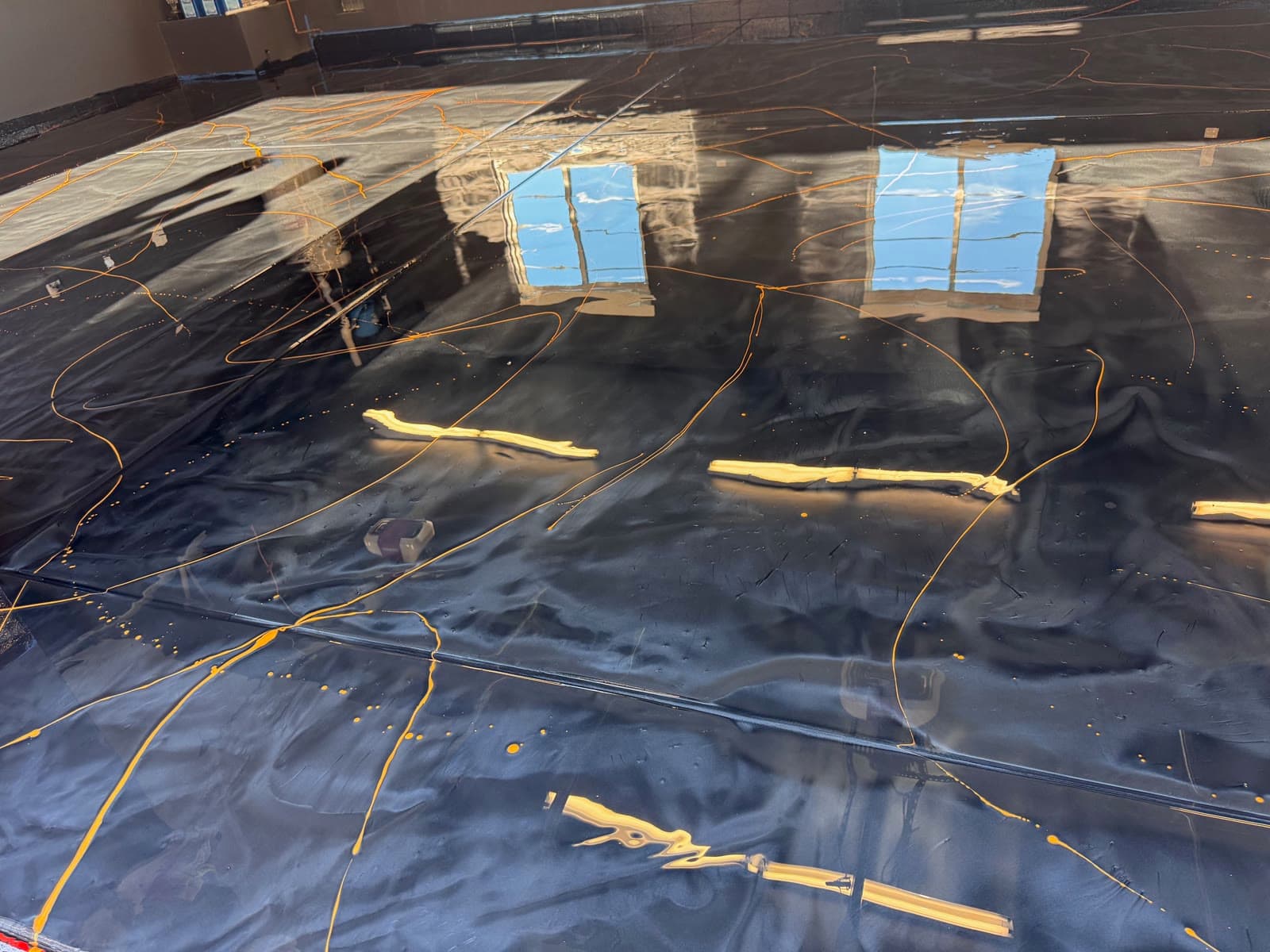
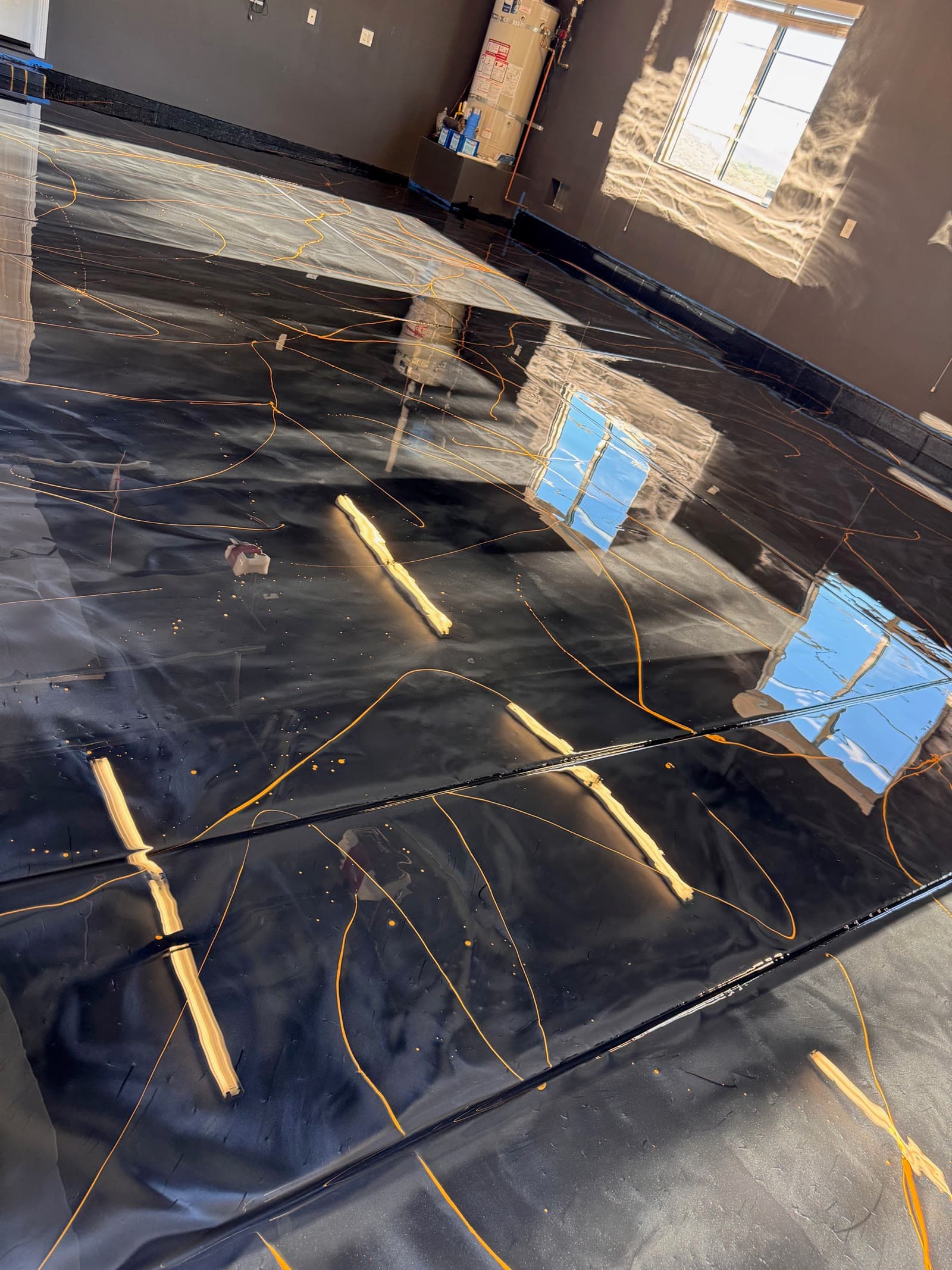
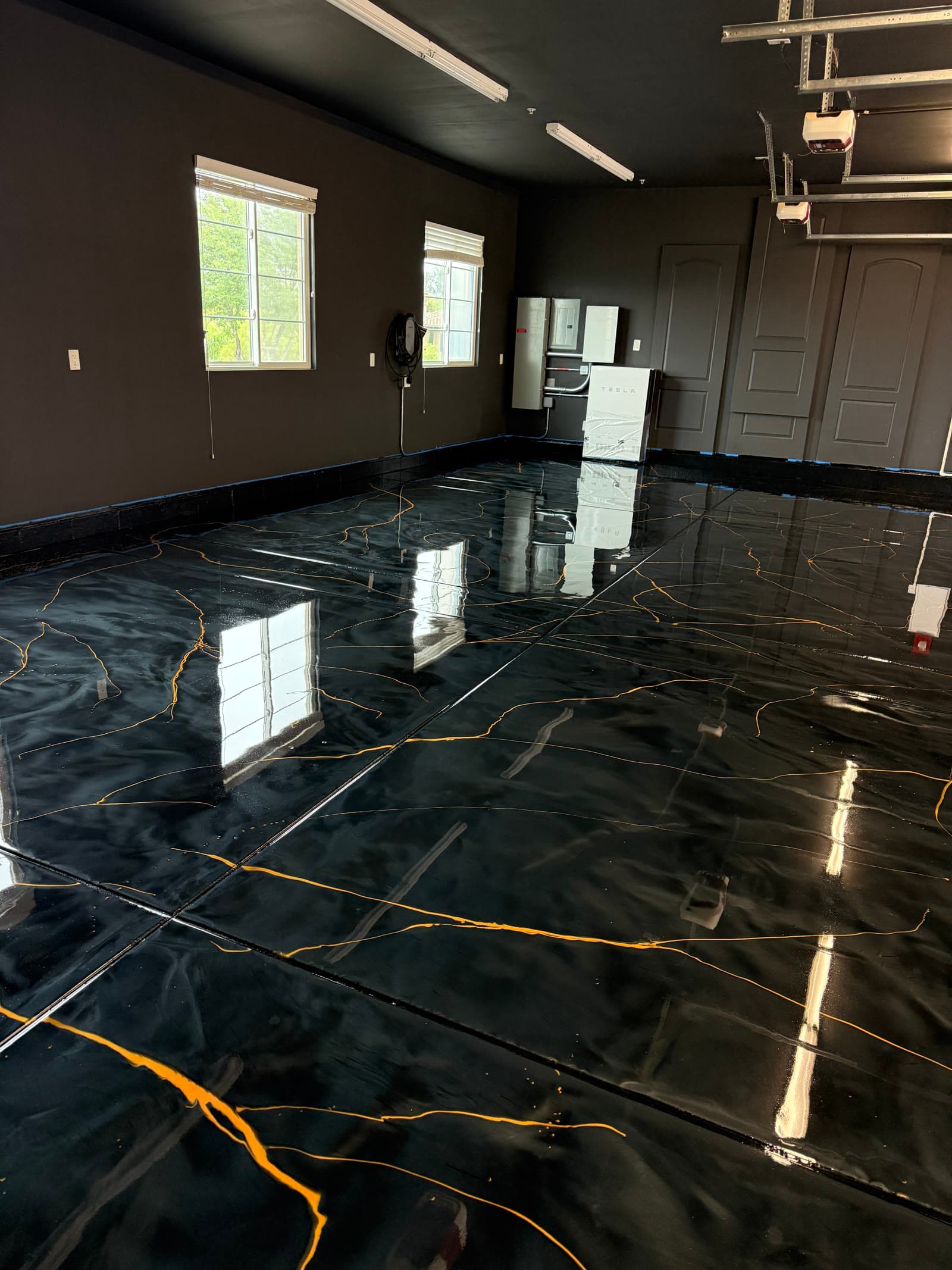
Metallic pigments float in clear resin. We move them with rollers, brushes, and air while the coating is still wet. The result has depth and movement, and it looks far more like polished stone than paint.
No two floors come out the same. That's how the process works, not a flaw. We make a sample board in your colors first, so you're judging something you can hold instead of a photo.
A UV-resistant topcoat goes over the metallic layer. Any garage that gets direct sun needs it. Plain epoxy turns yellow where the sun hits it every day.
We have built a floor a customer designed with AI
One client came to us with an image they had generated with AI. This is what I want my floor to look like. So we built it.
Turning a generated picture into a real floor is its own job. The image doesn't know how resin actually moves, and it doesn't know which pigments exist. Some of what it showed was never going to happen in a real garage. Most of it could, once we matched the colors to pigments you can actually buy and worked out how to move them while the coat was wet.
If you have an image in your head, or on your phone, bring it. Worst case we will tell you honestly which parts of it resin can do and which parts it cannot.
Cure time and getting your garage back
You can walk on the floor long before you can park on it. It takes several days to harden all the way through. Drive a car onto a floor that's only hard on top and the tires leave marks you can't get out.
We put the real dates in the estimate, one for walking on it and one for parking on it. Telling someone 'a couple of days' is how garages get ruined.
What drives the cost
We quote after walking the space, because the things that move the number are things nobody can see in a photo. Here is what they are, in the order they matter, so you know what will drive your estimate before anyone comes out.
- Surface preparation
- This is most of the job and most of the price. The slab is diamond ground or shot blasted open, never acid etched. Grinding off a previously failed coating costs real money and belongs in the estimate up front, not as a surprise on day one.
- What the slab arrives as
- A clean bare slab is one price. A slab with a peeling coating, oil saturation, or old adhesive on it is another.
- How much design is in the pour
- A single metallic color with natural movement is quicker than multiple pigments veined by hand, which is closer to painting than to coating.
- Topcoat
- A UV-stable topcoat costs more than a standard one and is what stops the floor ambering where daylight reaches it. Grit for traction is a decision made before coating, not after.
Numbers you can hold us to
- A properly prepped metallic epoxy floor lasts 10 to 20 years before it wants a new coat. One over bare or acid-washed concrete commonly fails in 1 to 3.
- Slab moisture testing happens before any resin goes down. Moisture driving up through a slab is what lifts coatings in sheets.
- The estimate carries two separate dates: when you can walk on it, and when you can park on it. They are not the same day.
How long it takes
Two to three working days on site for a standard two-car garage, including prep. Walk on it after roughly 24 to 48 hours; park on it after about 5 to 7 days, because a floor that is only hard on top takes tire marks that never come out.
We do not publish prices, because a real number needs a real look at your floor. Estimates are free and in person. Stone measures, takes the moisture readings, and writes it up itemized before anything is ordered.
Metallic Epoxy questions
How long does metallic epoxy last?
A metallic epoxy garage floor that was prepped and laid properly lasts about 10 to 20 years before it needs a new coat. What decides that is the surface prep and the topcoat, far more than the epoxy itself. Coatings put over bare or acid-washed concrete often fail in one to three years.
Can epoxy be applied over an existing coating?
Sometimes, but only after we test how well the old coating is holding. If it's already letting go, it has to come off. New resin stuck to a peeling layer just peels with it. Grinding off a failed coating costs real money, and that belongs in the estimate up front, not as a surprise on day one.
Is metallic epoxy slippery?
A smooth topcoat is slippery when wet. That matters in a garage you hose out, and in entryways. We can scatter a fine grit into the topcoat to add grip, and it barely changes how the floor looks. We ask about this before we coat, not after.