
Flooring services across San Diego County
Seven specialties, every one installed by owner Stone Peters and the same small crew, under California C-15 license #1099373. If a product isn’t right for your house, you’ll be told that before you’re given a price.
The short version
Top Tier Custom Floors is an owner-operated flooring contractor serving San Diego County, California. It installs solid and engineered hardwood, herringbone and chevron pattern floors, luxury vinyl plank and laminate, metallic epoxy coatings, and stained, sealed, and polished concrete; it sands and refinishes hardwood floors already down; and it fabricates custom stair treads on site. Owner Stone Peters holds active California C-15 license #1099373 and works on every installation personally, alongside the same small crew — installations are never subcontracted. Estimates are free and given in person, and the warranty available on your floor depends on the material you choose, so the terms get agreed and written into your estimate before anything starts.
What we install
Seven things we do, all with our own hands.
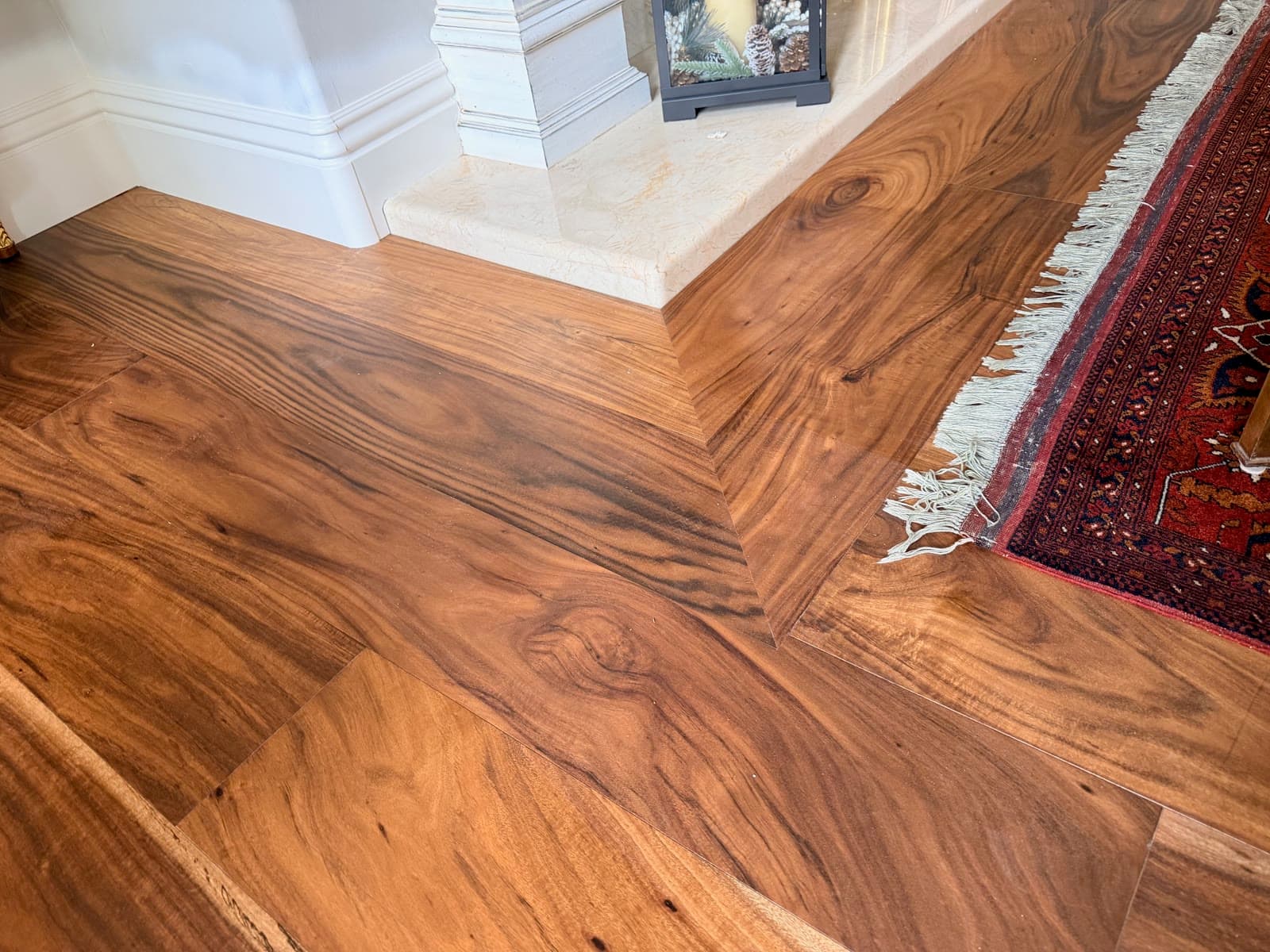
Hardwood
Hardwood Floor Installation
ViewSolid and engineered hardwood, installed board by board by the owner and his crew.
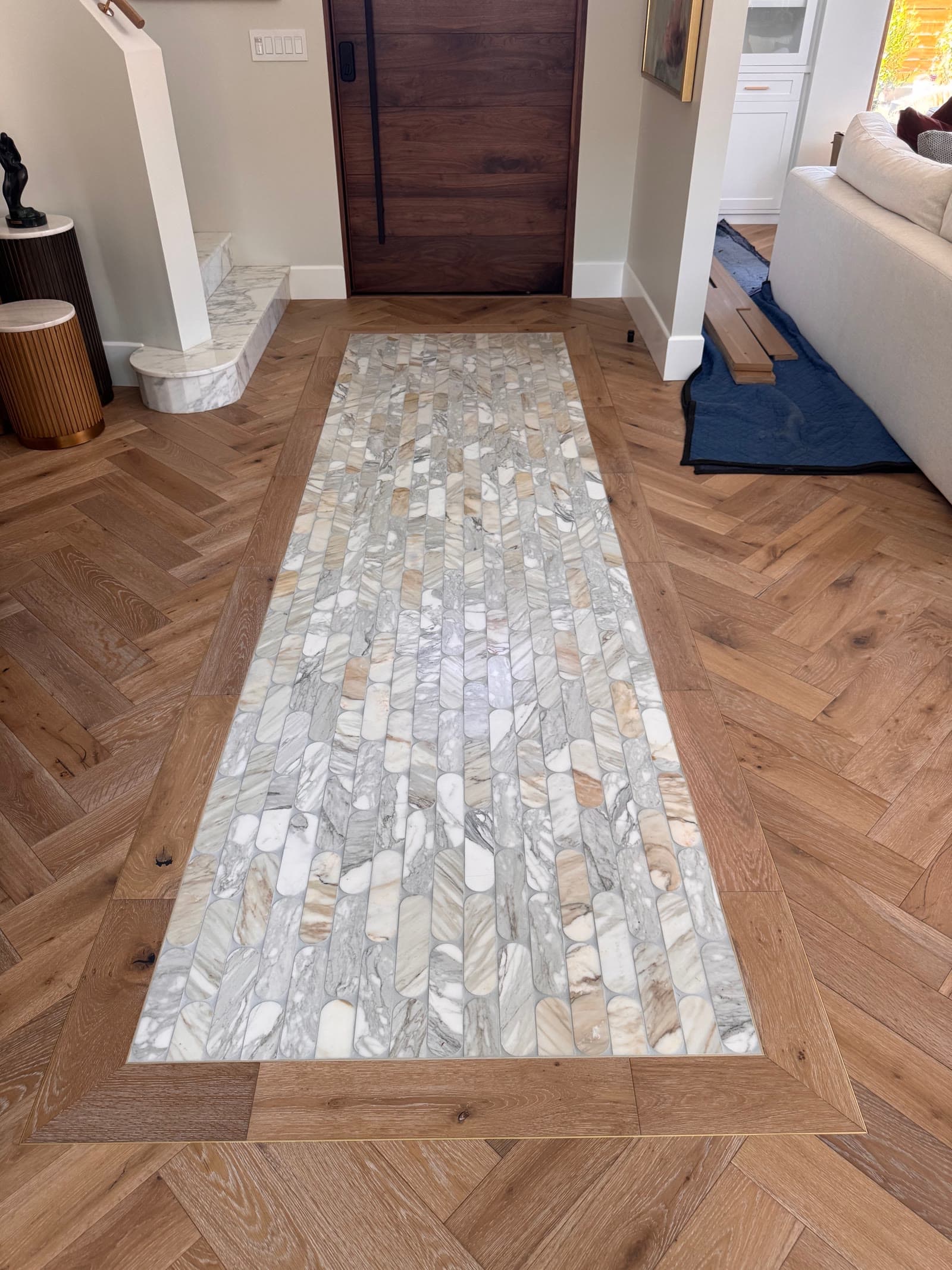
Herringbone
Herringbone & Pattern Wood Floors
ViewHerringbone, chevron, borders, and inlays. The patterns most installers turn down.
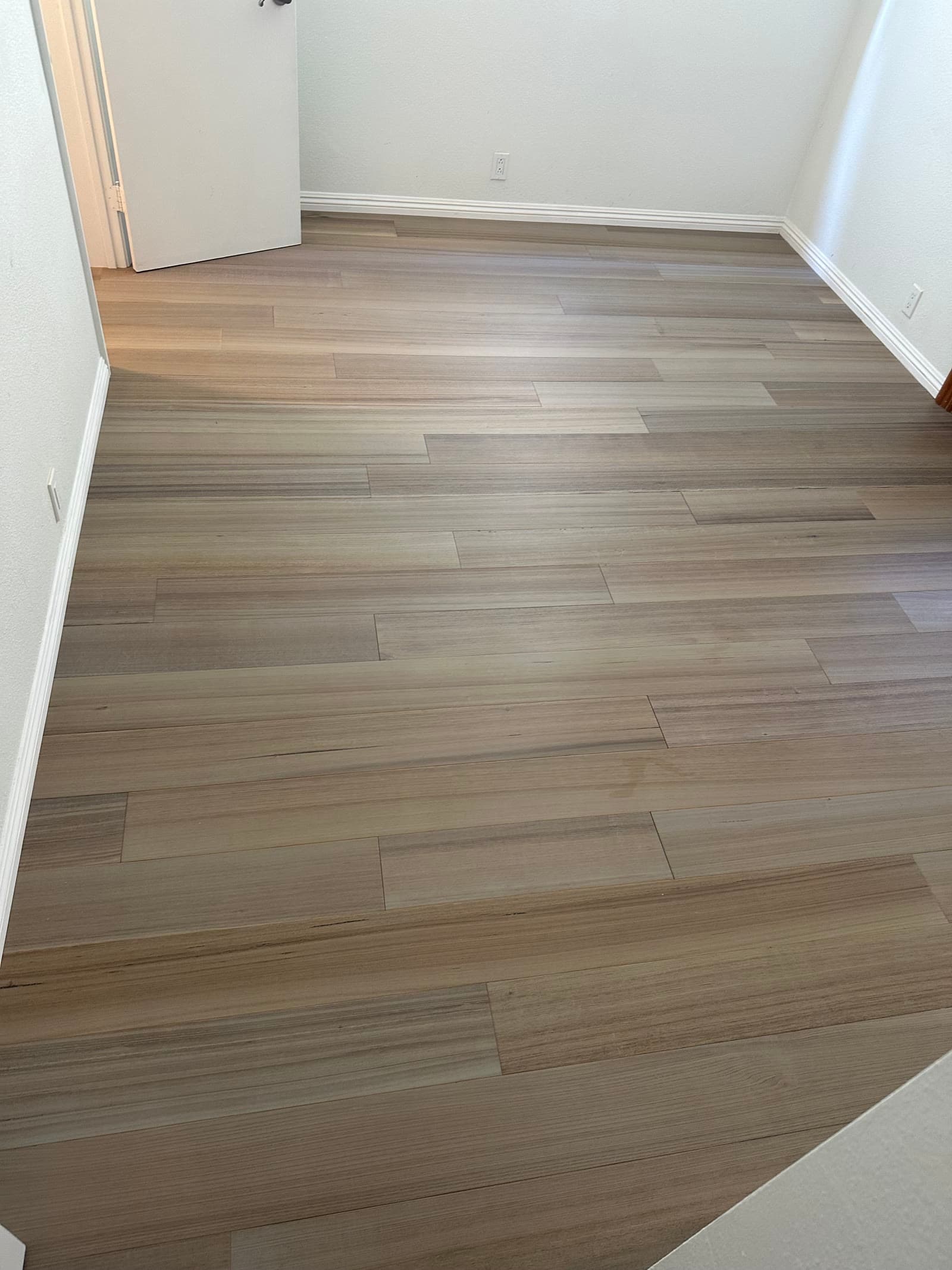
LVP & Laminate
Luxury Vinyl Plank & Laminate Installation
ViewWaterproof vinyl plank and laminate. The sensible pick for rentals, kids, and dogs.
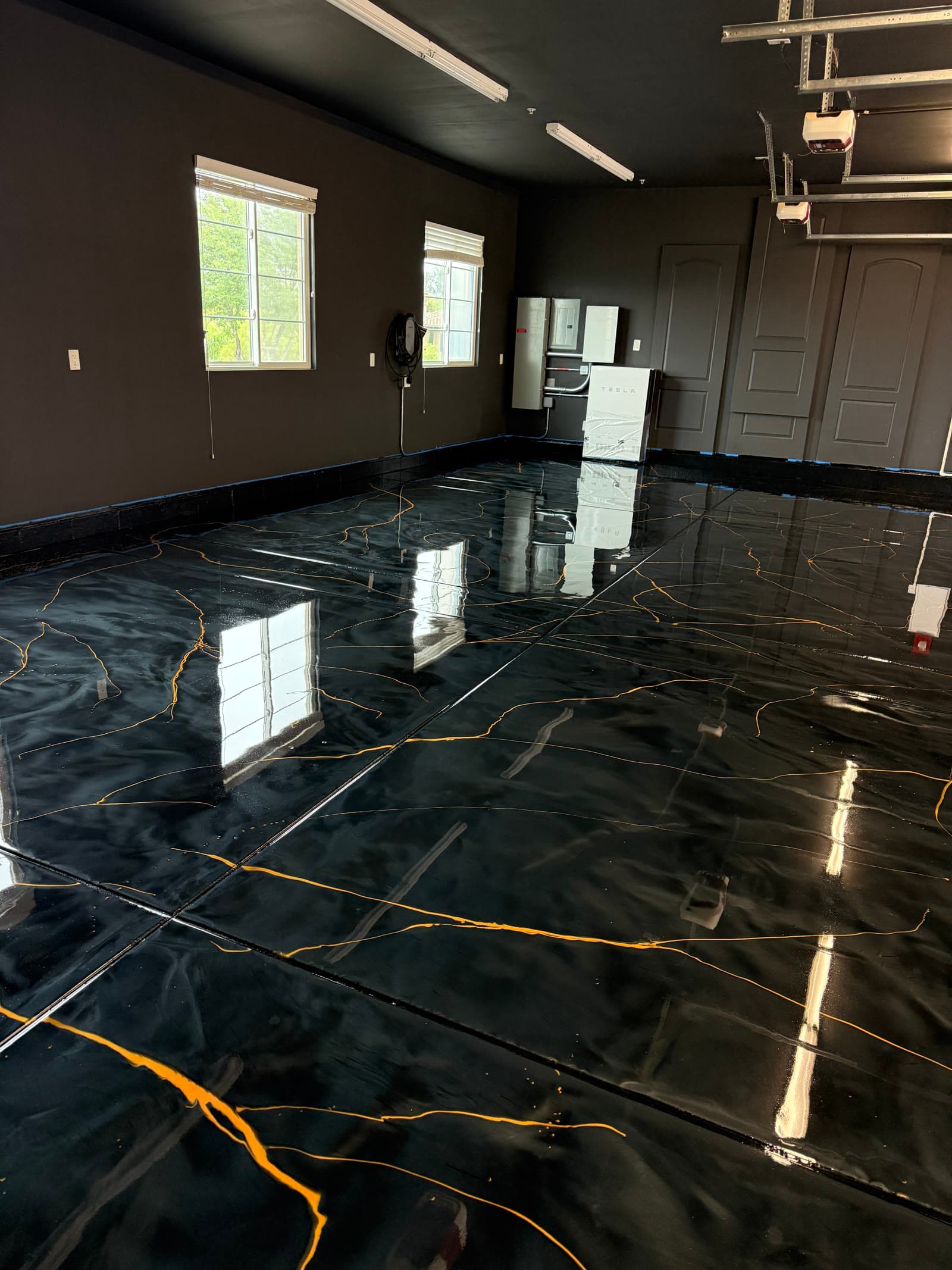
Metallic Epoxy
Metallic Epoxy Floor Coatings
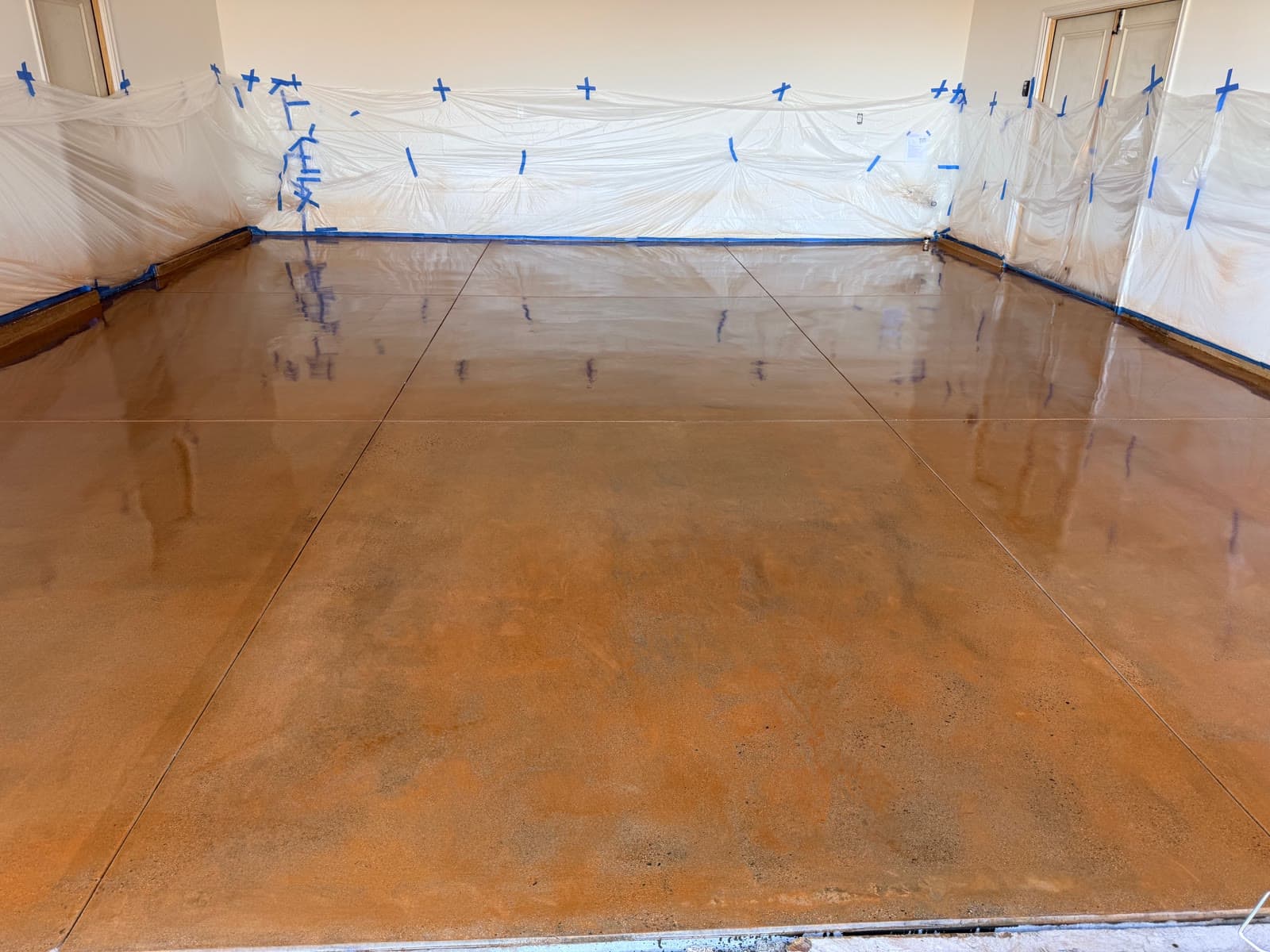
ViewSeamless metallic epoxy resin, poured over your slab for garages, shops, and statement interior floors.
Concrete
Stain, Seal & Polished Concrete
ViewPolish it, stain it, or seal it. The slab already under your house, made into the finished floor.
Refinishing
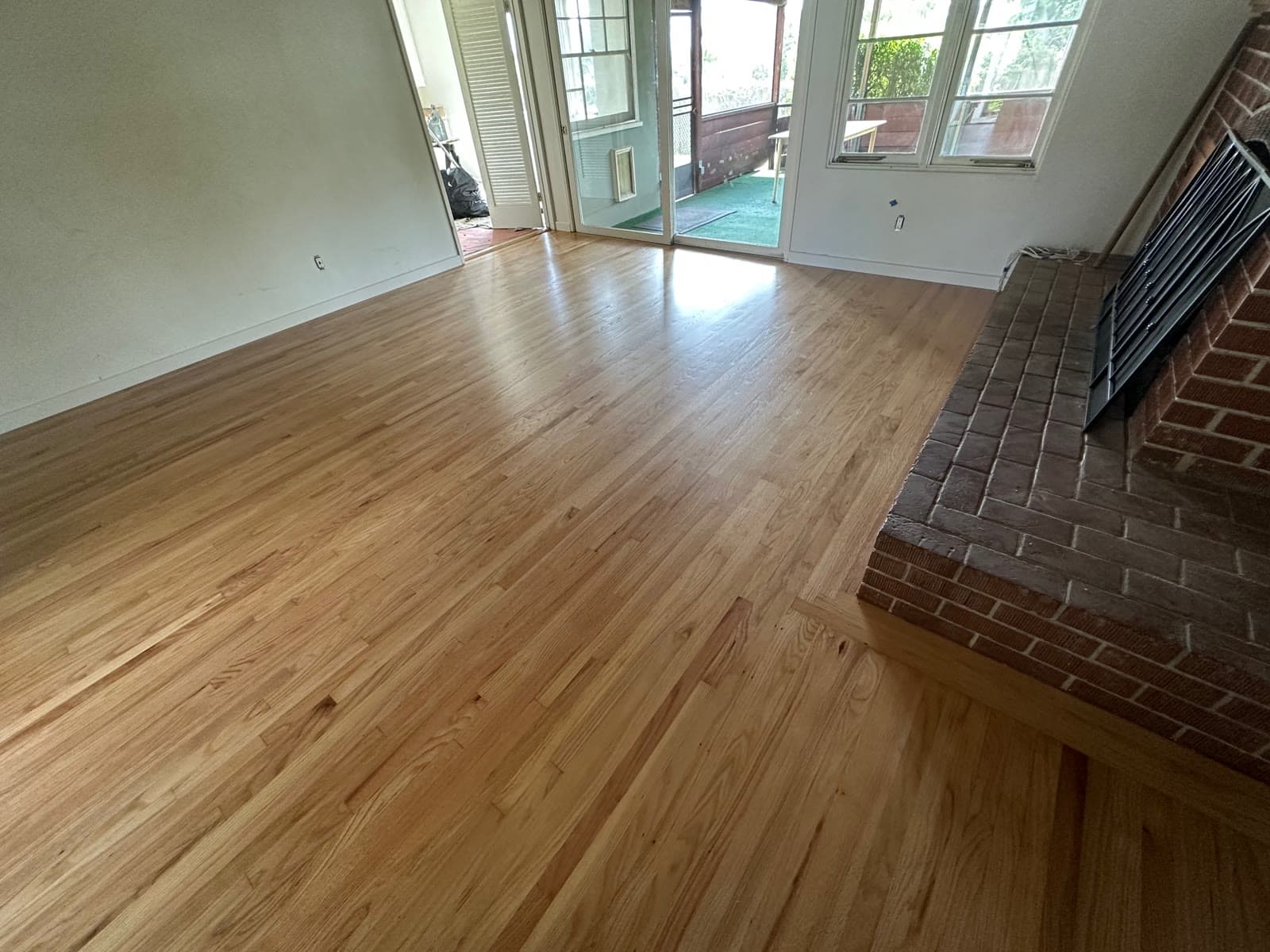
Hardwood Floor Sanding & Refinishing
ViewBring back the floor you already have, usually for less than a new one.
Stairs
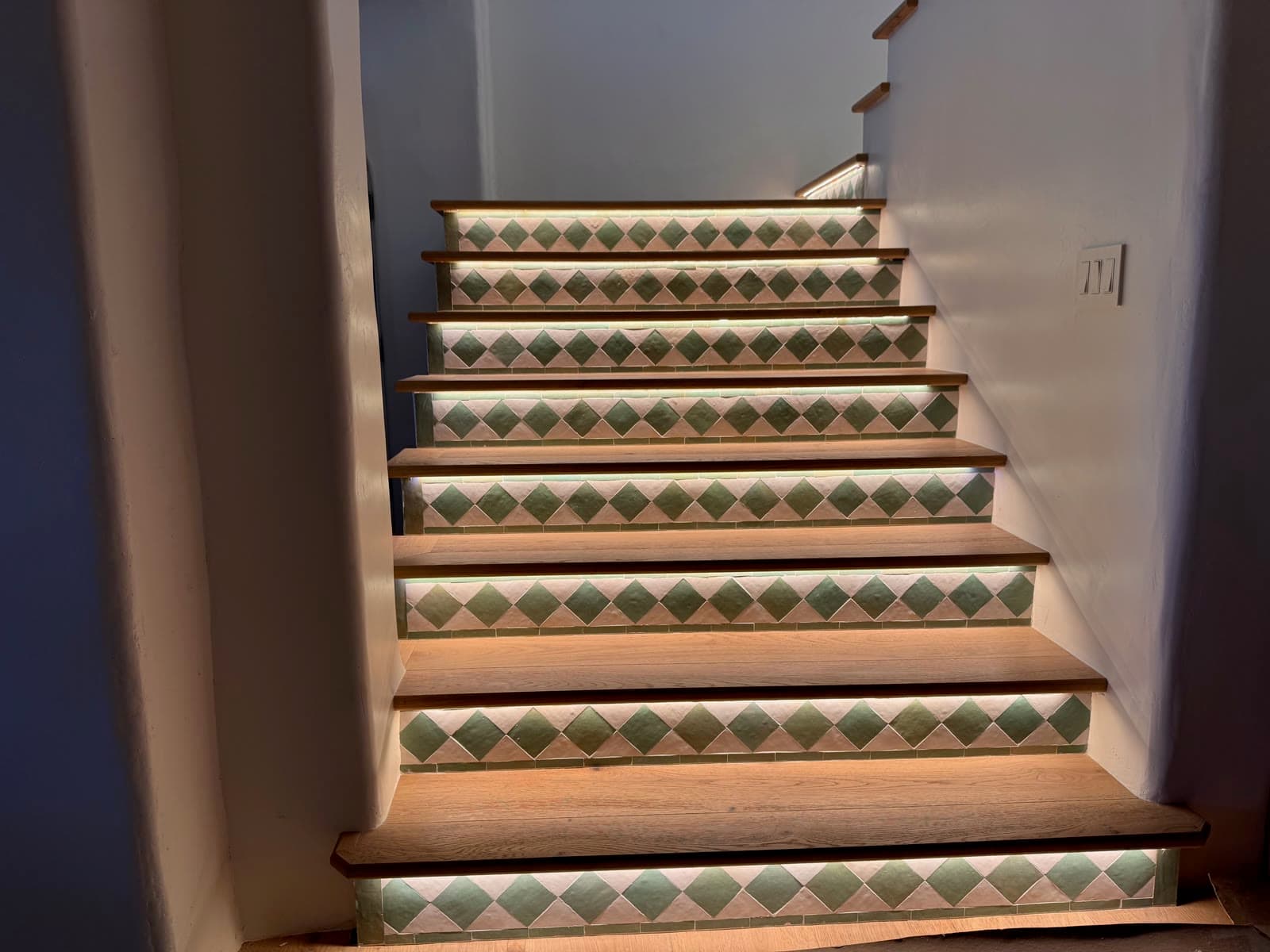
Custom Stair Treads & Staircase Flooring
ViewStair treads, risers, and nosings. The hardest part of any flooring job.
How to choose between them
Six questions decide almost every flooring job in this county. Work through them in this order and the list of seven usually comes down to one or two before anyone walks your house.
Question 1
How much water is this floor going to see?
This is the first question, and it eliminates more options than any other. Kitchens, bathrooms, laundry rooms, and any house with pets or small children want luxury vinyl plank, which is waterproof all the way through, or a concrete floor, which does not care at all. Laminate is the trap here — it looks similar and holds up better against scratches, but its core is wood fiber, and once water reaches that core it swells and never recovers.
Luxury vinyl plank & laminate Stain, seal & polished concrete
Question 2
How close to the ocean is the house?
Del Mar, La Jolla, Encinitas, Coronado, and west Carlsbad sit in damp air all year, and wide solid boards move with it. Engineered hardwood has a cross-layered core that barely responds, and it can be glued straight to a slab. Head inland to Escondido, Poway, or Valley Center and the air swings from damp winters to bone-dry summers instead — solid hardwood handles that well and can be sanded back several times over its life.
Question 3
Is there already a wood floor under the carpet?
In a lot of older San Diego County houses there is, and it is frequently better material than anything sold today. Old-growth oak laid in the 1920s or 1930s is denser and more stable than new stock. Where enough wood remains above the tongue, refinishing costs less than replacement and gives you a floor you cannot buy. We measure by lifting a floor vent rather than guessing from the surface.
Question 4
Is this a garage, a workshop, or a feature floor?
Concrete has two entirely different answers. Polishing grinds and densifies the slab you already have, so nothing sits on top that can peel — but not every slab can take it, and we will tell you when yours cannot. Metallic epoxy is a coating, and it is the one that produces a floor that looks like poured stone. Both live or die on preparation: the slab gets diamond ground or shot blasted, never acid etched.
Question 5
Is there a staircase in the scope?
Then it is its own project and it is quoted per step, not per square foot. A fourteen-step flight done fully is around forty separate custom pieces, each cut to its own measurement, and it is the slowest work in flooring. It is also where California's riser-height rules get discovered, because carpet hides an uneven riser and a hard tread does not.
Question 6
Do you want the floor itself to be the feature?
Then you are looking at pattern work. Herringbone and chevron have to be set out from a squared center line and cut far more exactly than plain planks — get the layout off by a sixteenth of an inch and the field runs visibly crooked by the far wall. Most installers decline it. It carries a 15 to 20 percent waste factor and roughly double the labor of straight plank, and it is worth both.
Where we work
Most of the book of business is the coastal corridor. We cover the rest of San Diego County too, and each city page says what is genuinely different about the houses there.
Questions about hiring a flooring contractor
What kind of flooring contractor is Top Tier Custom Floors?
An owner-operated one. Stone Peters holds California C-15 license #1099373, Flooring and Floor Covering, in active status, and installs personally alongside the same small crew he has worked with for years. There is no sales team quoting work that a separately hired crew then installs. The company covers hardwood, herringbone and chevron pattern floors, luxury vinyl plank and laminate, metallic epoxy, stained and polished concrete, sanding and refinishing, and custom stair treads across San Diego County.
Which flooring is best for a San Diego home?
It depends mostly on how close to the water the house is and how much moisture the room will see. Within a few miles of the coast — Del Mar, La Jolla, Encinitas, Coronado — engineered hardwood is the safer pick, because the air stays damp year-round and its layered core barely moves. Inland, where the swing between damp winters and dry summers is much wider, solid hardwood handles it well and can be refinished several times. For rentals, houses with big dogs, or rooms where spills are routine, vinyl plank with a 20 mil wear layer or better beats both.
Do you do the demolition and haul-away too?
Yes, and it is quoted up front rather than added later. Removal is the single biggest swing in most flooring estimates: pulling carpet is a morning, while pulling tile that was thin-set straight onto a slab is days of demolition, dust containment, and haul-away. Whatever comes out is priced in the written estimate before work starts.
Can one contractor do the floors and the stairs?
Yes, and it is usually the right call. Matching new stair treads to a floor that is going down at the same time is far easier than matching them to one that was laid by someone else a year earlier, and doing both together means one schedule instead of two. Stair treads can be cut from the same wood as the floor and finished to match.
How long does a whole-house flooring job take?
For most homes, 1,000 to 2,000 square feet of prefinished hardwood or vinyl plank takes 3 to 7 working days. Finishing the boards on site adds roughly 3 to 5 days for sanding, coats, and cure. A full sand and refinish of an existing floor is 3 to 5 days. A standard 14-step staircase is 2 to 4 days. Removing tile from a slab or leveling an out-of-tolerance subfloor adds to all of those.
Not sure which one you need?
You will hear what the house actually needs, including when that is a cheaper product than the one you asked about. The estimate is free and it is written down.
California C-15 License #1099373 · Active · Owner-installed