
Salt air on every side of the house
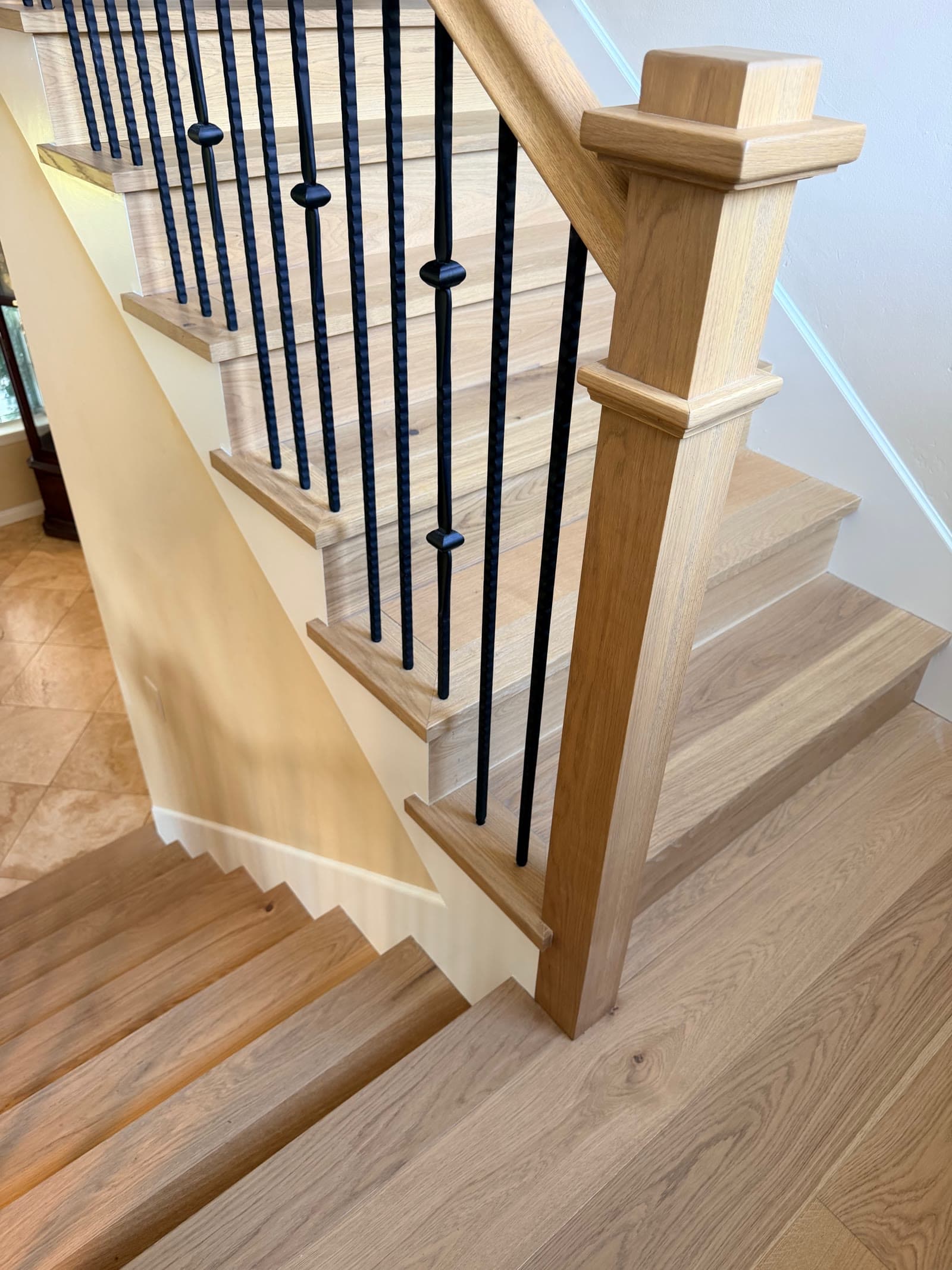
Coronado is close to a mile wide at its widest and has water on both sides of it. Nowhere else we work sits in salt air as completely. That matters less to the wood than people assume and more to everything around it — fasteners, transitions, thresholds, and the metal in a stair balustrade.
Where it does matter to the wood is humidity. The air here holds moisture year-round and barely swings between seasons. That is actually kind to a floor, but only if it was laid at the right moisture content in the first place. Boards trucked in from a dry inland warehouse and laid the same week will move once they equalize, and on a wide plank that shows up as gaps by the second winter.
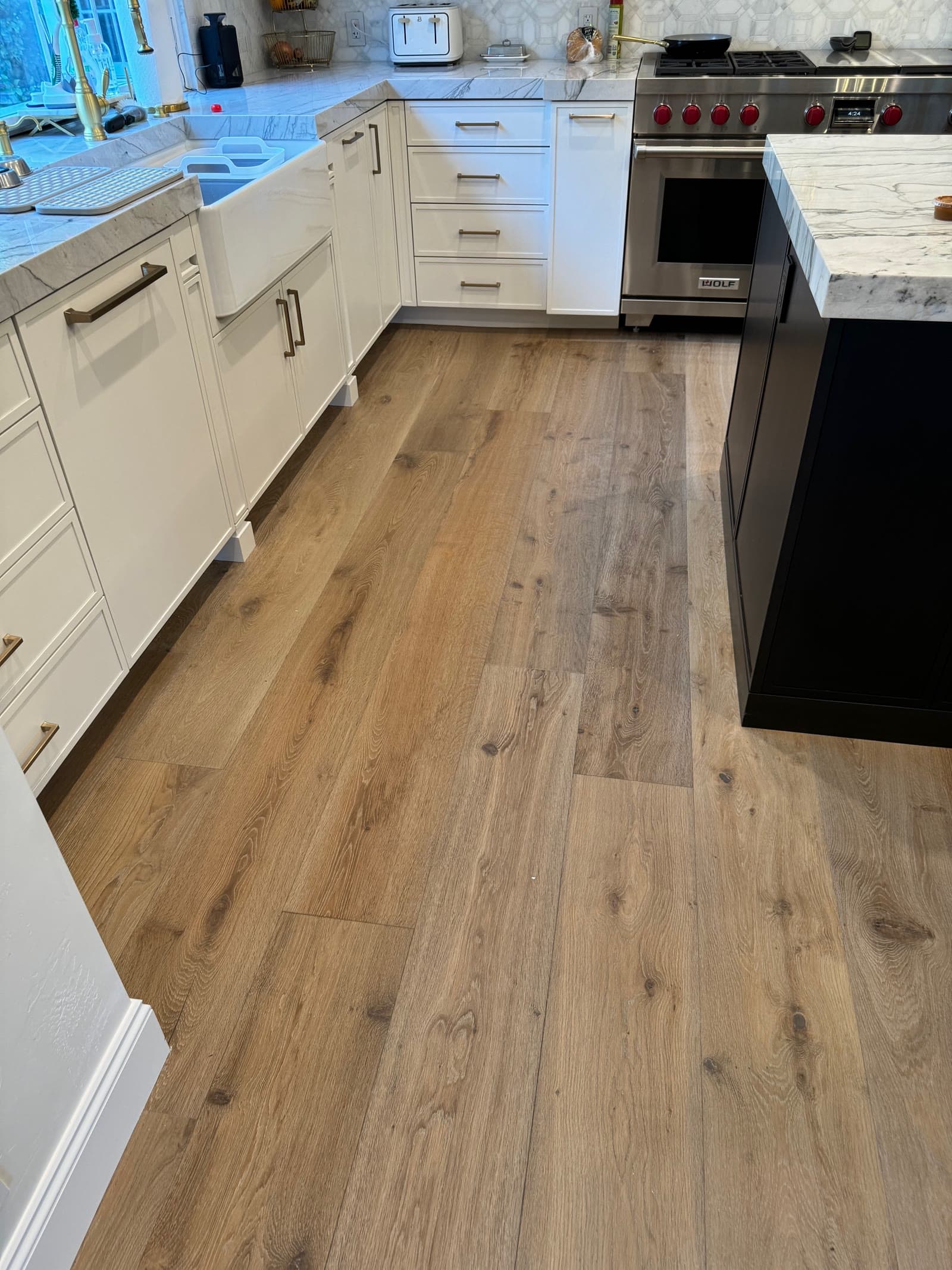
So the material sits in the house before it goes down, and we take readings rather than counting days. Engineered plank is the safer specification here for the same reason it is in Del Mar and La Jolla.
Two housing stocks, two entirely different jobs
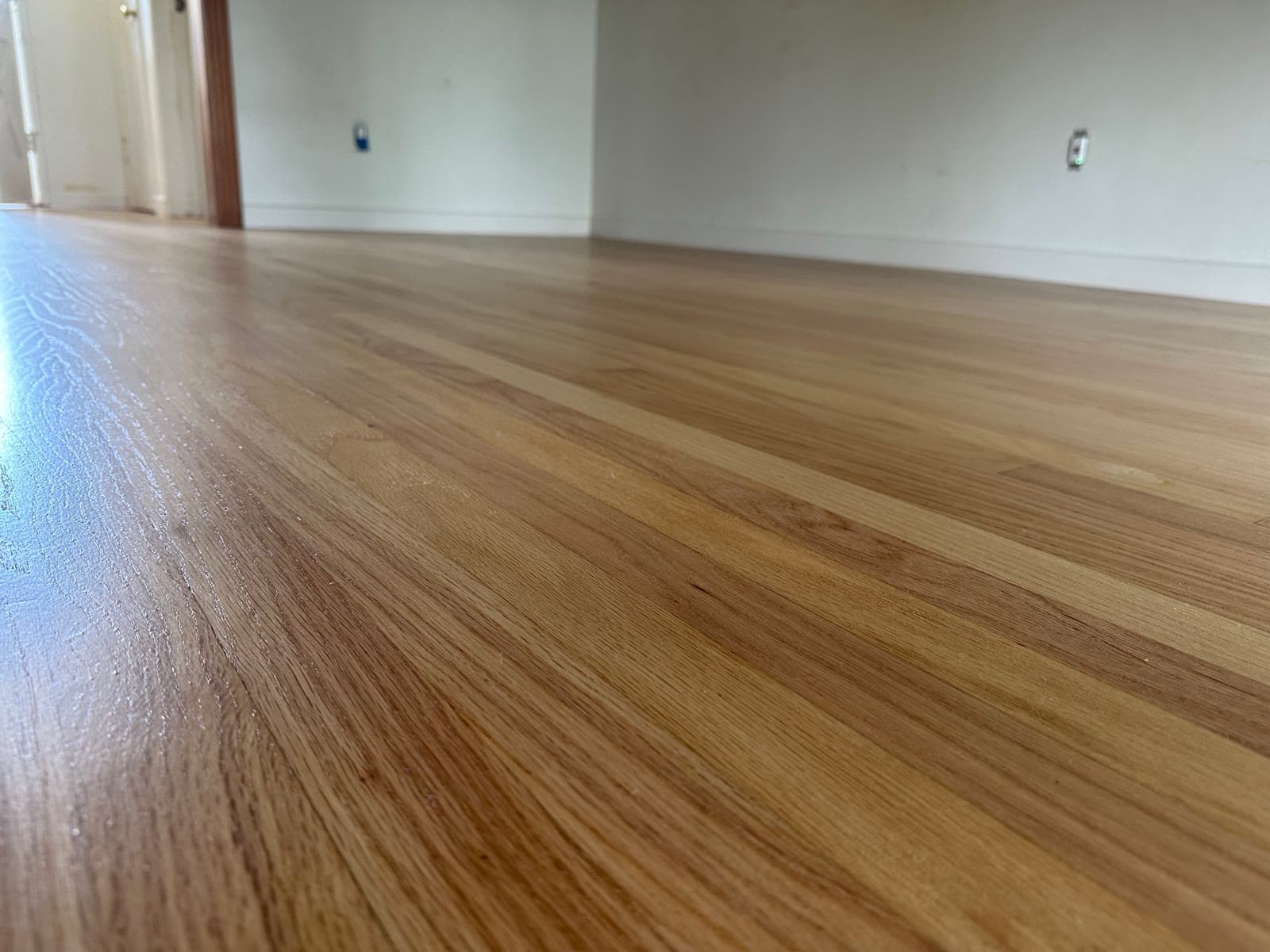
The Village is largely 1890s to 1930s — Victorians, Craftsman bungalows, Spanish Revival — on raised foundations with a crawlspace under them. Many still have their original narrow-strip oak or fir under carpet that went down in the sixties. Where those boards are sound, refinishing gives you a floor nobody sells any more.
A crawlspace also means moisture can arrive from below. We take readings under the house as well as inside it, because a subfloor drawing damp off the ground will curl new boards no matter how good they are.
The Cays and the Shores are a different century. Those are 1970s-onward, built on slab, much of it on fill, and often with HOA rules about sound transmission between floors. That decides underlayment before it decides anything else.
Working on an island with no parking
Coronado is reached by one bridge and one strand, the Village runs on narrow lots with alley access, and parking is genuinely scarce. A twenty-foot pallet of flooring cannot simply be dropped at the curb and dealt with later.
We plan the delivery, the staging, and the debris run before the first day, and we tell you where the truck will be and for how long. On a street where your neighbors are three feet away, that is not a small courtesy.
Coronado flooring questions
Can the original wood floors in a Coronado Village home be refinished?
Usually yes. Homes in the Village from the 1890s through the 1930s were built with narrow-strip oak or fir, and a lot of it survives under later carpet in better condition than anything sold today. Whether it can be sanded depends on how much wood is left above the tongue, which we check by lifting a vent cover before quoting. Where the boards are sound, refinishing keeps original material that cannot be bought back.
Is solid or engineered hardwood better in Coronado?
Engineered, in most cases. Coronado sits in salt air with water on both sides and humidity that stays high year-round. Engineered plank has a cross-layered core that barely moves with that moisture, where solid hardwood expands and contracts more. The exception is a Village home with a sound original solid floor already down — that is worth refinishing rather than replacing.
Do Coronado Cays and Shores condos have flooring rules?
Frequently, yes. Multi-level buildings and attached homes commonly set a minimum sound rating for anything hard-surfaced going over an occupied space, and the required underlayment follows from that number. We check the association's requirement before material is ordered rather than after the floor is down, because the underlayment often has to change with it.