
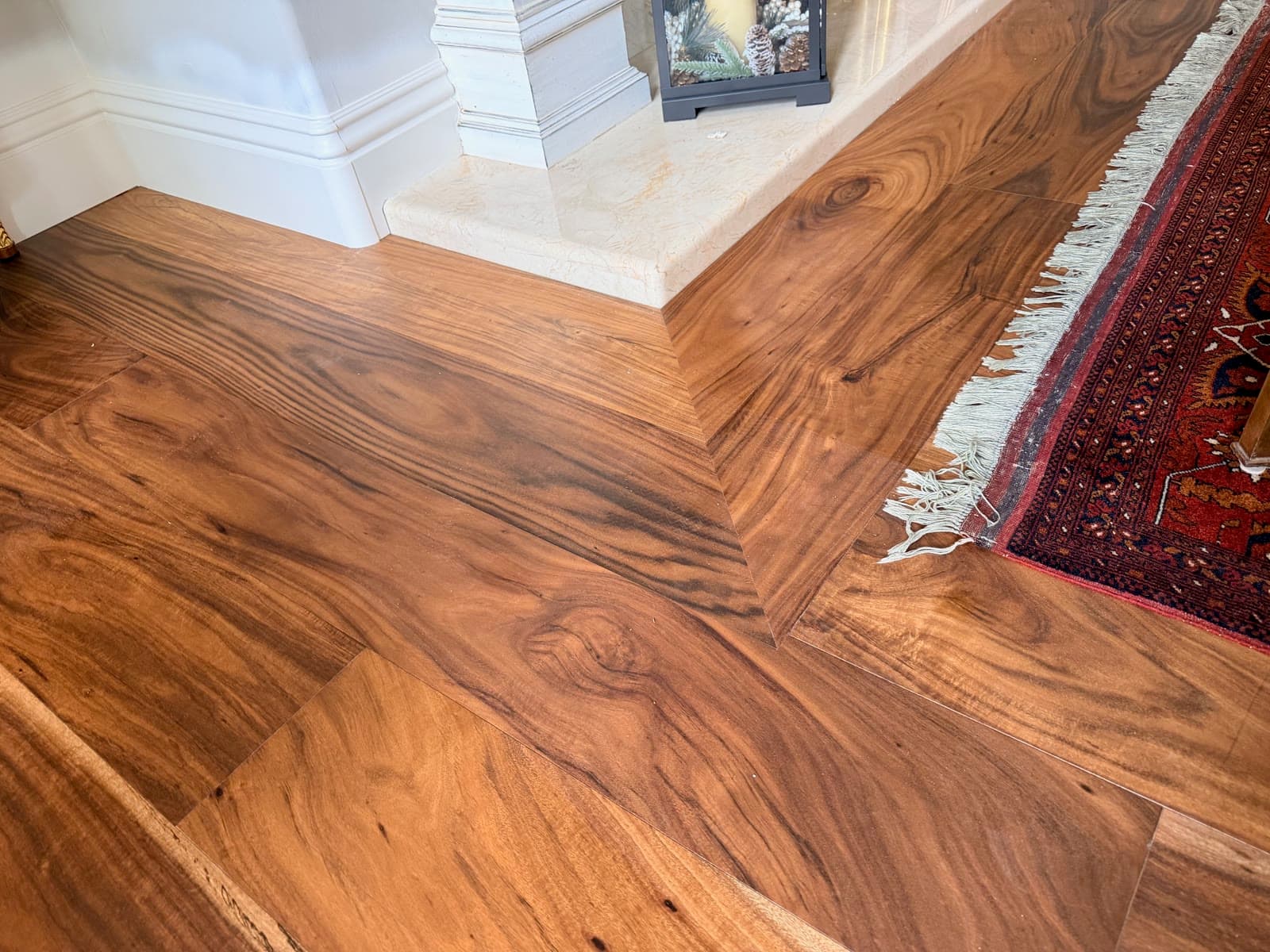
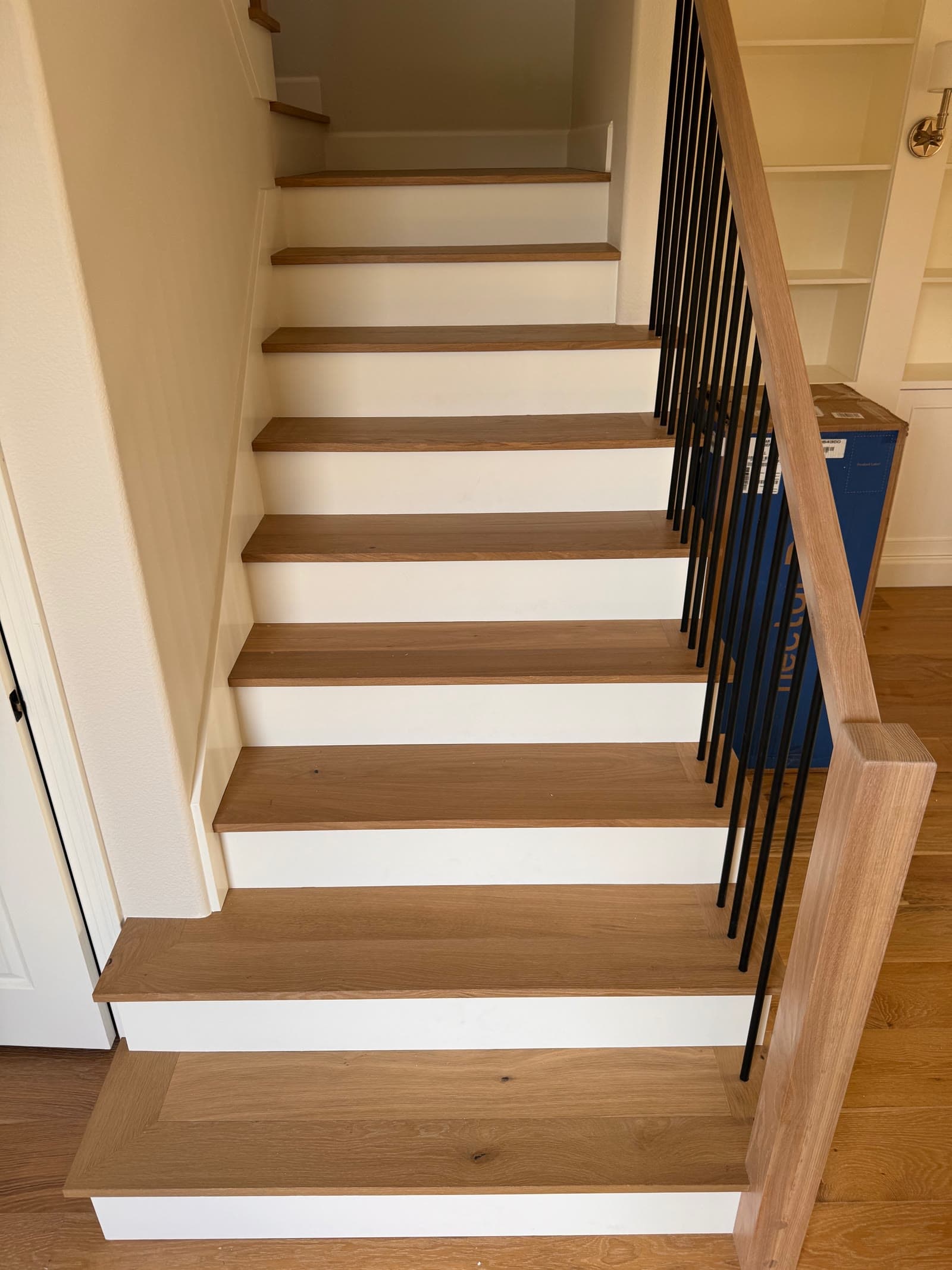
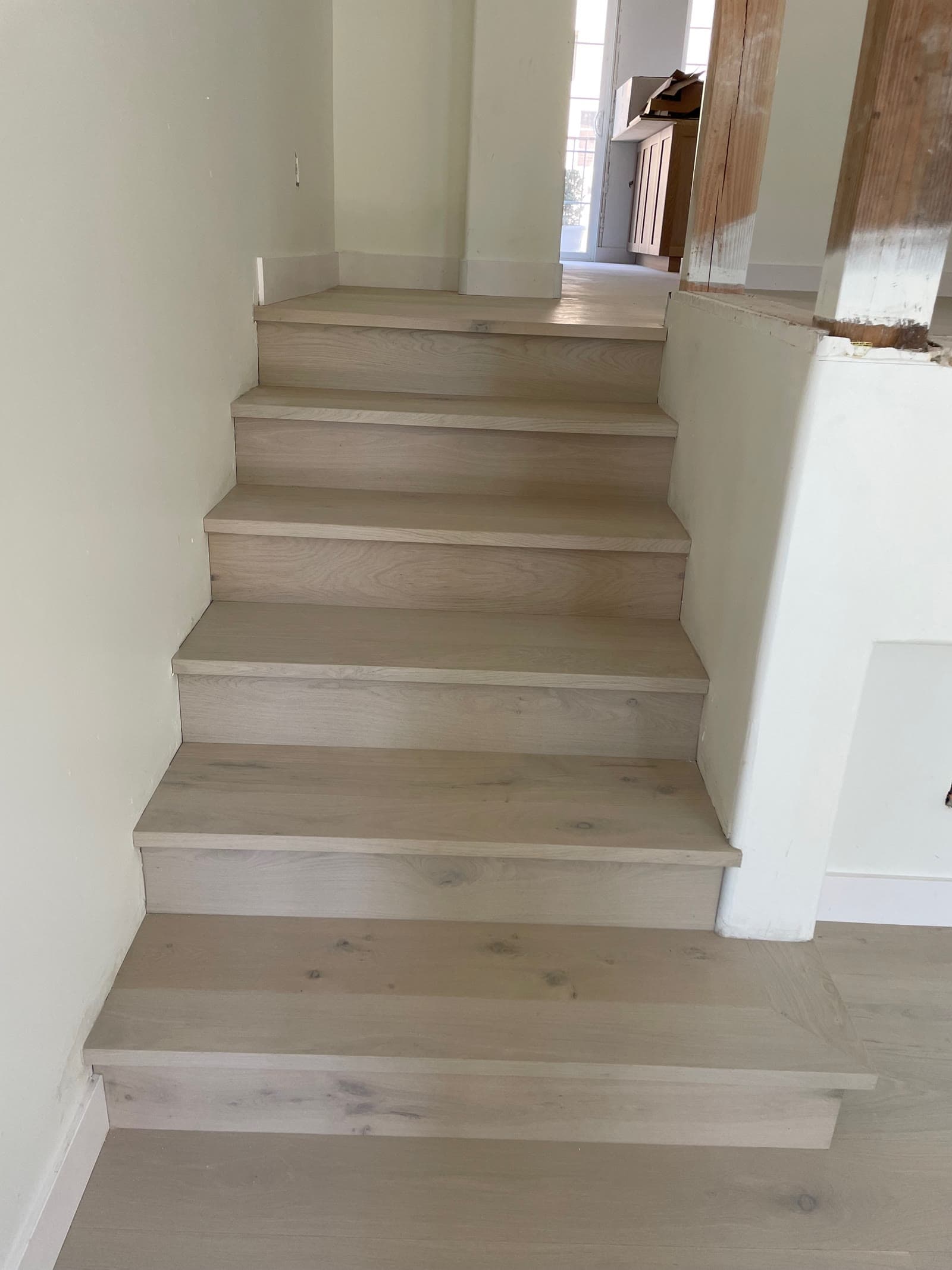
Most of these houses were built the same way
Carmel Valley went up fast, mostly between the late 1980s and the mid 2000s. Whole streets share a handful of floor plans. Pacific Highlands Ranch came later and is newer still.
That means we have often worked in your exact layout before. We know where the hallway narrows, how the stair landing is framed, and where the builder put the tile.
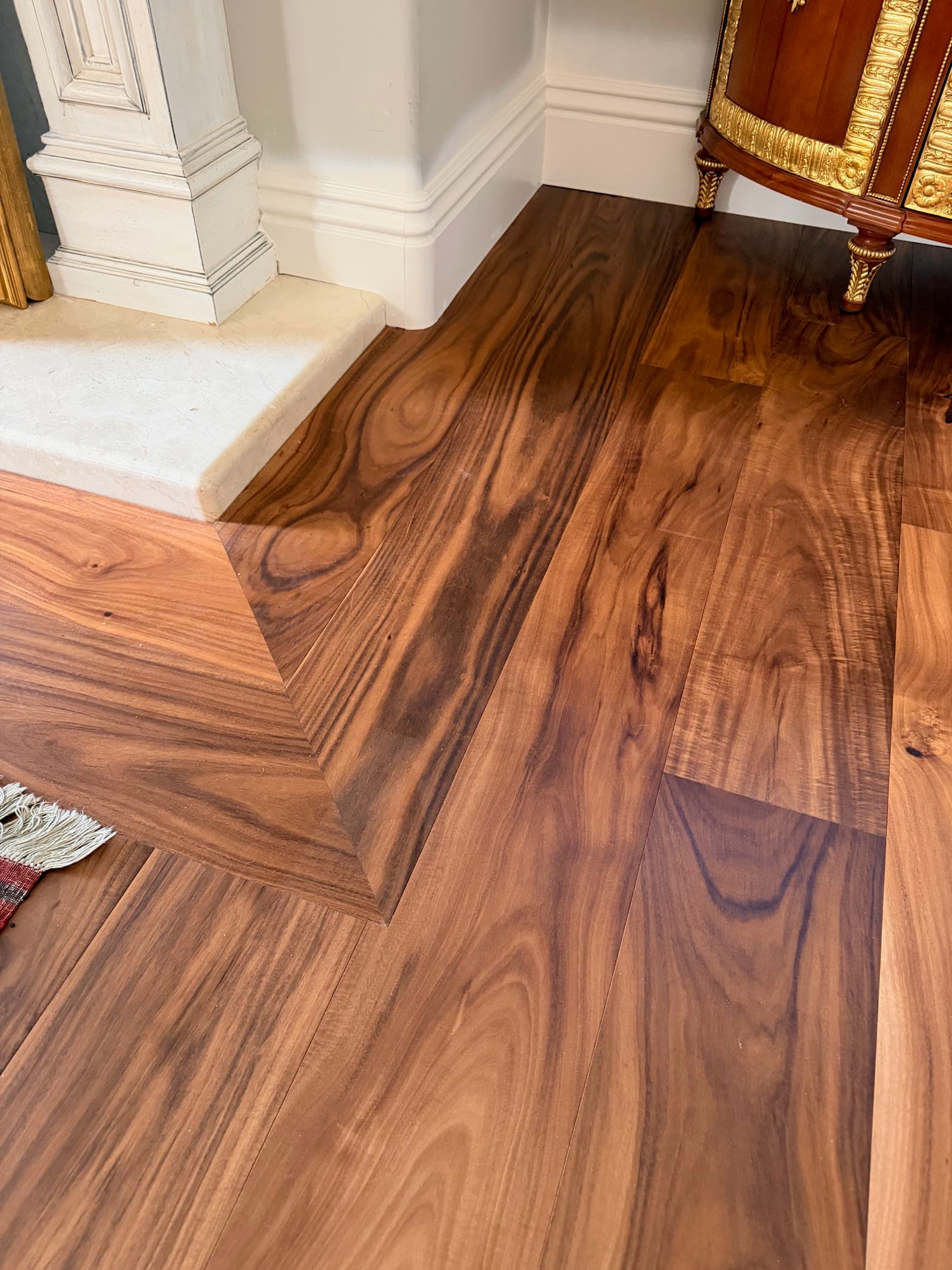
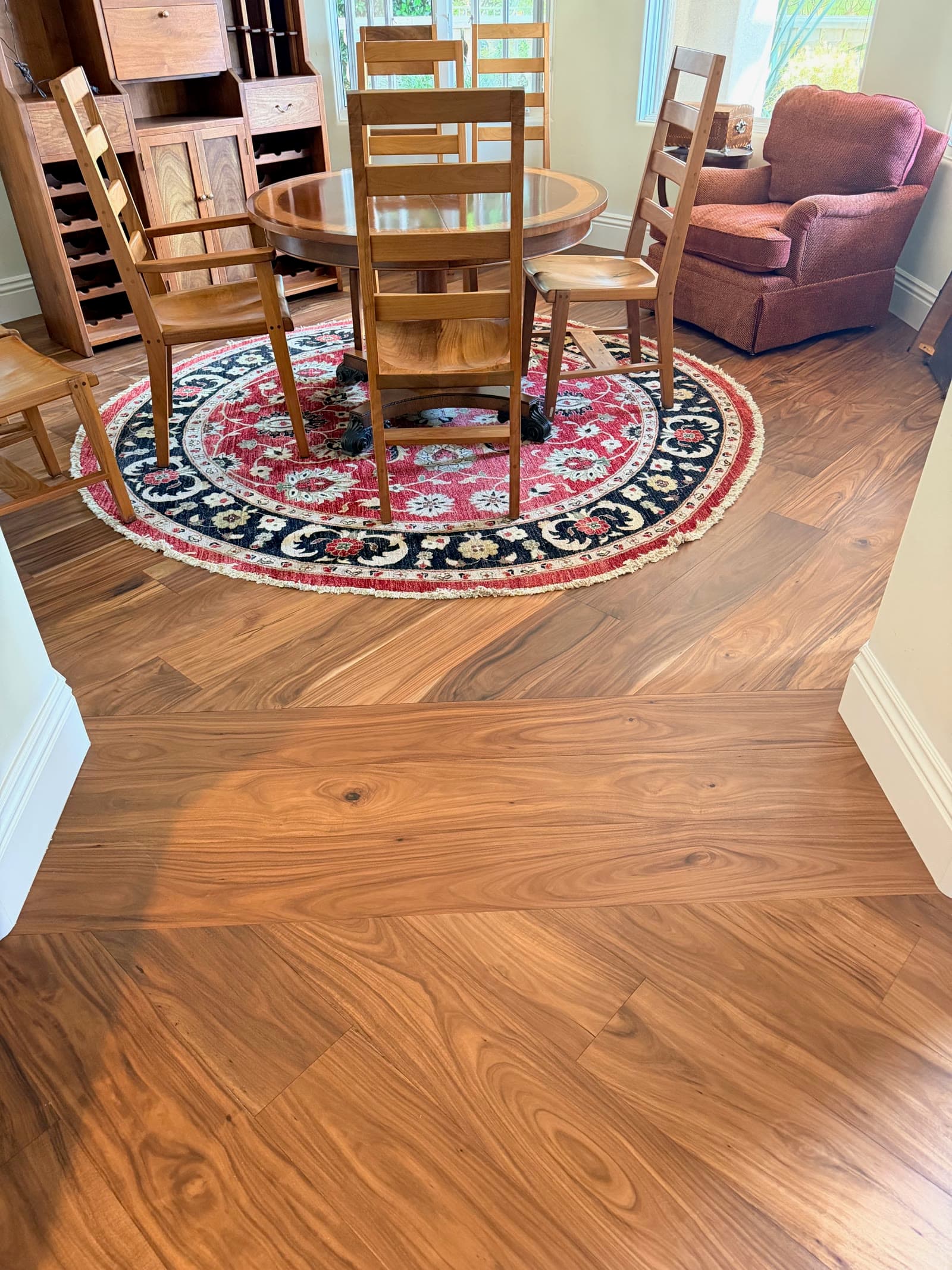
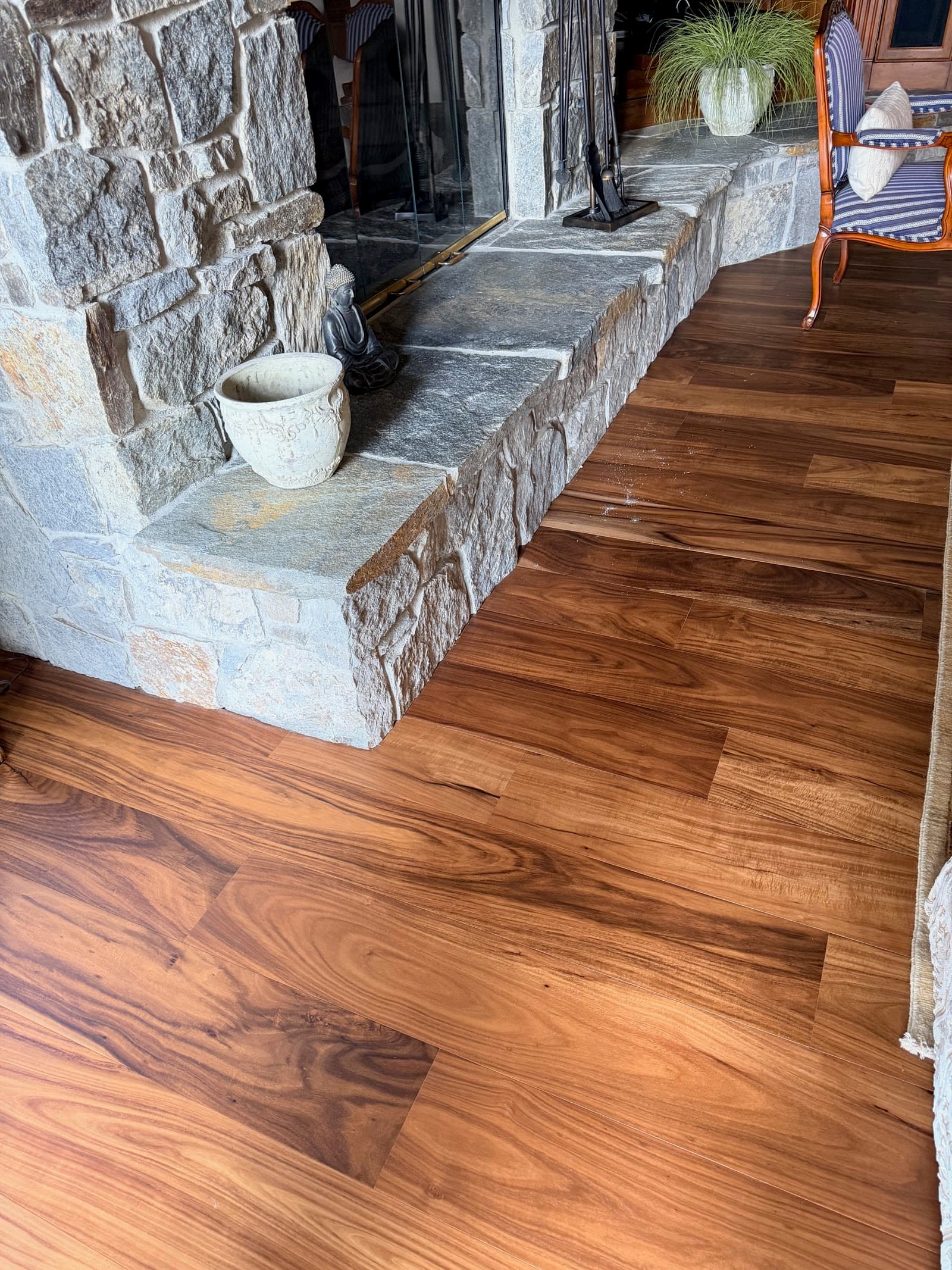
Most of these homes came with tile at the entry and carpet everywhere else. The most common job we do here is pulling both out and running one wood floor through the whole downstairs.
Post-tension slabs: nobody should nail into your floor
A lot of homes built here after the mid 1990s sit on post-tension slabs. There are steel cables running through the concrete under high tension.
You can't nail or drill into that slab. Hitting a cable is dangerous, and the repair is expensive. Any installer who wants to shoot fasteners into your slab hasn't checked what is under it.
So downstairs floors here get glued down or floated. That's not a shortcut. It's the only correct way to do it, and it changes which products make sense before we ever talk about color.
Wood upstairs sounds different than carpet
Almost every house here is two stories, and a lot of people want the carpet gone from the upstairs bedrooms and hallway.
Wood on a second floor carries sound. Footsteps get louder in the room below. Before we lay anything, we screw the subfloor down to stop squeaks, then add an underlayment rated to cut sound.
Skip that step and the floor still looks fine. You just hear every trip to the bathroom at 6 a.m.
Carmel Valley flooring questions
Can hardwood be nailed down in a Carmel Valley home?
Usually not, and it should not be attempted without checking. Most of Carmel Valley was built from the late 1980s onward on post-tension slabs, which carry tensioned steel cables. Driving a fastener into one is dangerous and expensive. Engineered plank glued to a ground, leveled, moisture-tested slab is the standard answer, and a floating floor over the right underlayment is the other.
Will wood floors upstairs make the house louder?
They change the sound rather than simply increasing it — footsteps carry differently over wood than over carpet. The fix is underlayment chosen for sound rather than for cushion, and it is decided before material is ordered, not after the floor is in. Carmel Valley homes with rooms over rooms are exactly where this matters, and it is worth raising at the estimate.
What is the most common Carmel Valley flooring job?
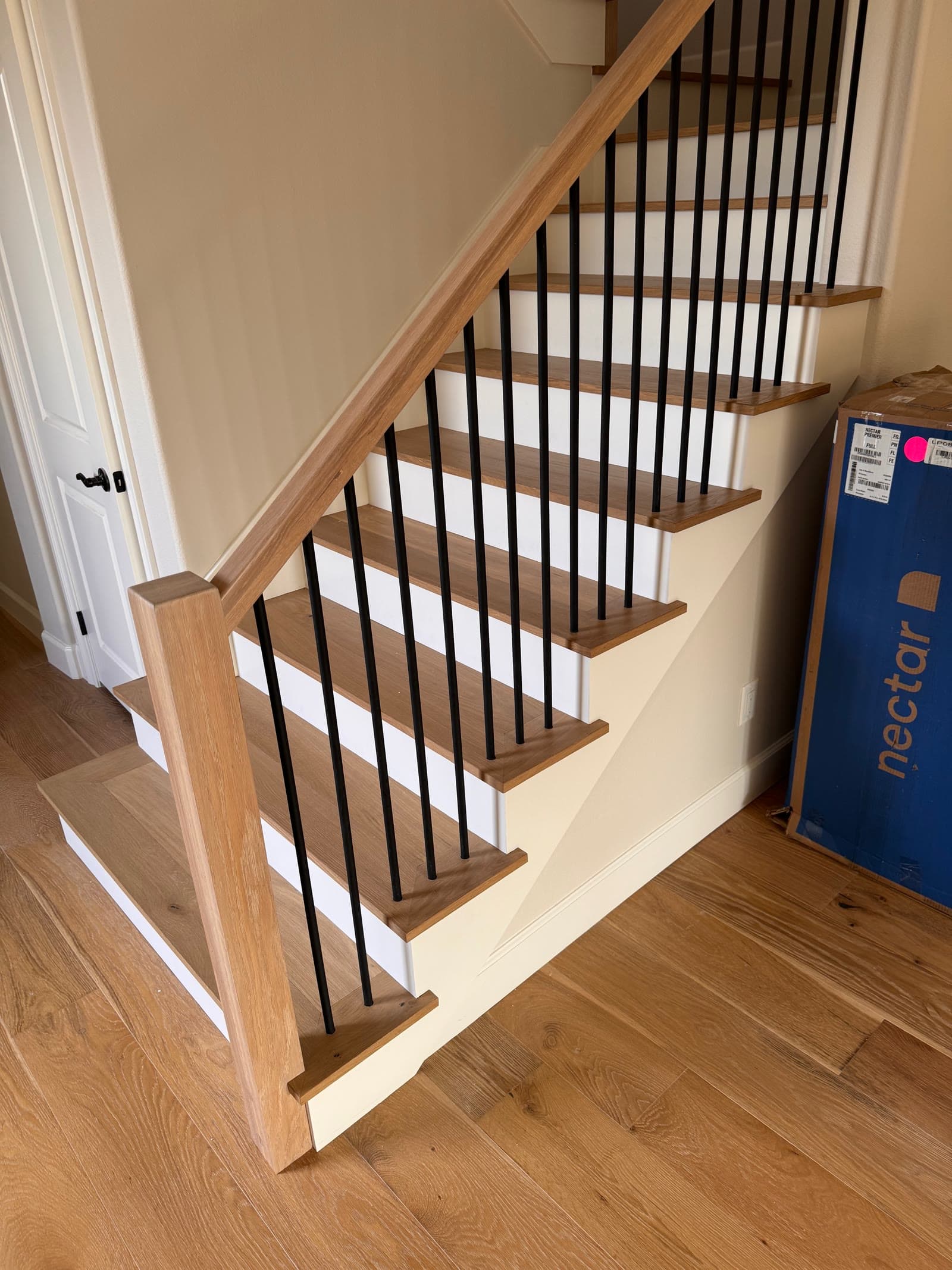
Replacing the original builder-grade flooring from the 1990s and 2000s with wide-plank engineered hardwood, and converting carpeted staircases to matching wood treads. Because so much of the neighborhood was built by the same handful of builders in the same decade, the houses share subfloor construction, slab type, and stair geometry — which means the surprises are largely known ones.