What made it difficult
Most floors that fail were let down by what was underneath them, not by the wood on top. Flat, dry and clean is the whole standard, and getting there is the boring part and most of the job.
Slab moisture is the half of it nobody can see. Damp driving up through concrete will cup a wood floor within a few months, and it voids most manufacturers' warranties — which is why the readings are taken with professional meters before anything is ordered, and written down.
Documented readings matter beyond the job. If a manufacturer ever disputes a warranty claim, numbers recorded from proper equipment are the evidence that settles it. Most installers cannot produce them.
How it was done
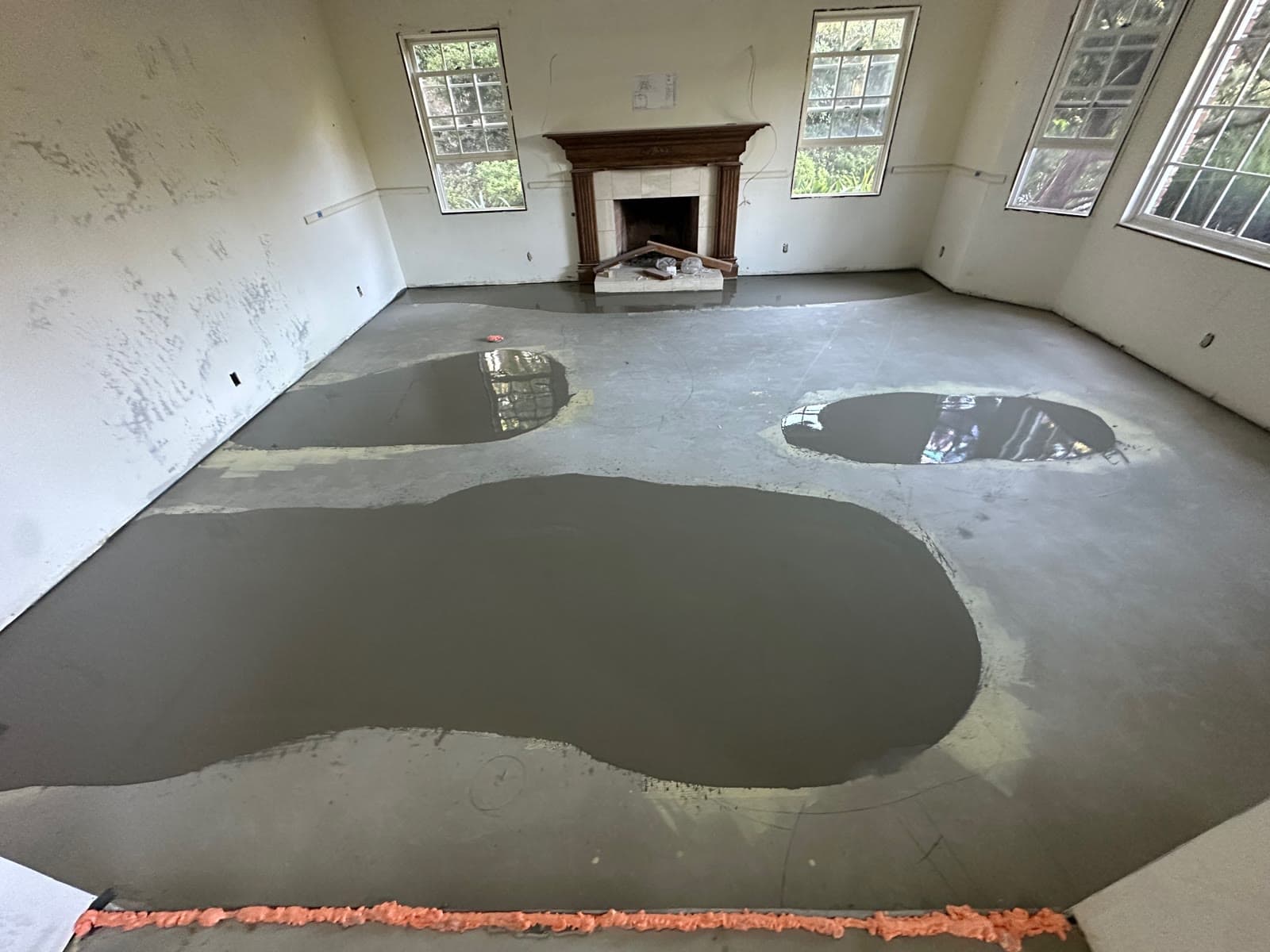
Self-leveling compound into the low spots, high spots ground down, until the floor measures inside the manufacturer's flatness tolerance.
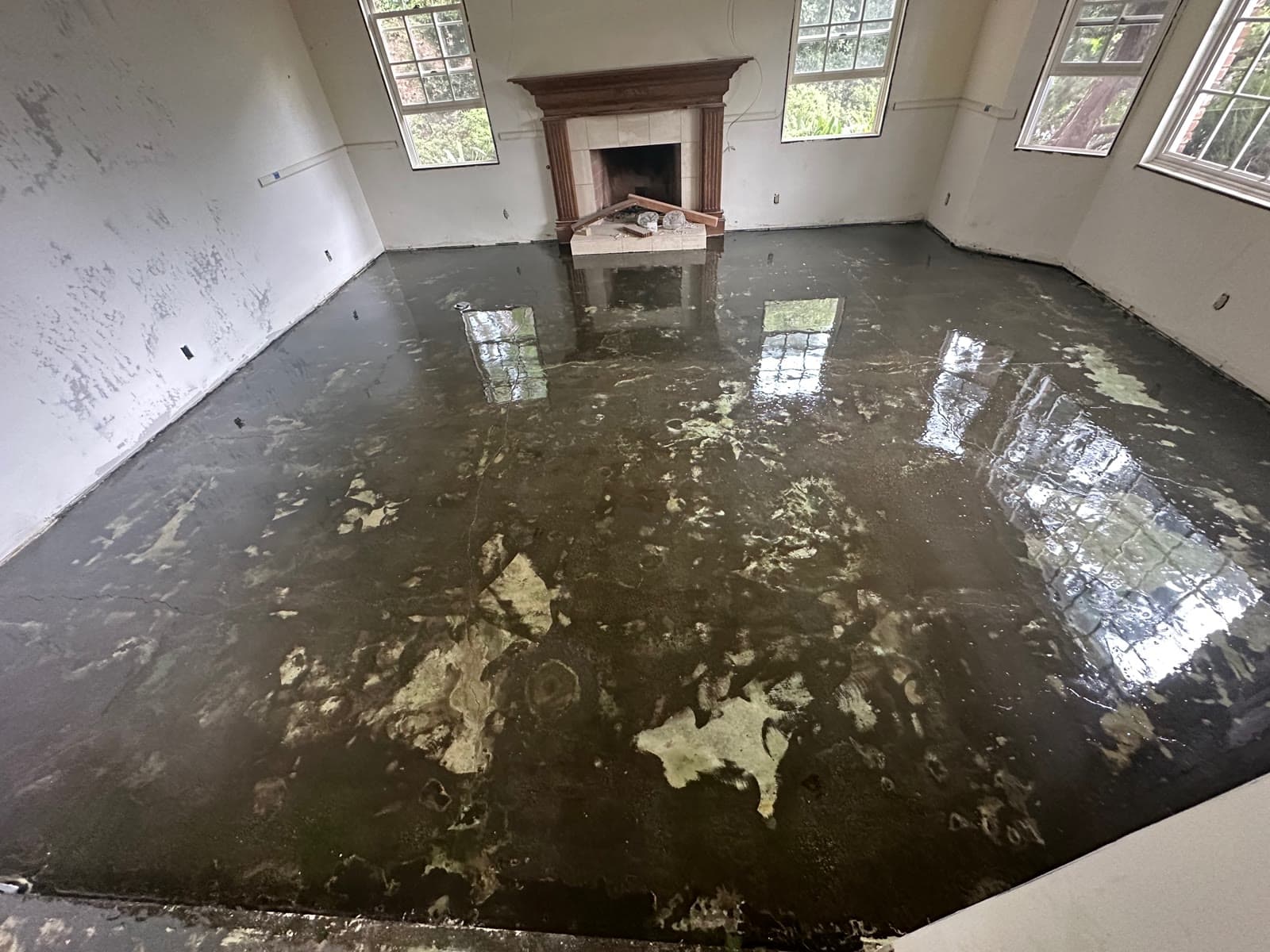
A moisture barrier troweled over the leveled slab — the layer nobody ever sees and the one that decides whether the floor is still flat in five years.
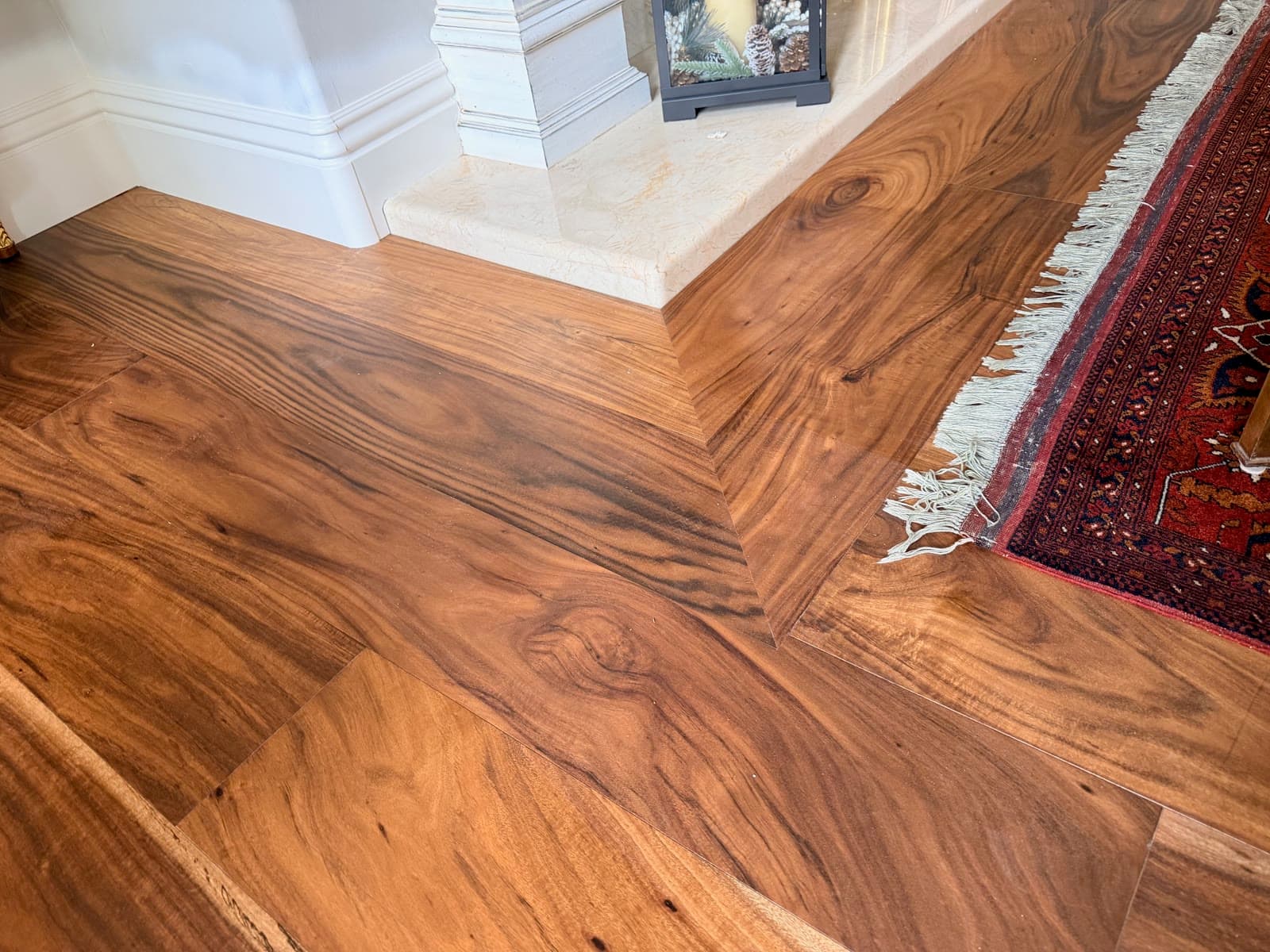
Then the plank, laid over a substrate that has been measured rather than assumed.
How it came out
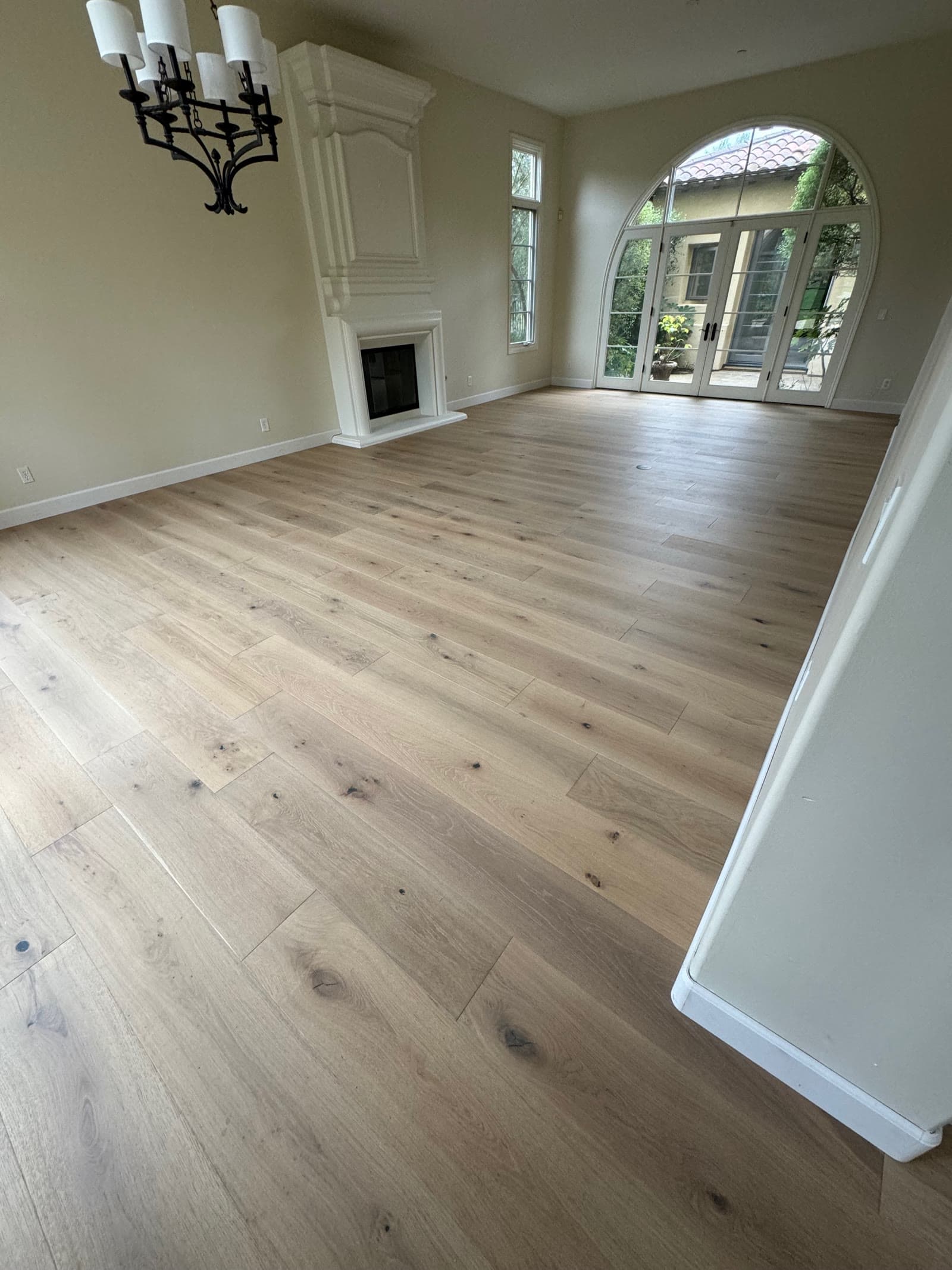
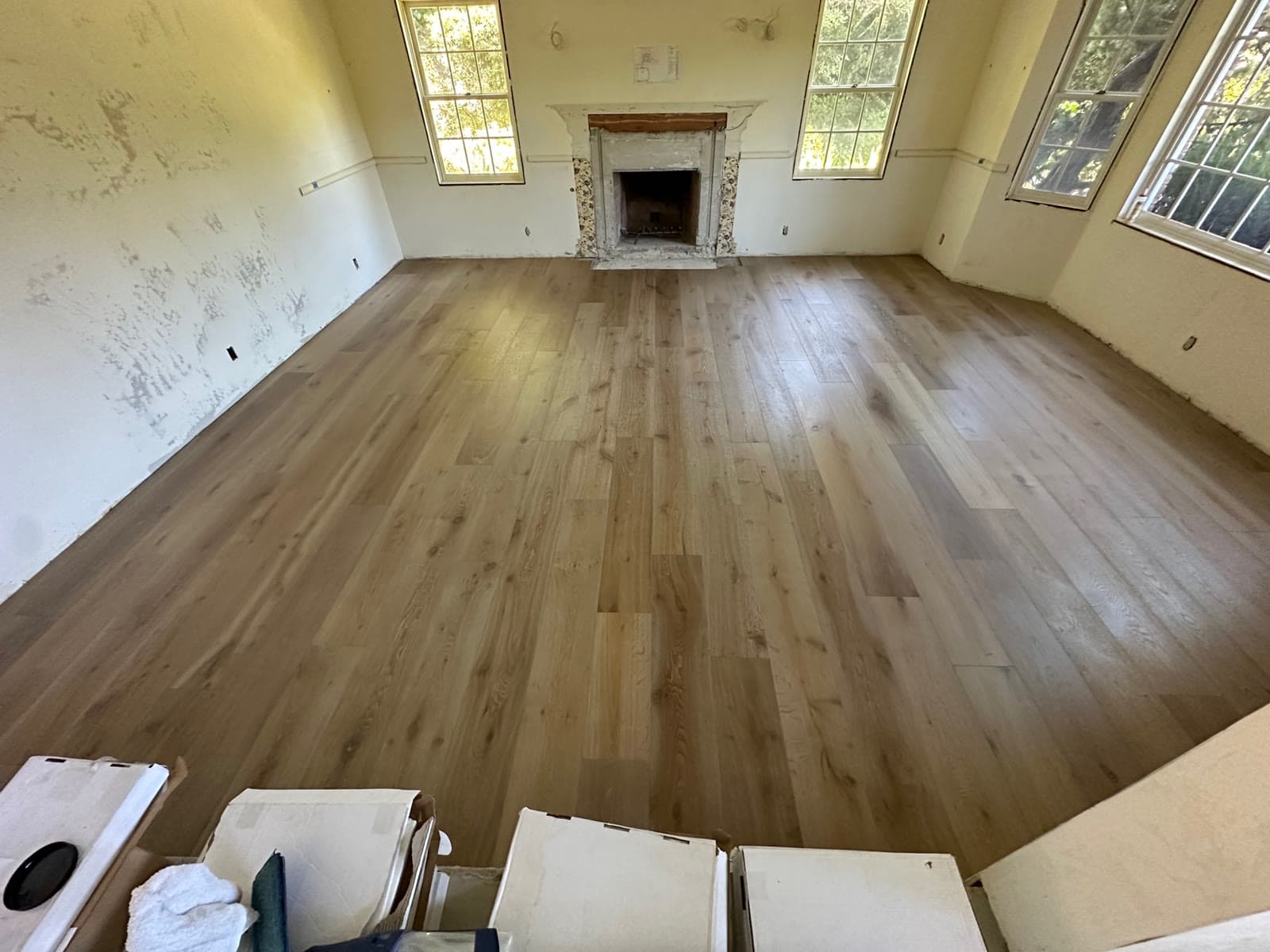
Natural light wide-plank white oak through a period room with its original fireplace.
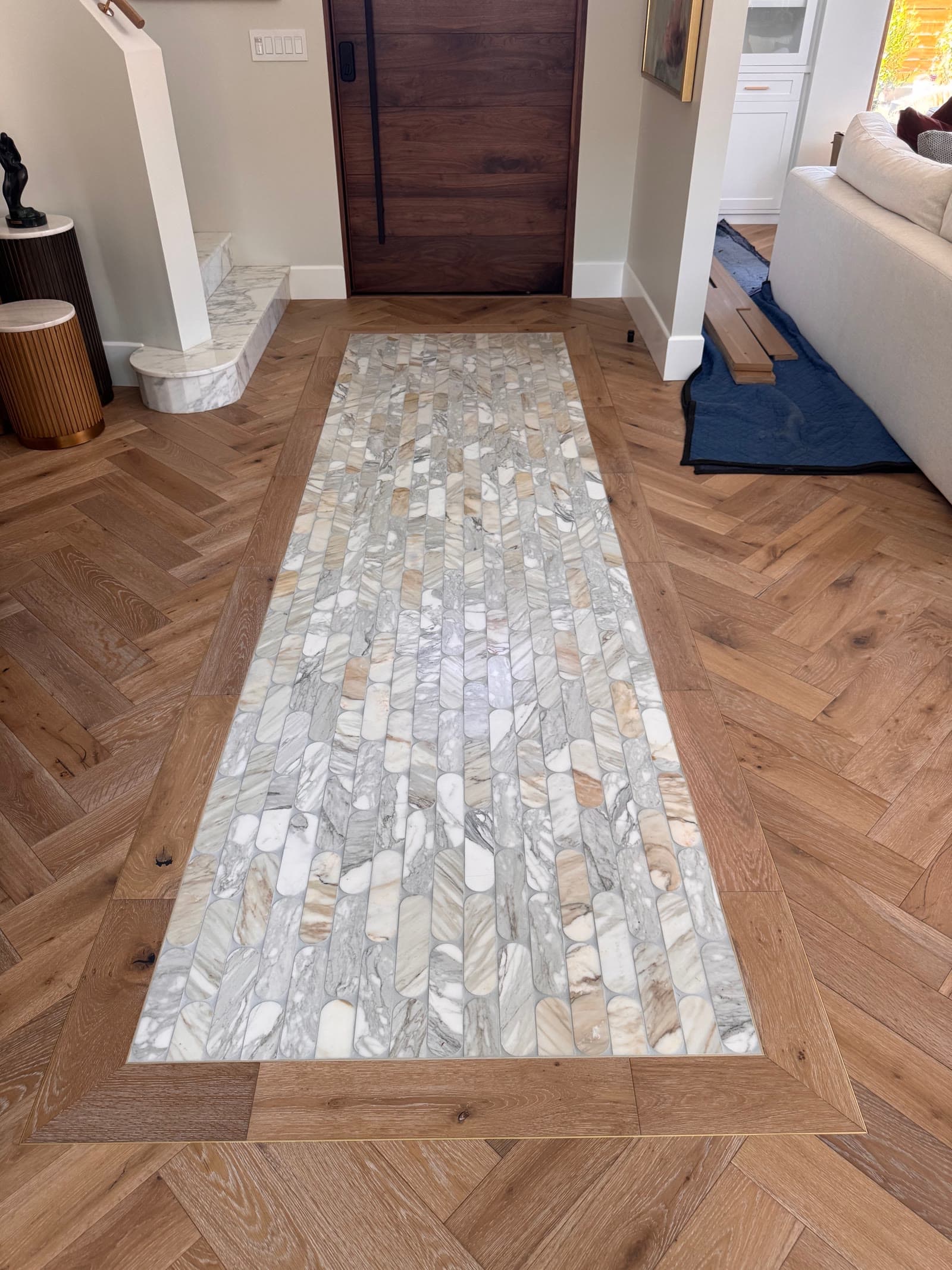
The three photographs are the argument this site keeps making about preparation, in the one form that cannot be argued with.