
Why stairs cost more per square foot than anything else
A room is the same job over and over. A staircase is fourteen separate custom pieces. Each one gets measured on its own, because the frames are almost never square to each other and no two treads come out the same.
Every tread has to be traced to fit the trim board beside it. The front edge has to match the floor it meets. And the fit has to be tight enough that it never squeaks. Squeaks come from gaps, and gaps come from cutting one step to match the one below it.
The floor area is small. The hours aren't. That's why a staircase gets quoted on its own instead of lumped in with the rooms.
Carpet to hardwood conversions
Pull the carpet off a staircase and you usually find rough framing and cheap treads underneath. The builder knew nobody would ever see them.
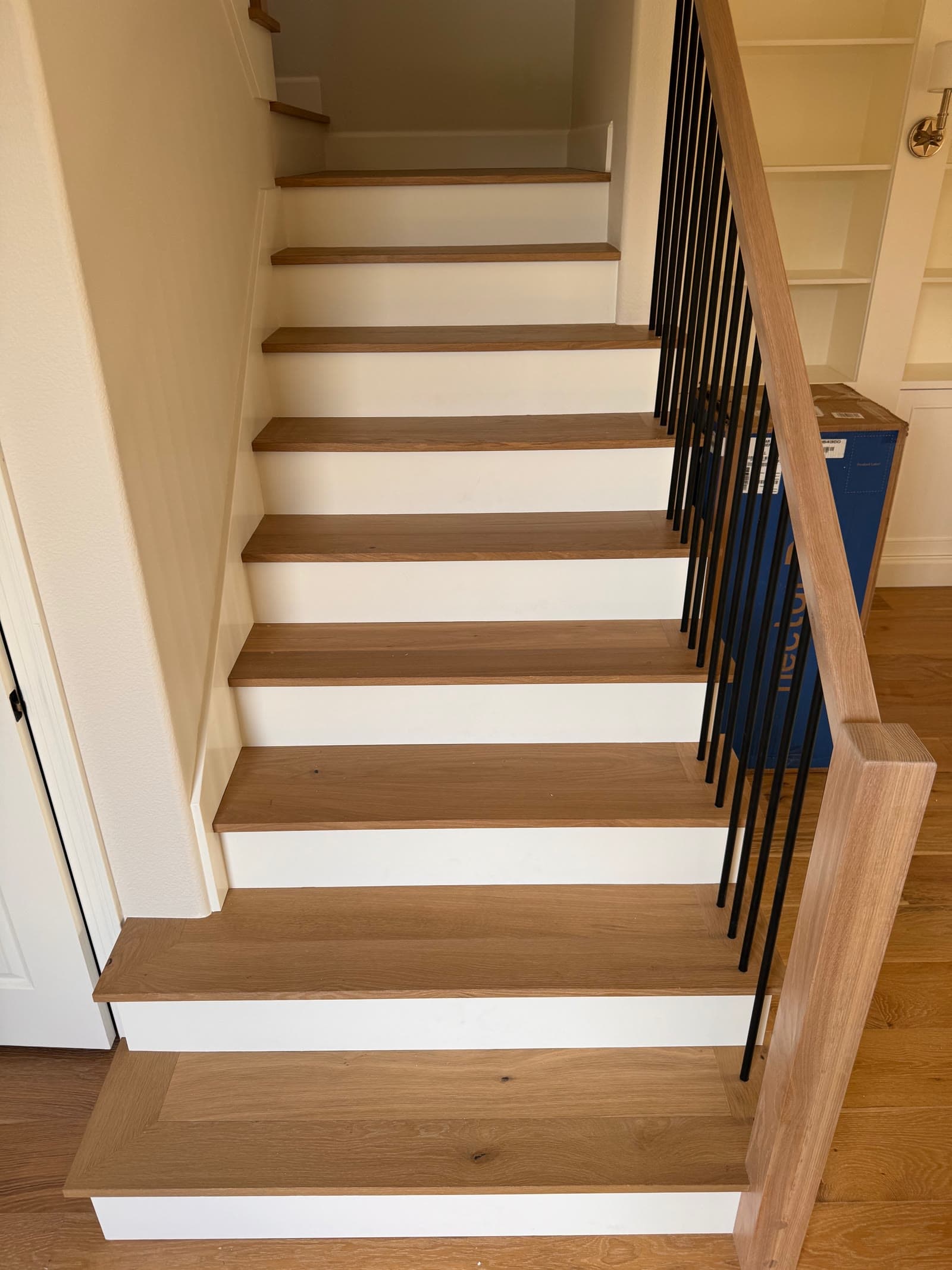
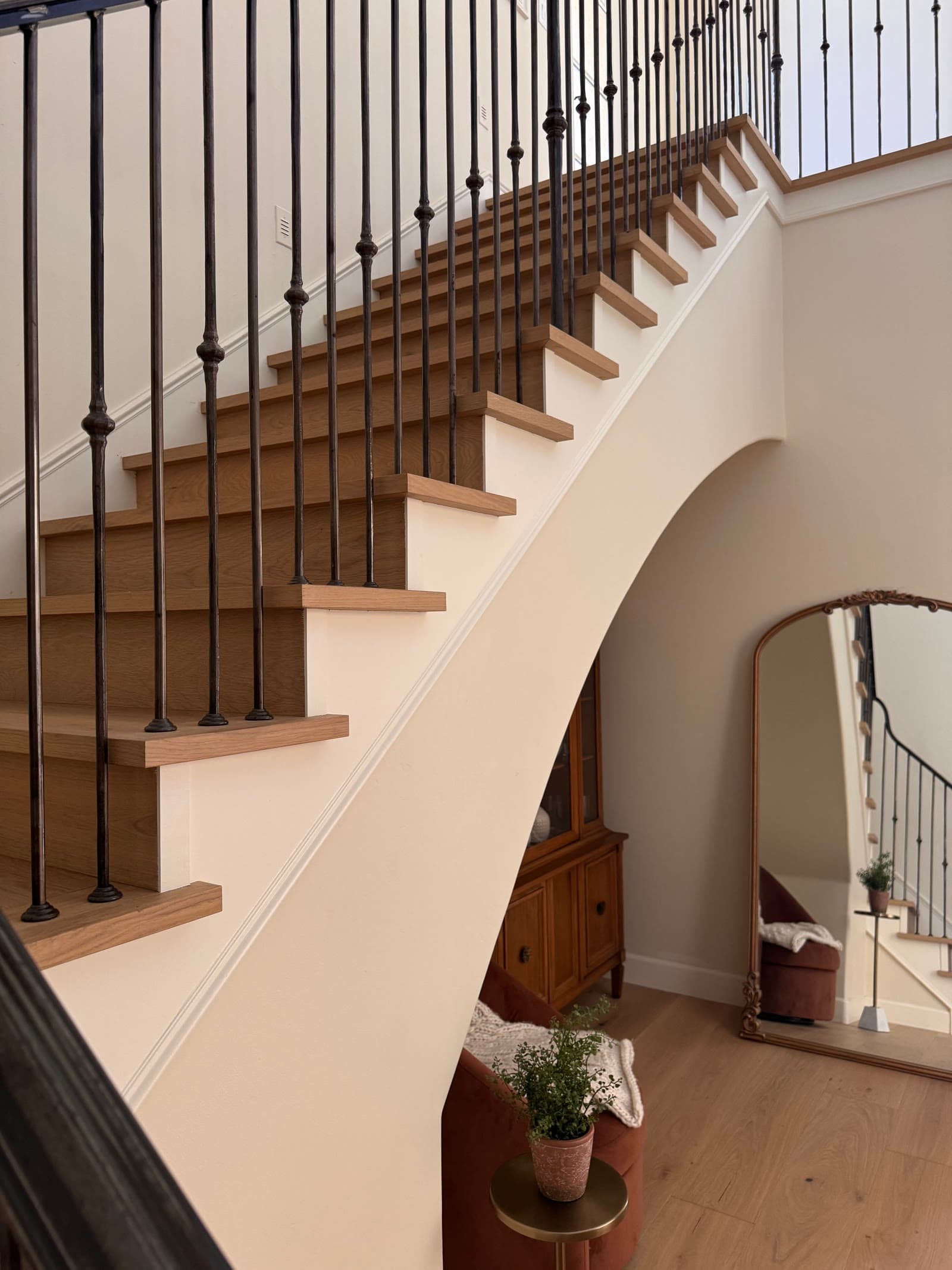
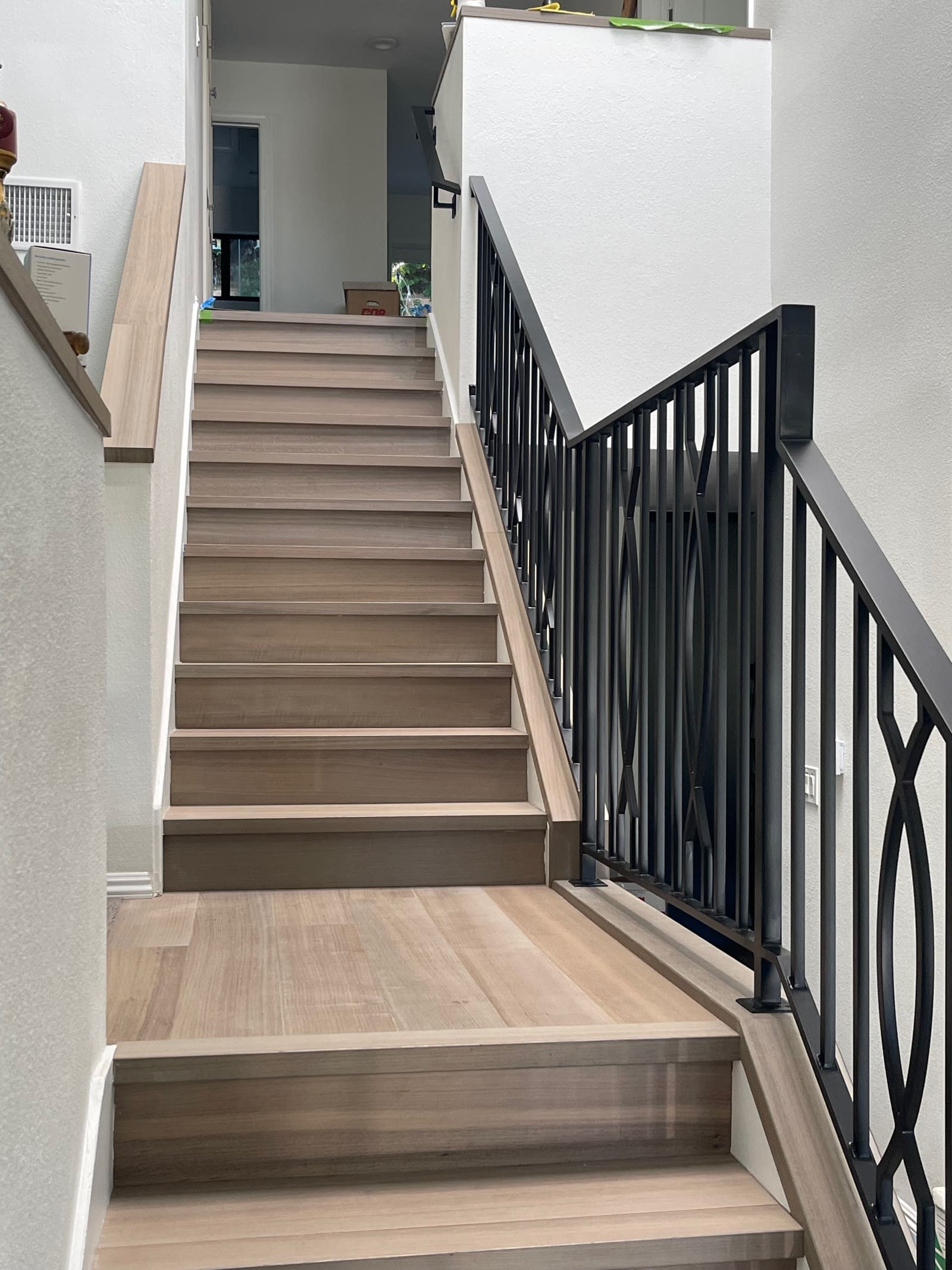
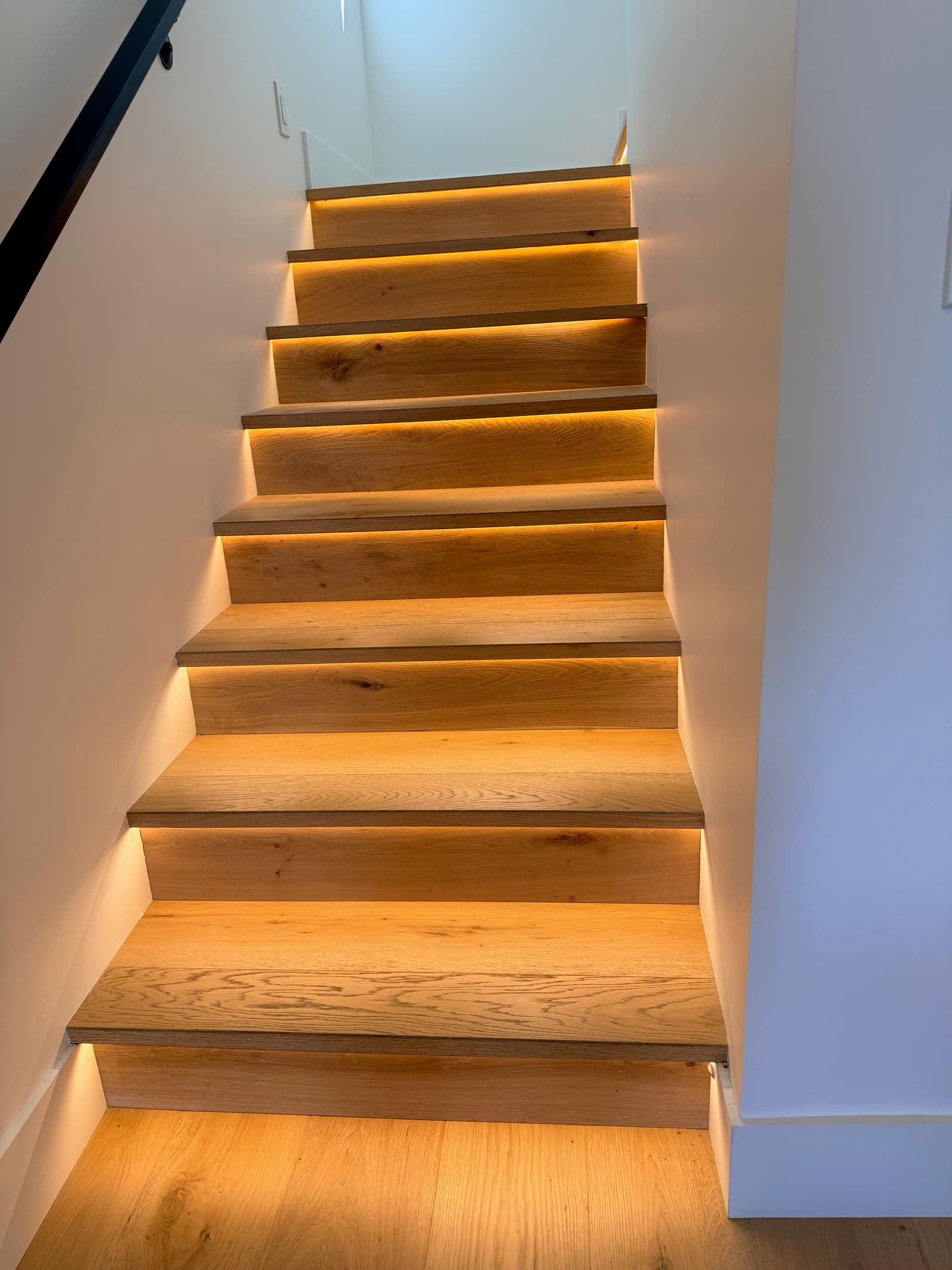
So this is a rebuild of everything you can see, not a cover-up. New treads and risers go over the existing frame, and the front edges are matched to the floor at the top and bottom.
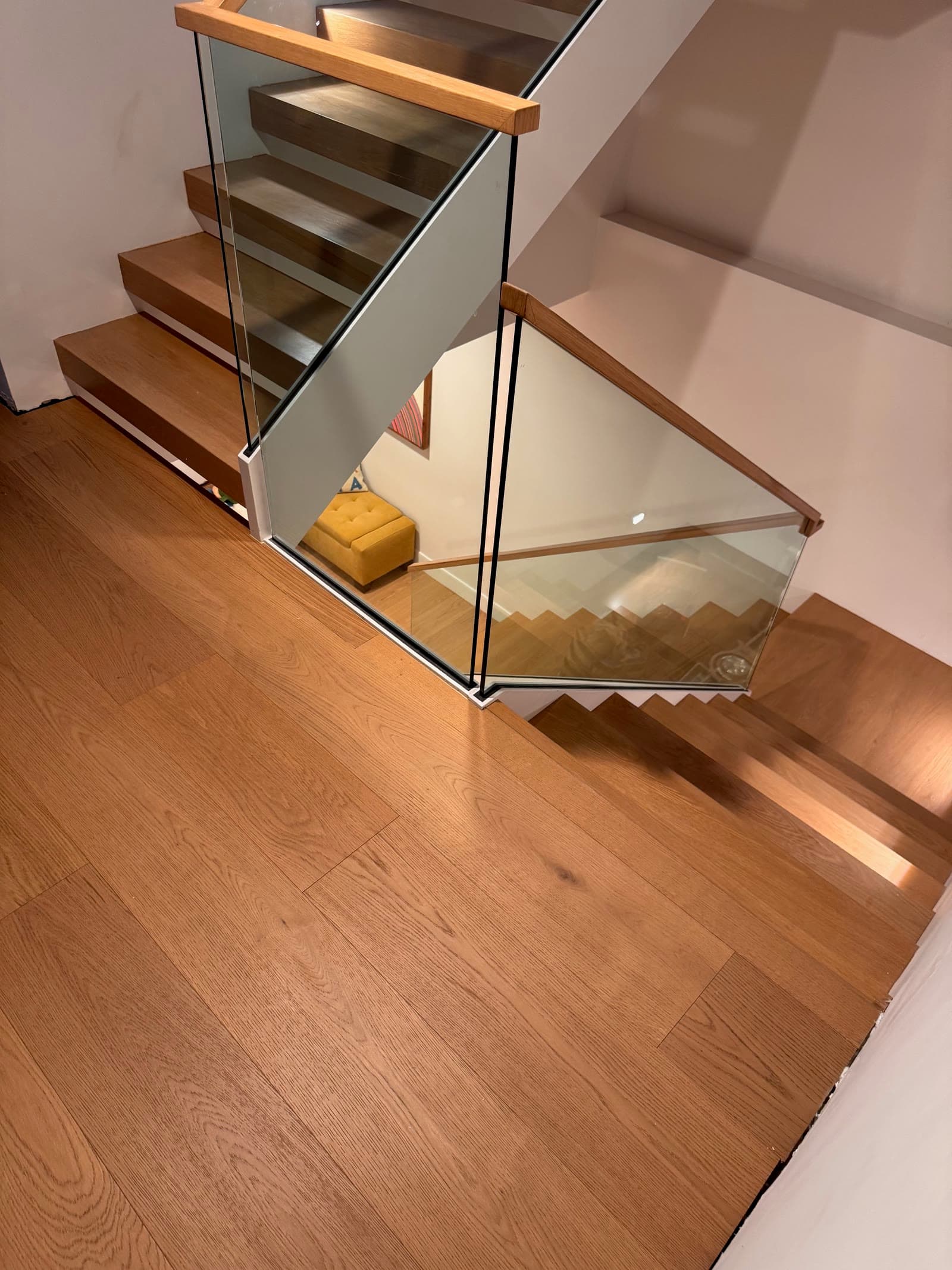
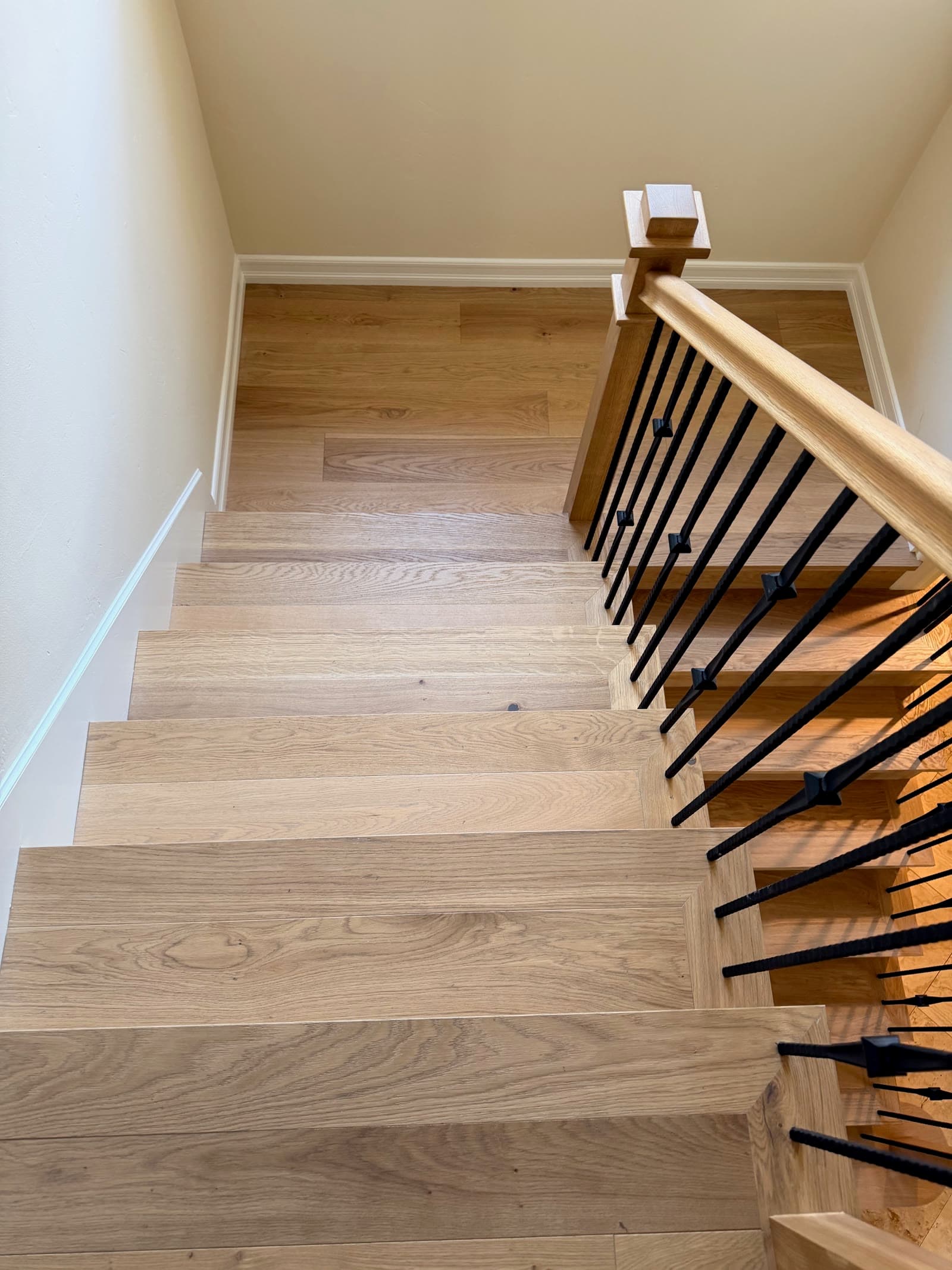
Open sides, landings, and the wedge-shaped steps that go around a turn all add work. Those wedge steps are the worst of it. Each one needs its own template.
Code, and the part nobody mentions
Laying new treads on top of an old staircase changes the height of the steps. It shows up most at the very top and very bottom, where there's no step above to soak up the difference.
California code limits how much step heights can vary in one flight. An uneven bottom step breaks that rule, and it's the most common reason people fall on stairs at home.
We plan for this before we cut anything. It's a normal part of stair work, and a normal thing to miss for someone who mostly lays rooms.
What drives the cost
We quote after walking the space, because the things that move the number are things nobody can see in a photo. Here is what they are, in the order they matter, so you know what will drive your estimate before anyone comes out.
- The number of steps
- A staircase is never quoted off a square-foot number, because every step is its own custom piece. Count the steps and you have the unit the job is actually priced in.
- What is included per step
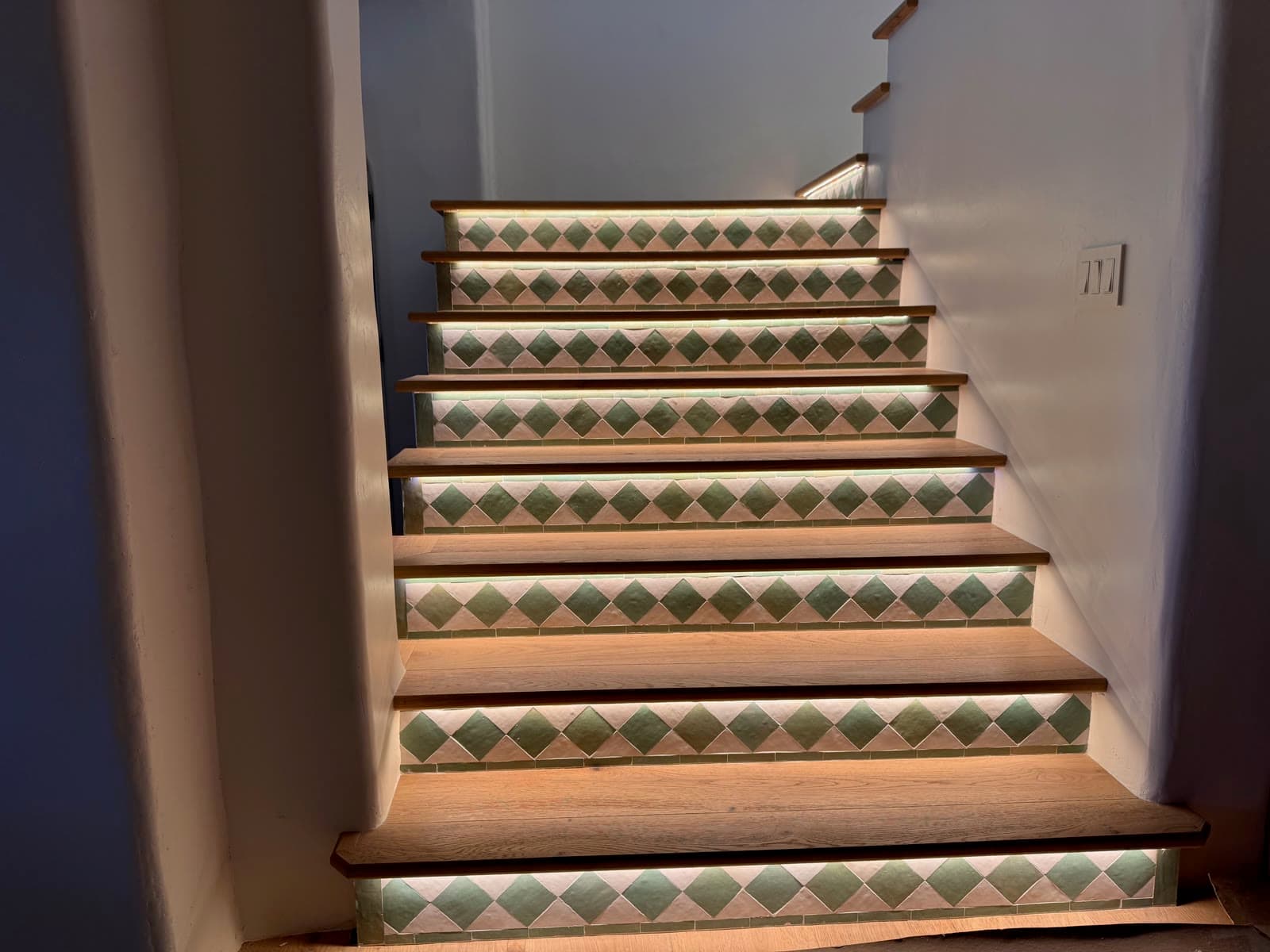
- A tread only, or a tread and riser, or a tread, riser, nosing, and skirt board are three different jobs. A typical 14-step flight done fully is 14 treads, 14 risers, the nosings, and two skirt boards — roughly forty separate pieces, each cut to its own measurement.
- Open sides, landings, and winders
- A tread with an exposed end needs a mitered return so no end grain shows. Winders — the wedge-shaped treads on a turn — are each a unique shape and are the slowest pieces on any staircase.
- Riser height variance
- California code allows very little variation in riser height within one flight. Carpet hides a discrepancy; a hard tread does not. Where a house has settled, correcting it is real work and it belongs in the estimate rather than appearing mid-job.
- Matching an existing floor
- Cutting treads from the same wood and finishing them to match a floor that has already aged means matching to how it looks now, not to a fresh sample.
Numbers you can hold us to
- Stairs cost more per square foot than any other flooring work, and the reason is that there is no field — it is all edges and all custom cuts.
- Every tread is scribed to actual contact with the stringer rather than cut to a measurement, and set with both adhesive and mechanical fastening. A squeak that appears immediately after installation is a fit problem, not settling.
- Some prefinished floors sell matching treads from the same run, and we check for those before fabricating.
How long it takes
A standard straight flight of 14 steps takes 2 to 4 working days. Landings, open sides, and winders add to that, and a staircase with all three can run a week.
We do not publish prices, because a real number needs a real look at your floor. Estimates are free and in person. Stone measures, takes the moisture readings, and writes it up itemized before anything is ordered.
Before you decide
Stairs questions
How much does it cost to replace carpeted stairs with hardwood?
Every step is its own custom piece, so a staircase is never quoted off a square-foot number. What matters is how many steps there are, the wood you pick, whether risers and side trim are part of it, and whether the stairs have open sides, landings, or wedge-shaped turns. Stone measures the staircase, then quotes it.
Can stair treads match my existing floor?
Usually yes. We can cut treads from the same wood and finish them to match. If your floor has been down a while, we match the stain to how it looks now, not to a fresh sample. Some prefinished floors also sell matching treads, and we check for those first.
Why do new stair treads squeak?
Squeaks are movement — a tread that's not fully bearing on the stringer, or one fastened without adhesive so it shifts under load. Preventing it means scribing each tread to actual contact rather than to a measurement, and using both adhesive and mechanical fastening. A squeak that appears immediately after installation is a fit problem, not settling.