
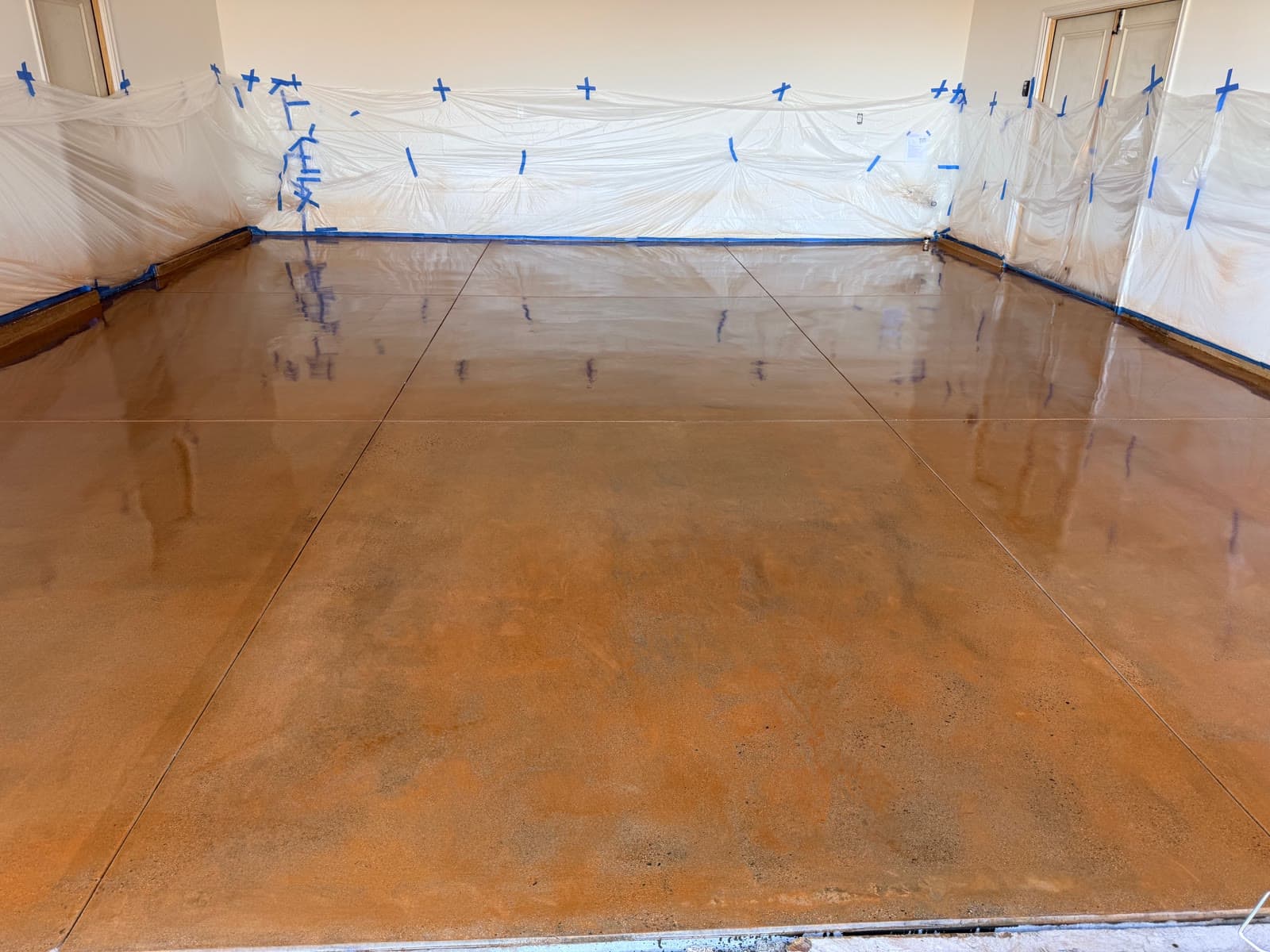
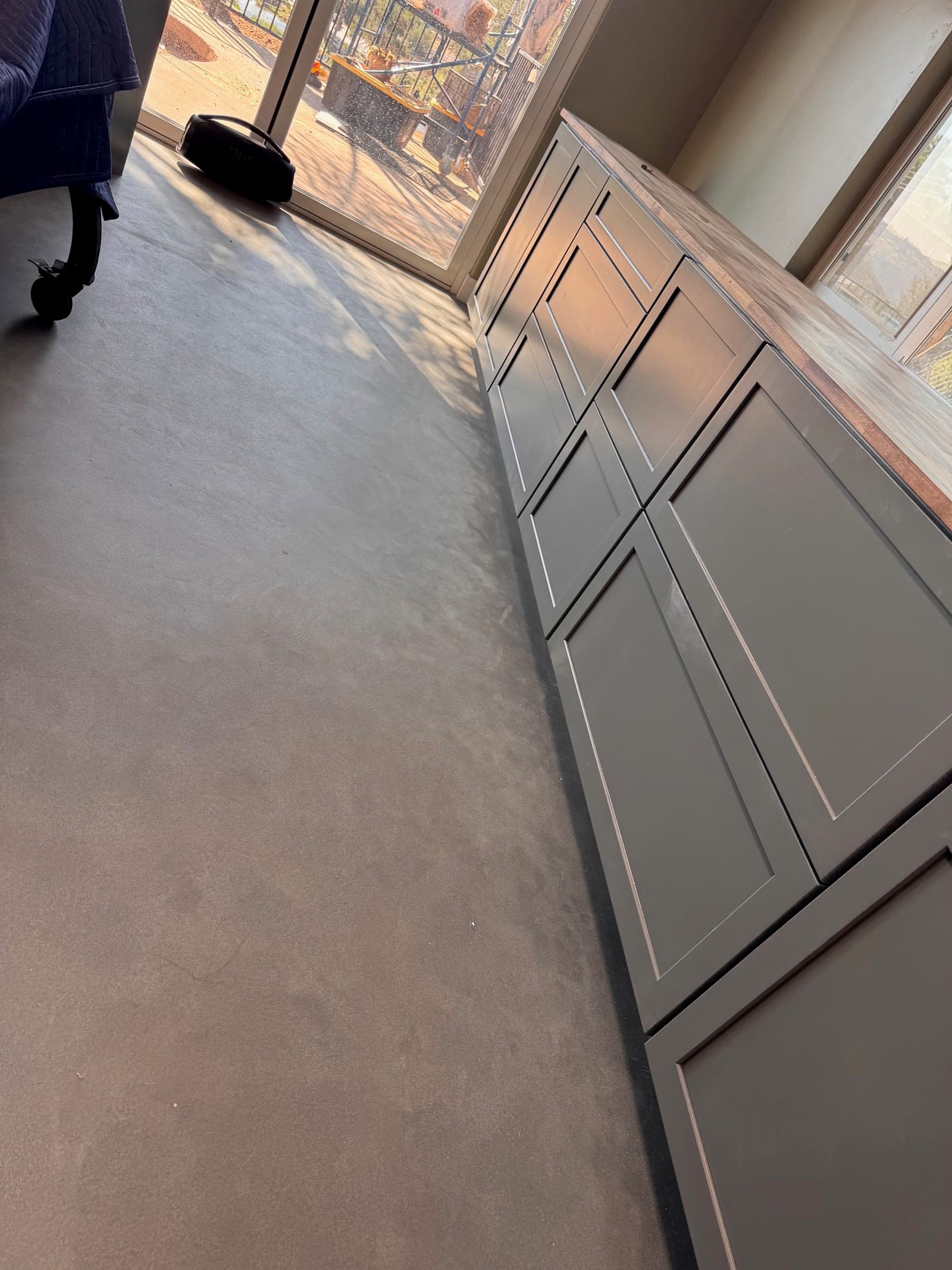
Polished concrete is not a coating
That difference matters. A coating is a separate material stuck on top, and anything stuck on top can come off. Polishing takes material away instead. We're smoothing the concrete you already have.
Partway through we put down a hardener. It soaks in and reacts with the concrete to toughen it from the inside. The shine comes from finer and finer grinding, not from a sealer brushed on at the end.
So you get a floor with nothing to peel, and its toughness comes from the slab that was already there.
Stain and seal is a different job from polishing
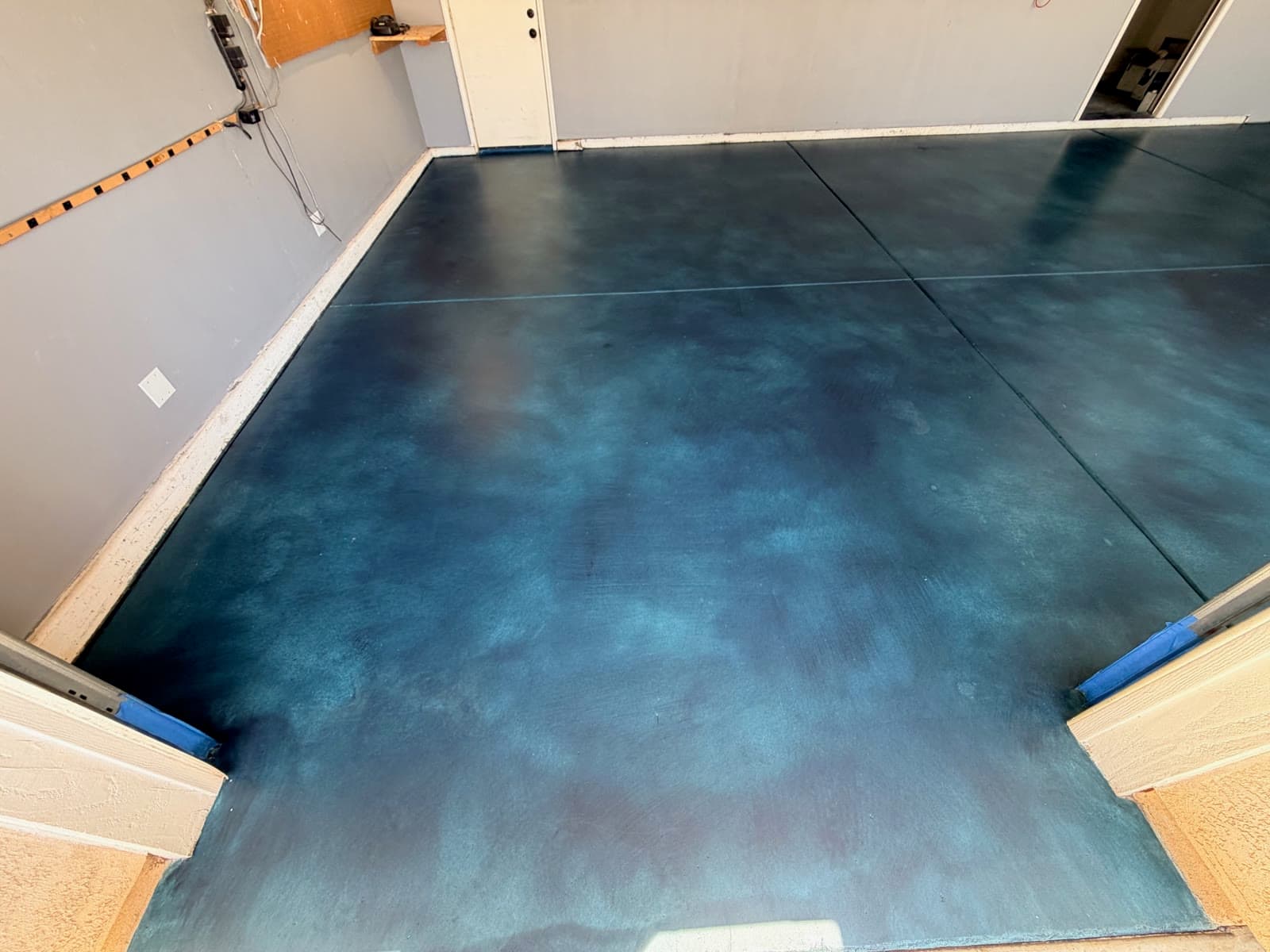
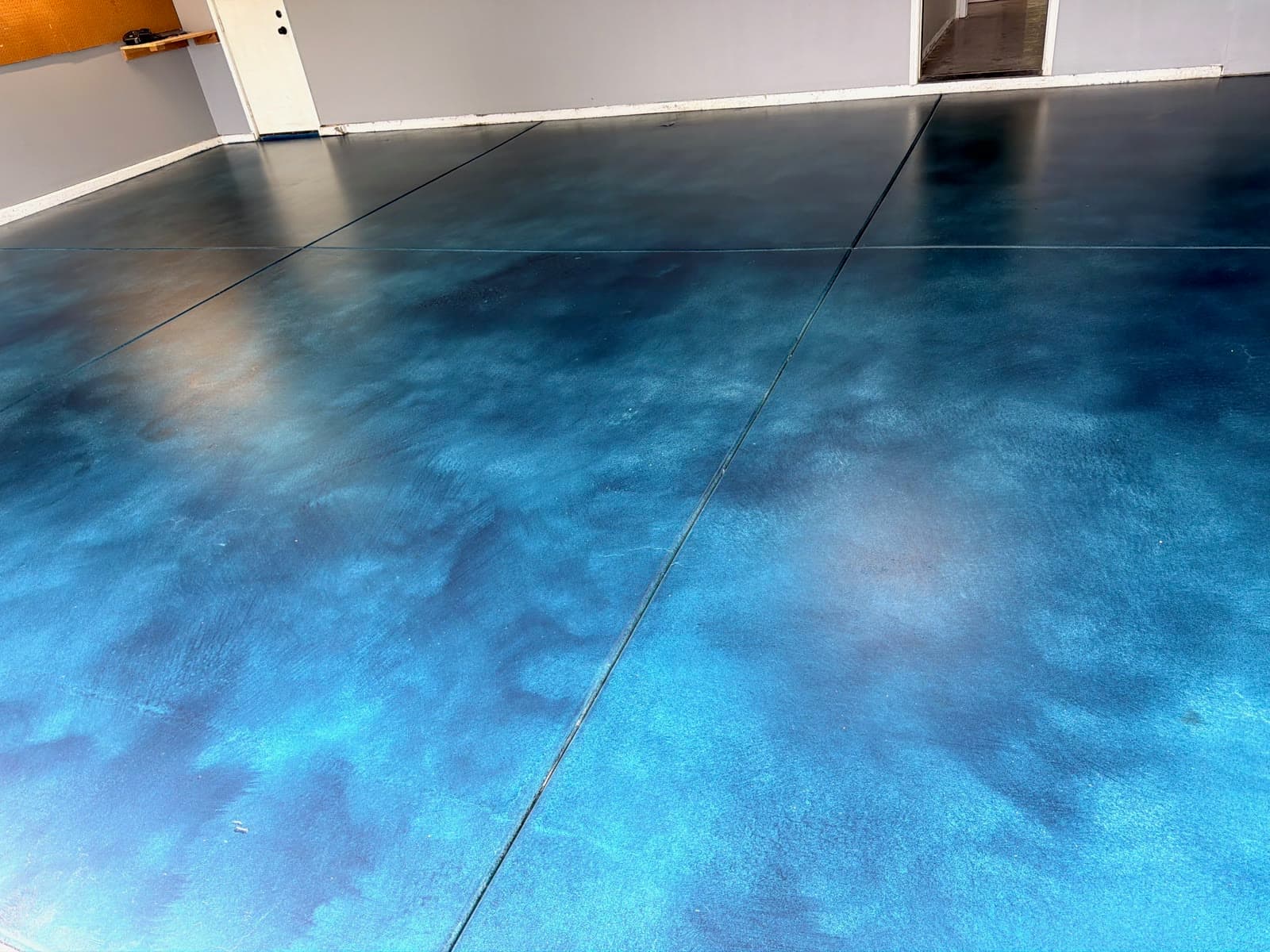
Staining soaks color into the concrete. It reacts with the slab, so the result has depth and movement, and no two floors come out alike. It also can't be undone, which is why we test a patch on your slab before committing the room.
Sealing goes over the top. It protects the surface and decides how much shine you end up with, anywhere from flat to wet-look gloss. A stained floor almost always wants a sealer over it.
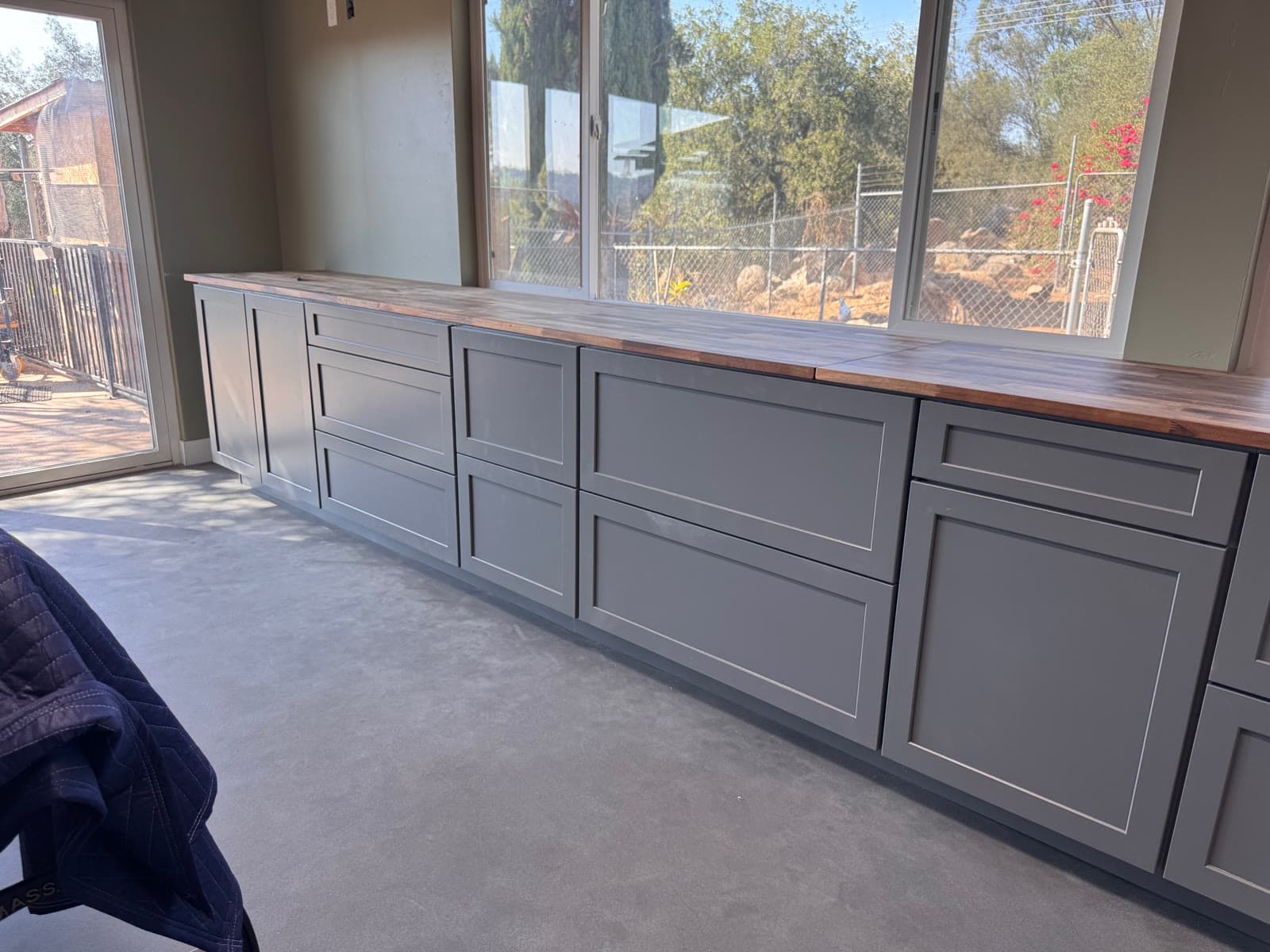
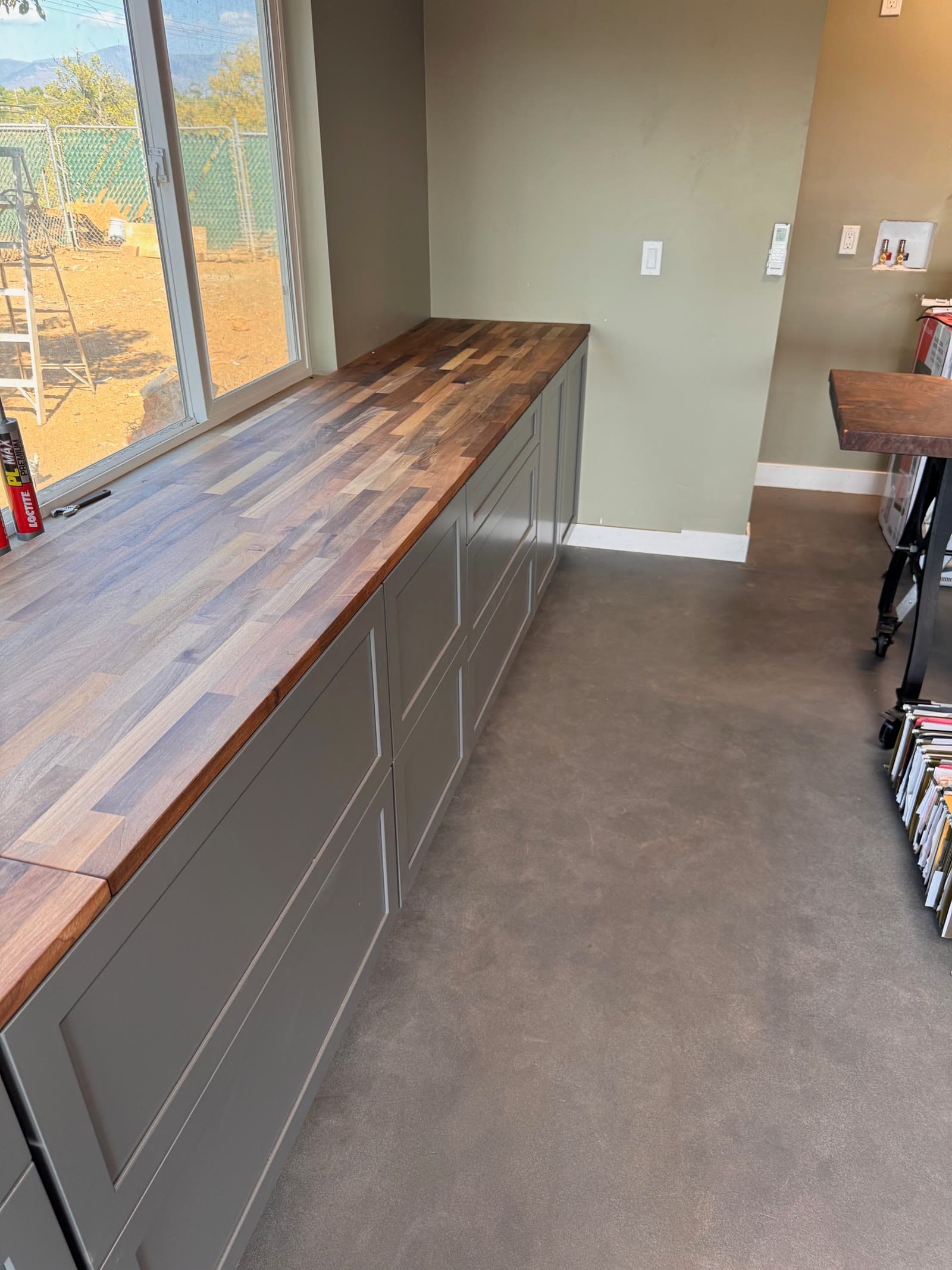
Polishing is mechanical. No color, no coating, just grinding the slab finer and finer until it shines. You can stain first and polish after, and plenty of floors get both.
Not every slab can be polished
Most sales pitches skip this part. Some slabs will never polish evenly. That includes slabs that were finished badly, patched a lot, or have a lot of stone sitting close to the surface.
Cracks come with concrete. They're not a flaw we hide. We can fill them and stop them moving, but you'll still see them, and that's part of the look. If you want a floor with no marks at all, this is the wrong product, and we will tell you.
We look at your slab and show you what it will look like before you commit. The deeper we grind, the more stone shows. You can have a smooth cream finish, a speckled salt-and-pepper look, or full stone. That choice can't be undone.
Where it makes sense
Polished concrete suits modern homes, garages, workshops, and shops. It fits anywhere a floor takes heavy traffic and nobody wants to fuss over it.
It works well with heat piped under the floor, because nothing sits between the heat and the room.
What drives the cost
We quote after walking the space, because the things that move the number are things nobody can see in a photo. Here is what they are, in the order they matter, so you know what will drive your estimate before anyone comes out.
- What the slab starts as
- Polishing is a grinding process, so the condition of the existing slab is the job. A badly finished, heavily patched, or soft-surfaced slab will not come out even, and we say so before quoting rather than after grinding.
- How far the grind goes
- Cream finish, salt-and-pepper, or full aggregate exposure are three different depths of grinding, and the deeper the exposure the more passes and the more diamonds it takes.
- Finish level
- Matte through high gloss is a count of progressively finer grits. Each step up is another full pass over the whole floor.
- Stain or no stain
- Acid stain reacts with the slab itself, so the result cannot be undone or evened out afterwards. That is why a test patch on your slab comes first, and the test is part of the job.
Numbers you can hold us to
- Polishing is mechanical, not a coating. Nothing sits on top that can peel.
- The densifier works from inside the slab; a penetrating guard on top is what shrugs off oil and wine, and it is topped up rather than stripped.
- Not every slab can be polished. Where it will not come out well, a coating is the better answer and we will tell you that.
How long it takes
Two to four working days for a typical room or garage, depending on how many grinding passes the chosen finish level needs.
We do not publish prices, because a real number needs a real look at your floor. Estimates are free and in person. Stone measures, takes the moisture readings, and writes it up itemized before anything is ordered.
Concrete questions
Can any concrete floor be polished?
No. Slabs that were finished badly, patched a lot, or have a soft or stained surface won't come out even. We check the slab before we quote. When polishing won't look good, a coating is usually the better answer, and we will say so.
Is polished concrete cold and loud?
It's hard and dense, so it bounces sound around and feels cool on bare feet. Those are real tradeoffs. Rugs and soft furniture fix the echo. And it's a great match for heat piped under the floor, since nothing blocks the warmth coming up.
Does polished concrete need to be sealed?
The hardener does most of the protecting from inside the slab, not as a film on top. We usually add a guard that soaks in to help it shrug off stains, which matters in kitchens and garages where oil and wine get spilled. You top that up now and then. You never have to strip it off and start again.