
Herringbone and chevron aren't the same pattern
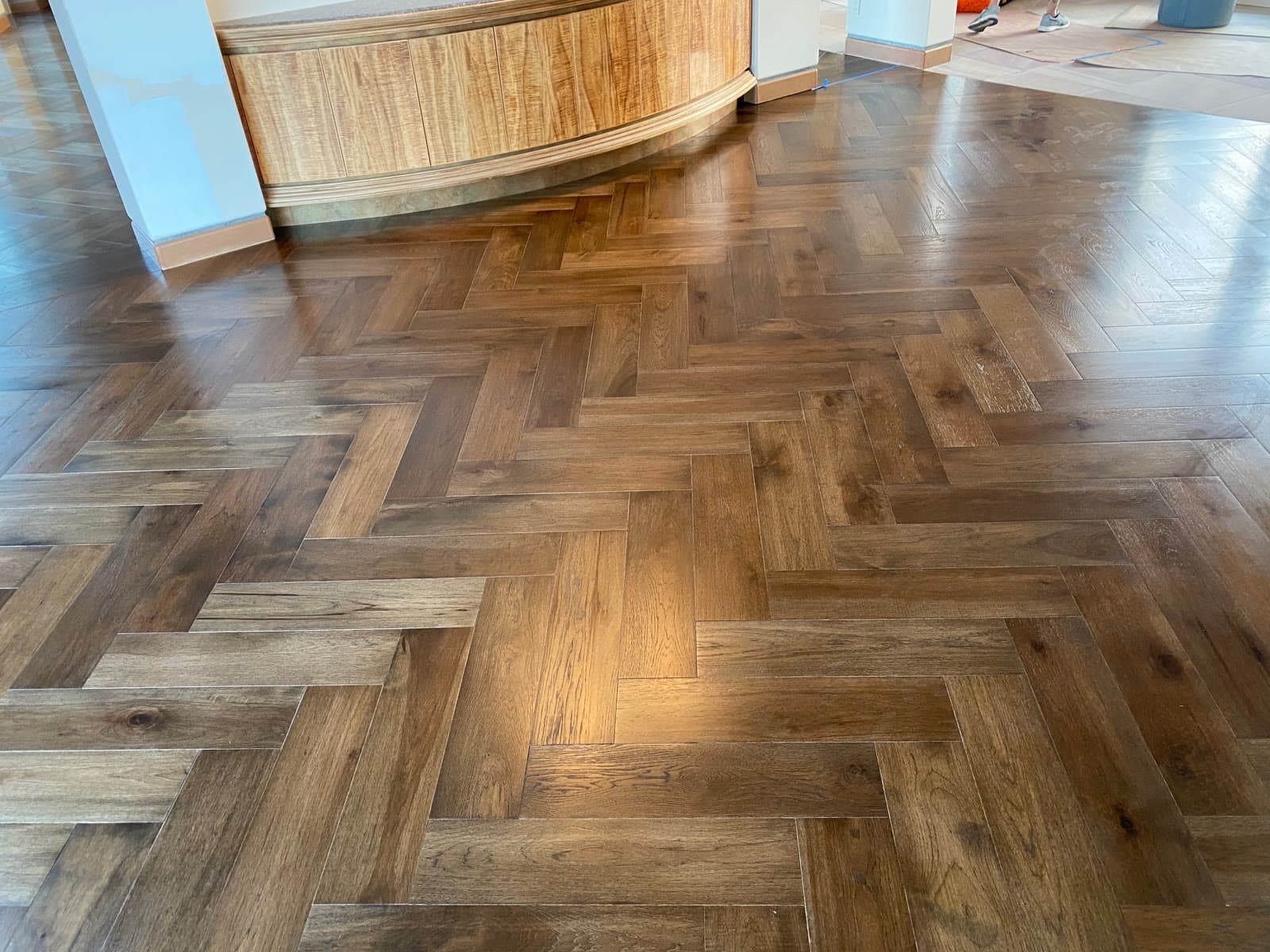
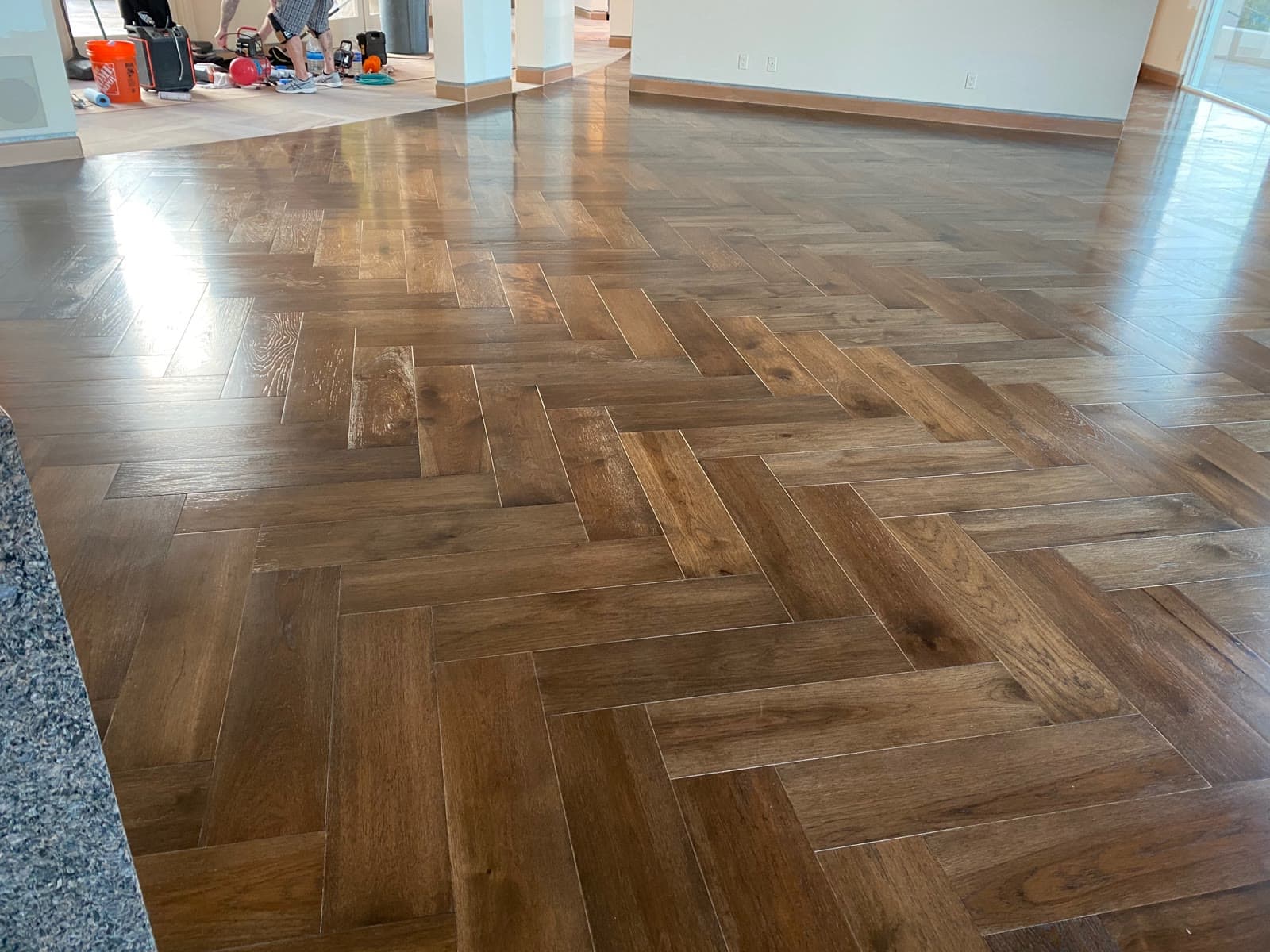
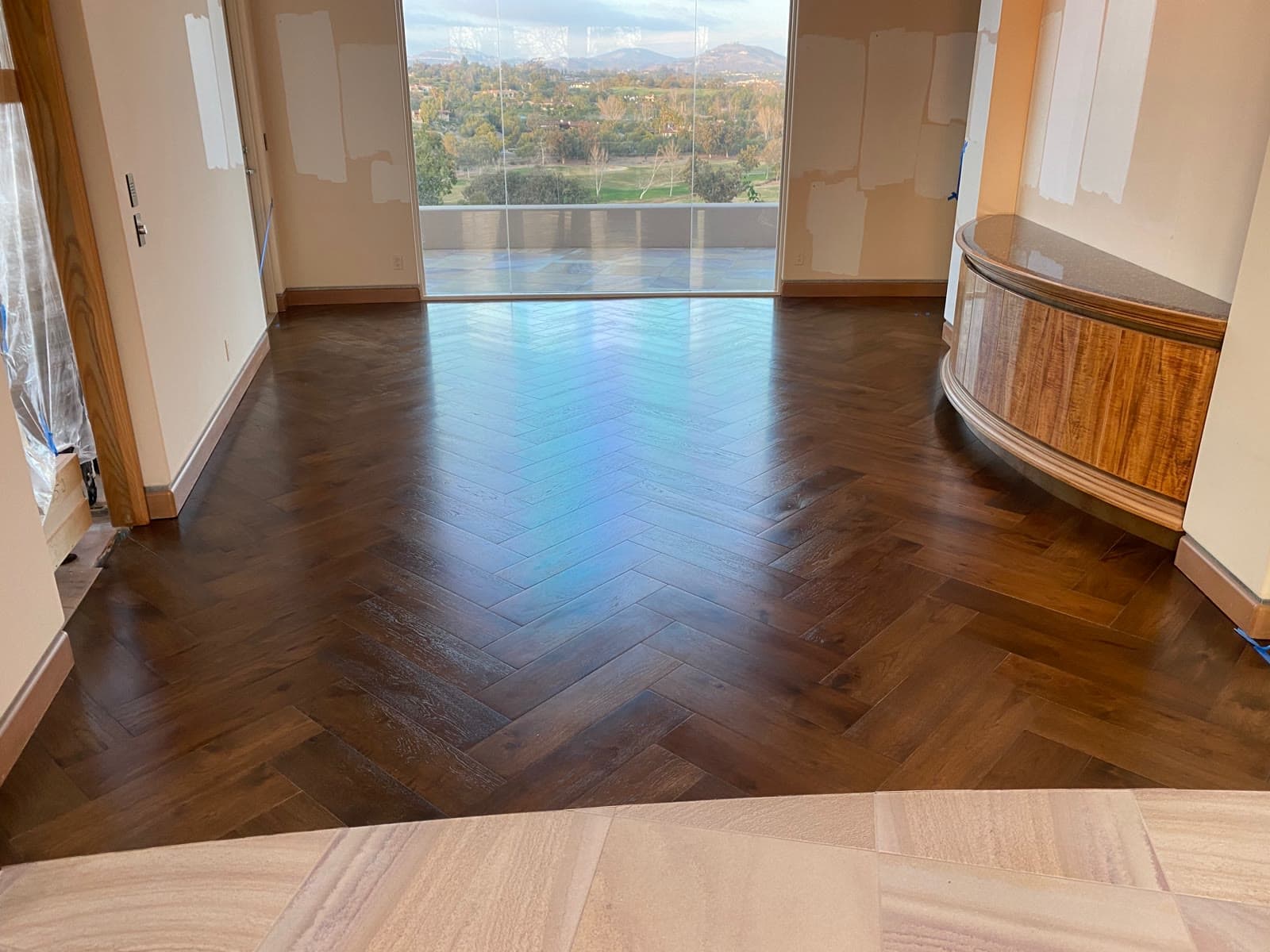
Herringbone uses plain rectangular boards set at right angles. The end of one board meets the side of the next. That makes the broken zigzag most people picture.
Chevron uses boards cut at an angle, usually 45 degrees, so the ends meet point to point in one unbroken V. It looks more formal and costs more. Every board needs an angled cut, and there's almost no room for error.
People often ask for one and mean the other. We set out both on your floor before we start, so you choose while looking at the real wood in the real room.
Why pattern work costs more
A plain plank floor hides small mistakes. Each row soaks them up. A pattern floor doesn't. Being off by a sixteenth of an inch early grows across the room, and by the far wall anyone can see it.
We start by snapping a center line. We take it from the line your eye follows when you walk in, never from a wall, because almost no wall in a real house is straight. Every piece after that's measured off that line.
Pattern work also wastes more wood, because of all the angled cuts. We add that into the order up front. Running short halfway through is a real problem, since the matching batch is often sold out by then.
Borders, inlays, and medallions
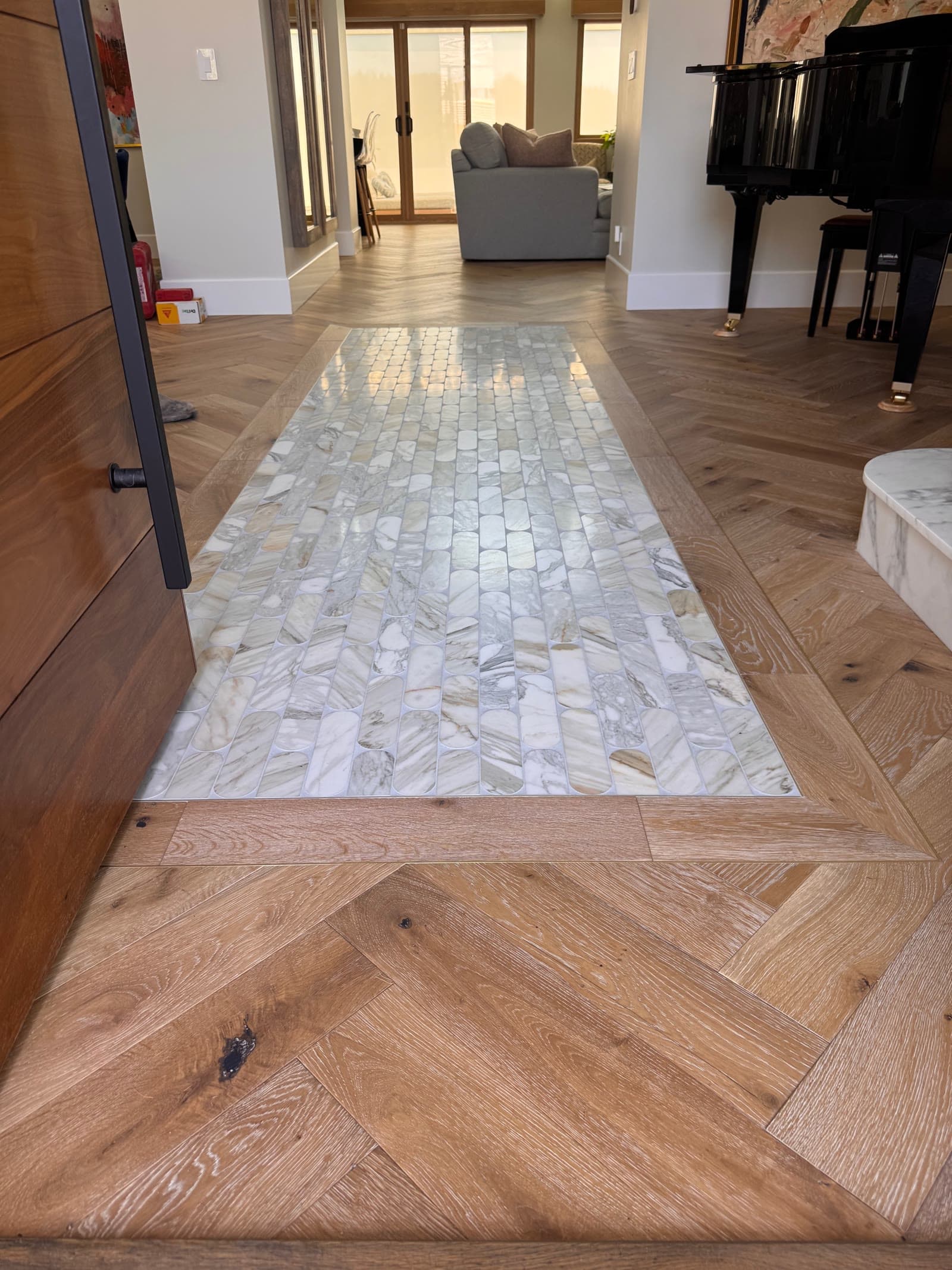
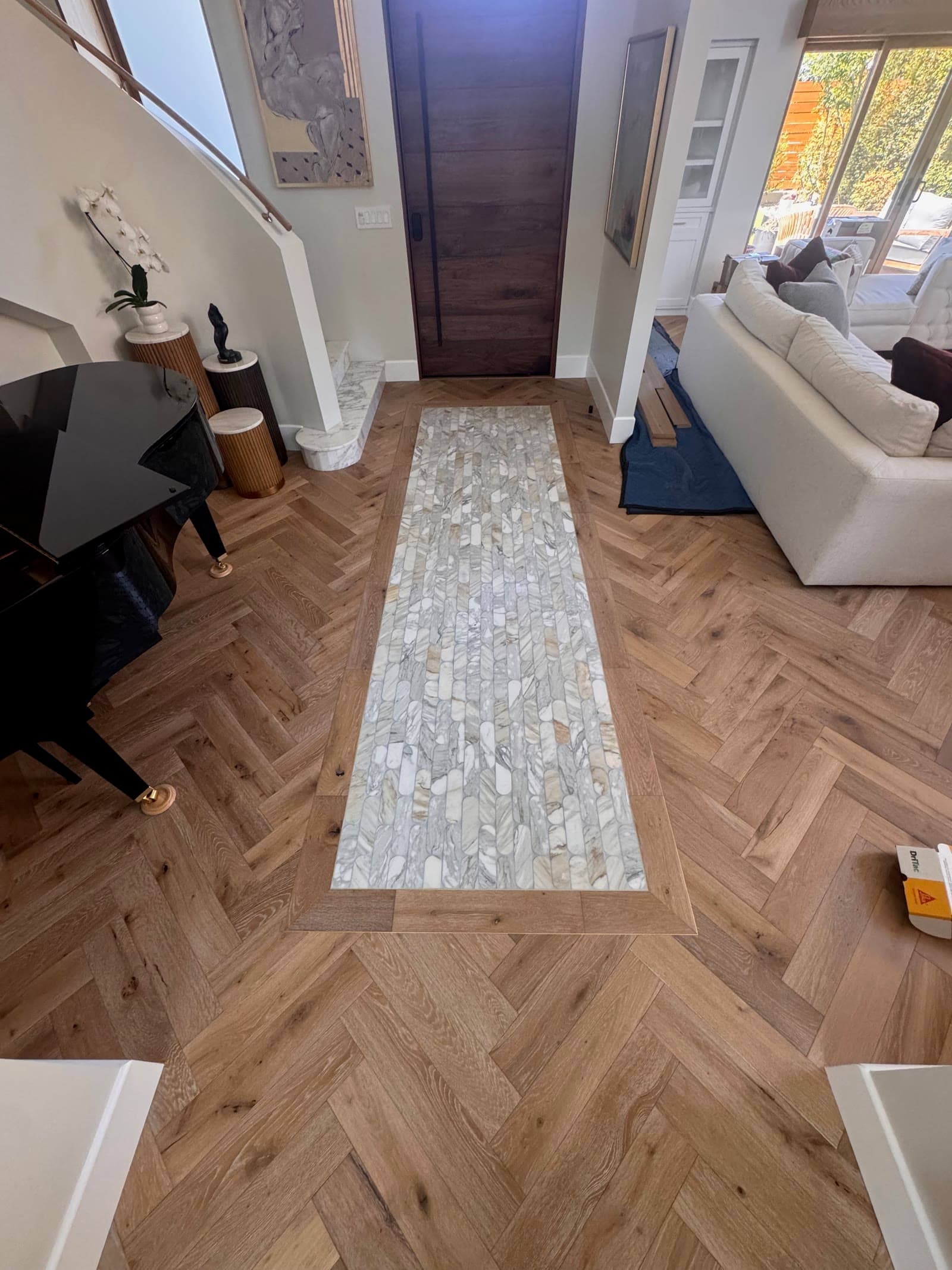
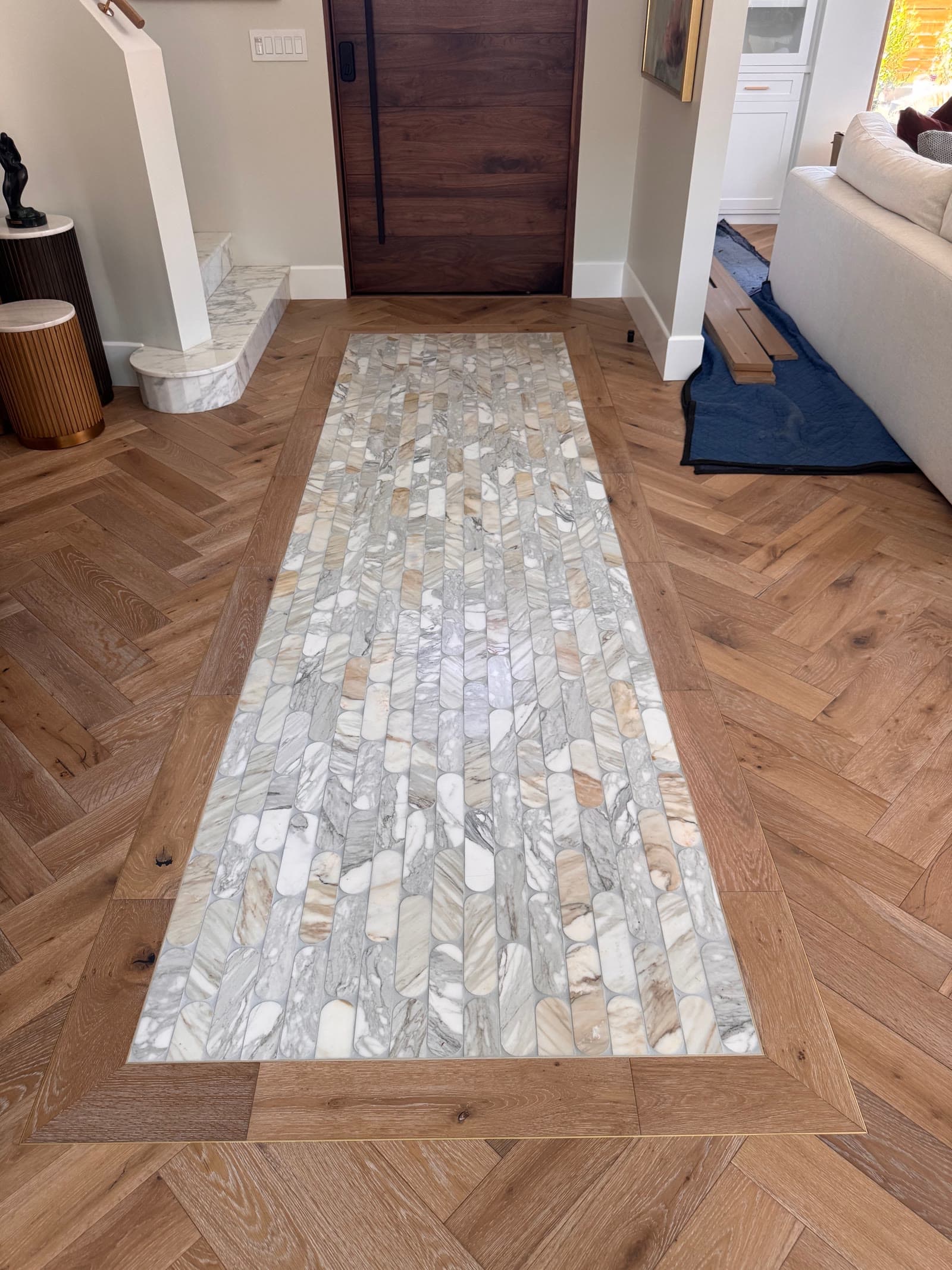
Pattern floors are often framed with a border. That's a straight run of plank around the edge of the room. It gives the pattern a clean edge and hides the fact that most rooms aren't square.
We also do custom inlays, and the joins where a pattern meets a plain plank floor. Those joins are where pattern jobs usually go wrong in the hands of someone who has only done a few.
What drives the cost
We quote after walking the space, because the things that move the number are things nobody can see in a photo. Here is what they are, in the order they matter, so you know what will drive your estimate before anyone comes out.
- Herringbone or chevron
- Herringbone uses square-cut rectangular boards. Chevron needs every single board mitered at the same angle at both ends, which roughly doubles the number of precision cuts in the floor. That is the whole reason chevron costs more, and it is why we lay both out before starting — people ask for one and mean the other more often than not.
- Layout and starting line
- A pattern floor is set out from a center line that has to be squared to the room, not to a wall. Get it wrong by a sixteenth of an inch at the start and the field runs visibly crooked by the far wall. This is unbillable time that has to happen anyway.
- Borders, inlays, and medallions
- A mitered border doubles the perimeter cutting. A stone or mosaic inlay adds a second trade's tolerance to hit and a recess that has to finish dead flush.
- Subfloor flatness, more than usual
- Pattern floors telegraph every bump underneath far more than plank floors do, so the prep standard is higher and the prep bill is bigger.
- Board size
- Smaller pattern pieces mean more of them per square foot, and every one is a placement.
Numbers you can hold us to
- Waste factor on herringbone and chevron runs about 15 to 20 percent, against 5 to 10 percent for a straight plank floor — chevron sits at the top of that band because both ends of every board are cut off at an angle.
- Labor per square foot on pattern work is substantially higher than on straight plank; the field takes longer and the perimeter takes much longer.
- Both patterns get dry-laid on the floor before anything is fastened, so you see the actual layout in your actual room first.
How long it takes
A pattern floor takes roughly twice as long to lay as the same area in straight plank. Budget 7 to 12 working days for a typical entry and main-floor herringbone, more where there is a border or an inlay.
We do not publish prices, because a real number needs a real look at your floor. Estimates are free and in person. Stone measures, takes the moisture readings, and writes it up itemized before anything is ordered.
Herringbone questions
What is the difference between herringbone and chevron flooring?
Herringbone uses plain rectangular boards meeting at right angles. The end of one board meets the side of the next, making a staggered zigzag. Chevron uses boards with angled ends that meet point to point in one unbroken V. Chevron needs an angled cut on every board, so it costs more to lay.
Does herringbone flooring make a room look smaller?
No. It usually does the opposite. The pattern pulls your eye along the diagonal, which makes narrow rooms and hallways feel wider. Board size matters more than the pattern. Big wide planks in a small room feel cramped no matter how you lay them.
Can herringbone be installed over an existing floor?
Only if the floor under it is solid, flat, and a suitable base. Usually it is not. Pattern floors show every bump underneath far more than plank floors do. In most cases the old floor comes out and we fix the subfloor first.