What made it difficult
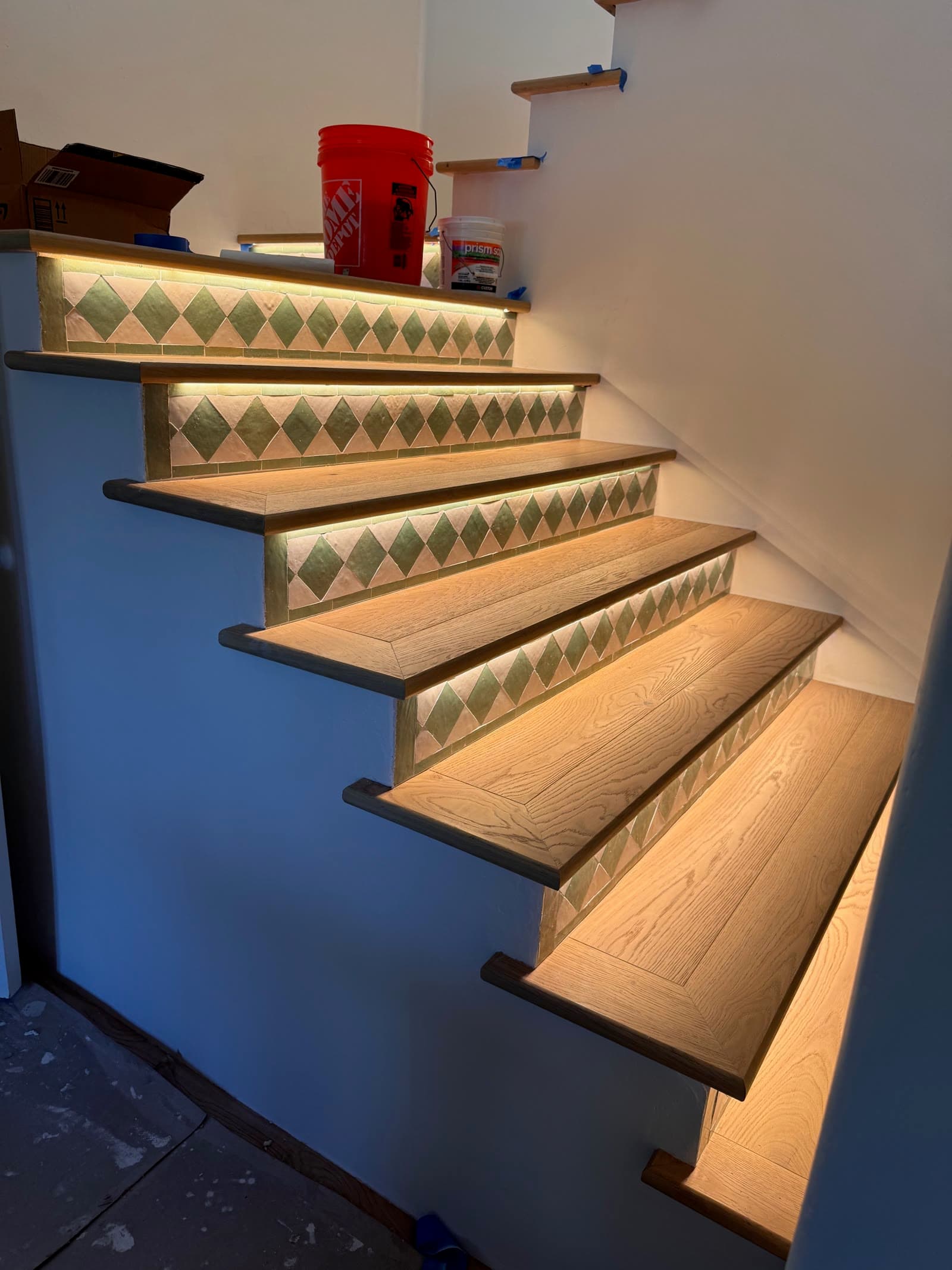
Wood treads and tile risers means every single step has a junction between two materials that arrive at different thicknesses and are set by different methods.
Riser height is where that becomes a code question rather than an aesthetic one. California limits how much step heights may vary within one flight, and a tile riser adds its own thickness to the calculation. The whole flight has to be worked out before anything is cut, because a correction discovered on step nine is a correction to all of them.
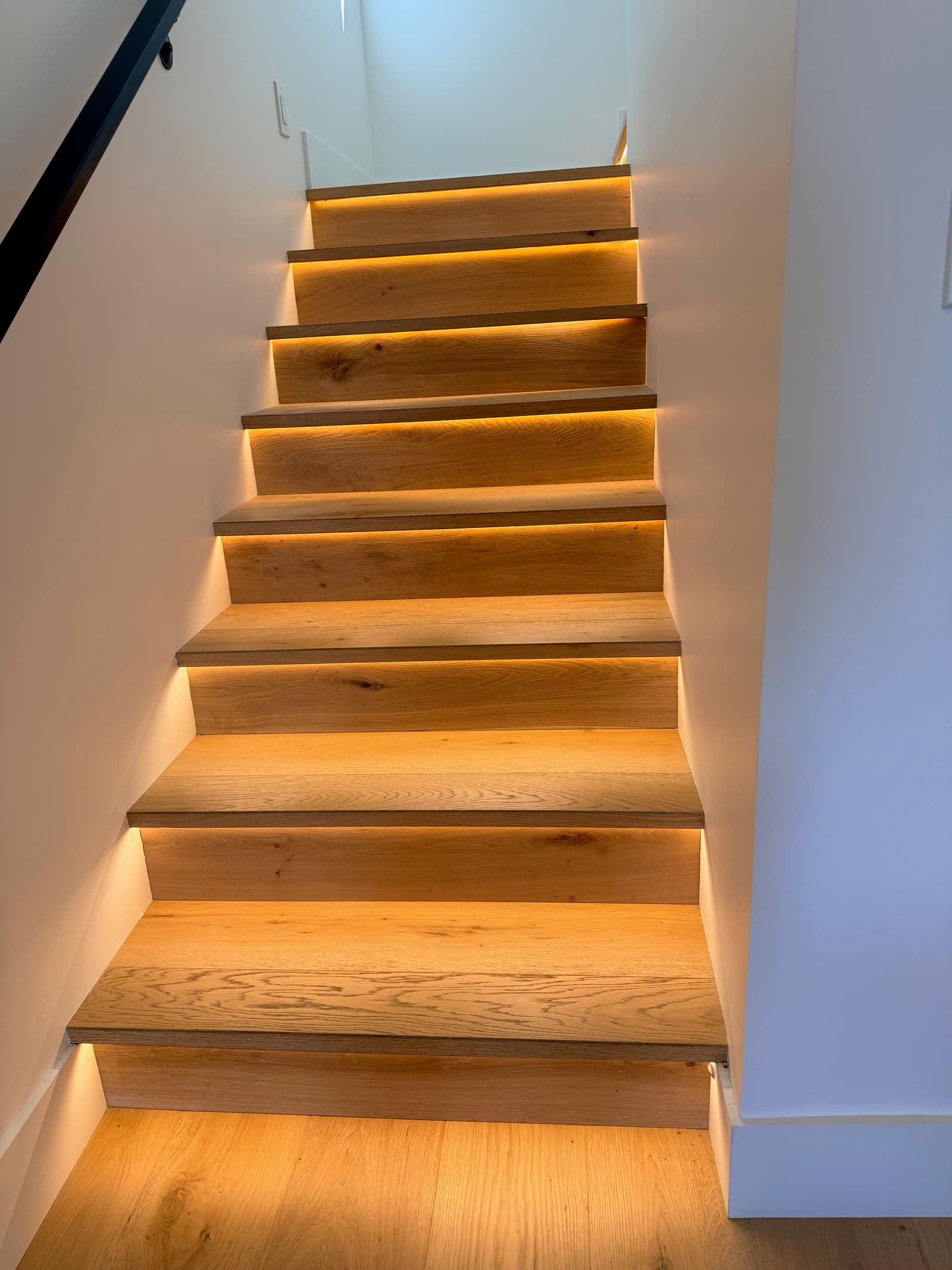
The lighting adds the same constraint as any lit stair: the strip lives under the nosing, so the wiring goes in before the treads do.
How it was done
The flight set out first — every riser measured and the tile thickness carried through the arithmetic — so the finished step heights land inside the permitted variation.
Wiring run and the treads fixed over it.
Hand-glazed tile is not a uniform product; the color and surface vary tile to tile, which is the reason for using it and a thing to lay out deliberately rather than take out of the box in order.
How it came out
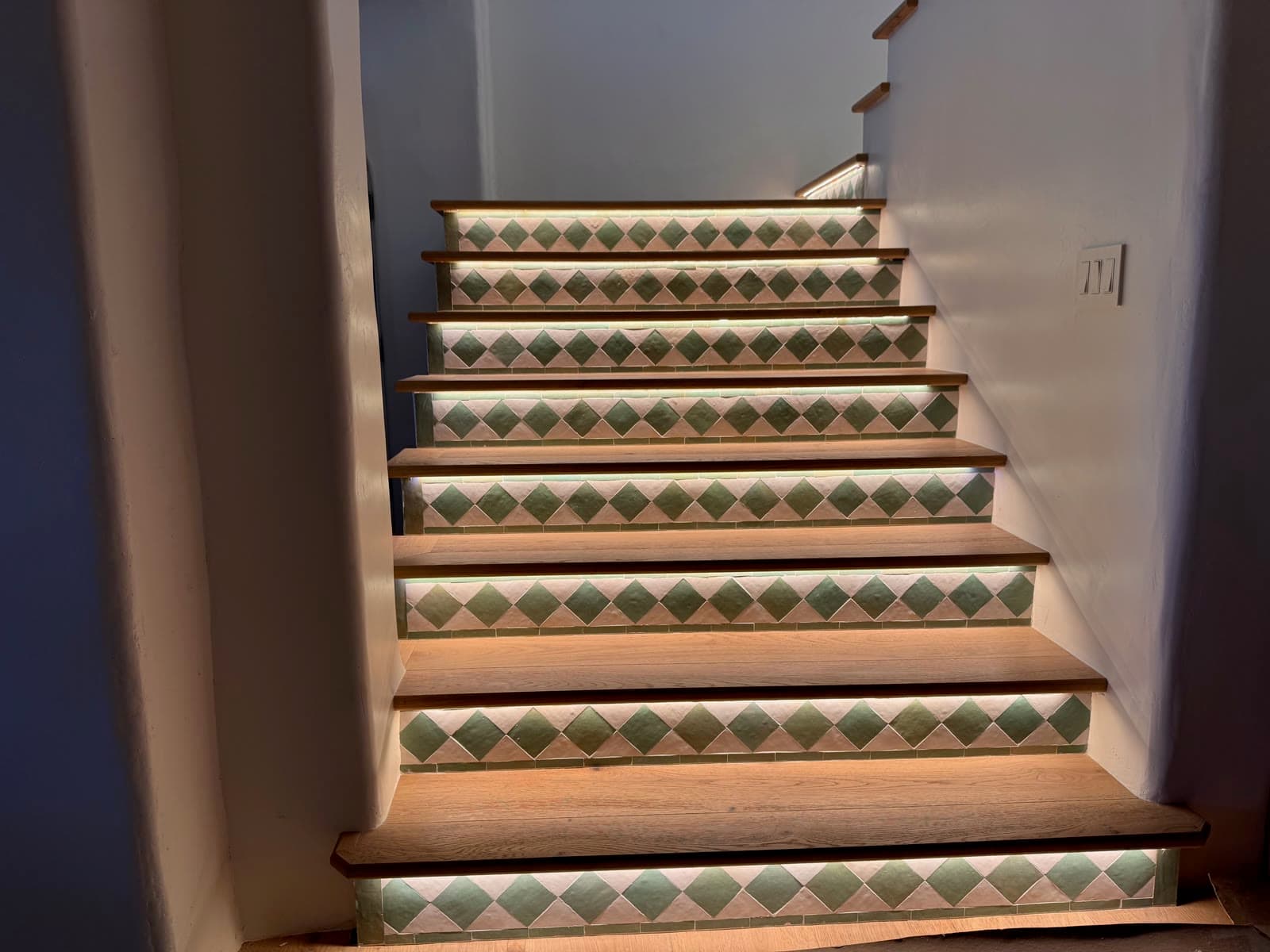
A green and white diamond pattern running up the risers under solid oak treads, with light washing down each step from the nosing above it.
It is the most distinctive staircase in the portfolio, and the reason it leads the stairs page.