What made it difficult
Carpet hides a great deal. It compresses, so it absorbs a riser that is a few millimeters out and nobody ever knows. A hard tread does not, and California code allows very little variation in riser height within one flight.
That is why a carpet-to-hardwood conversion is where uneven risers get discovered, and why it has to happen at the measuring stage rather than mid-installation.
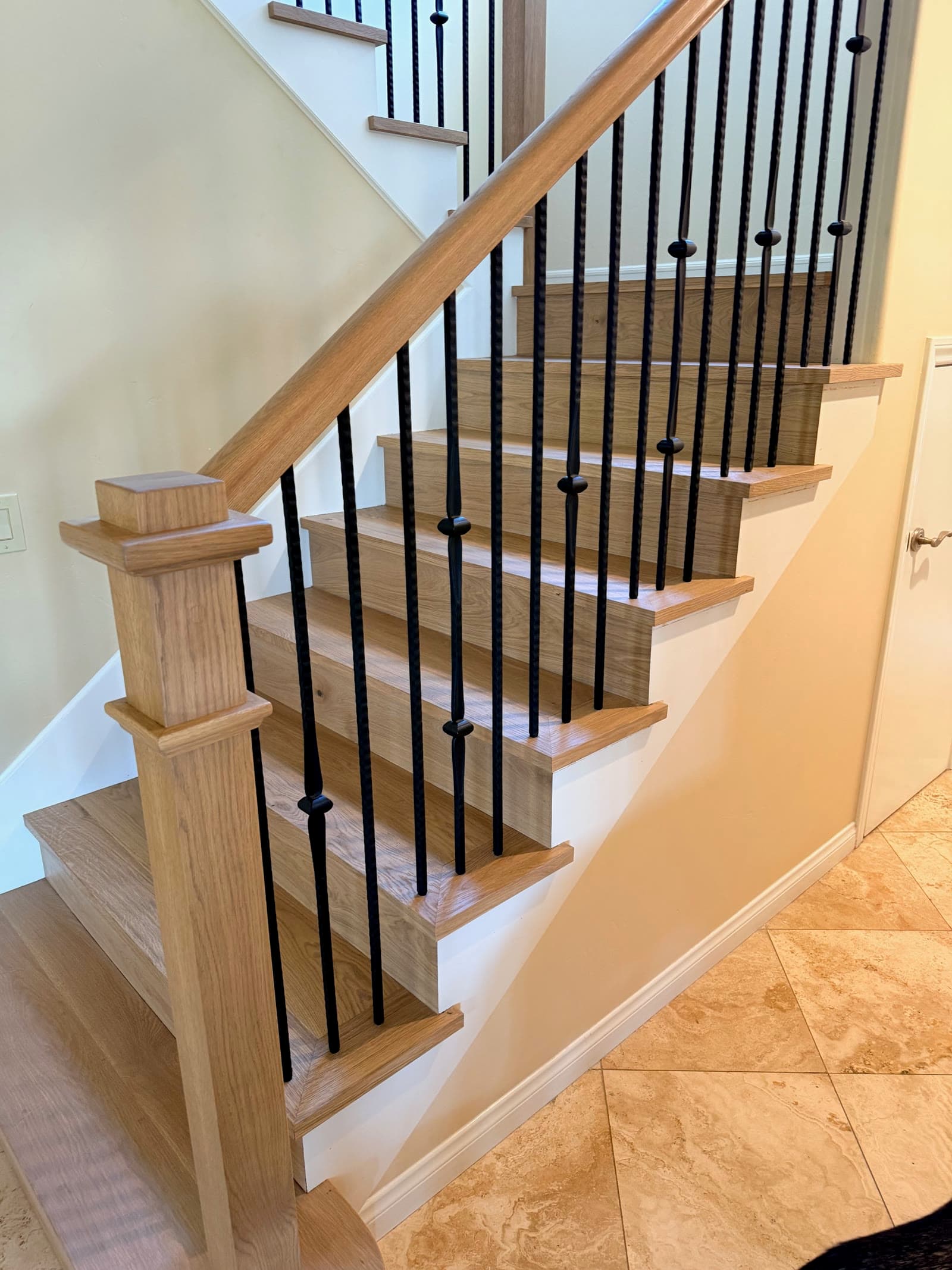
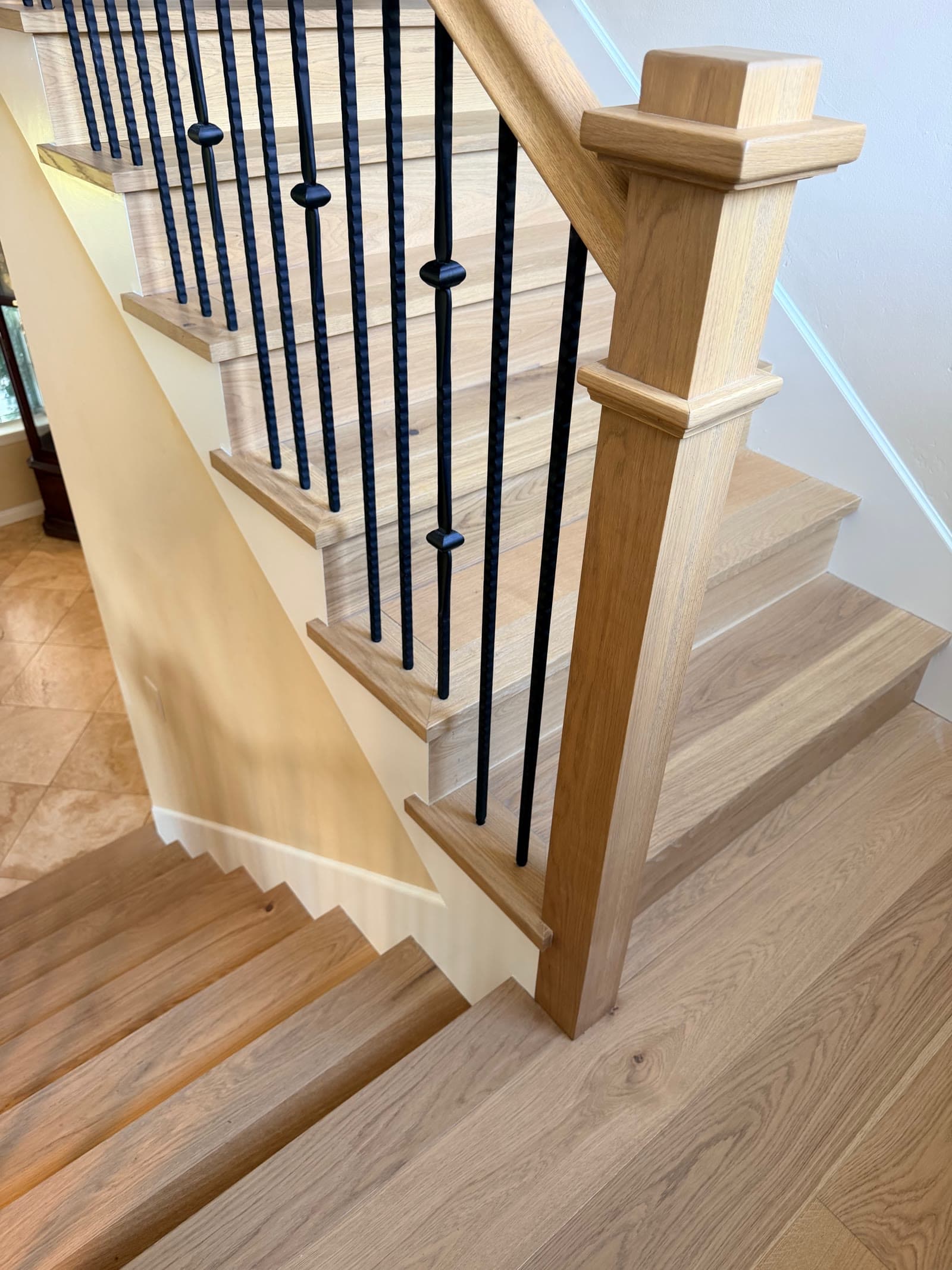
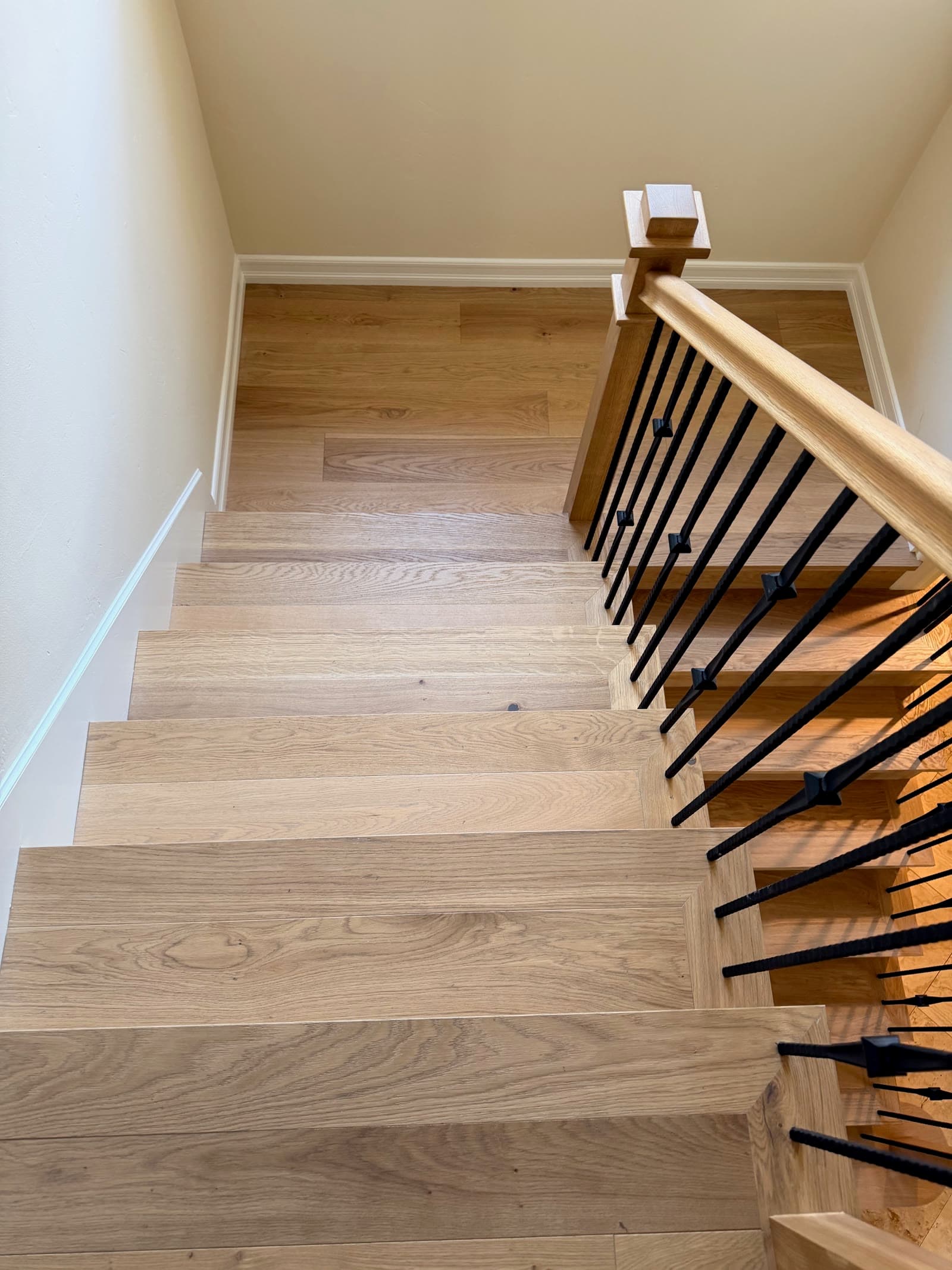
The open side of the flight is the other half of the job. Every tread end on an open stringer is visible, so each one needs a mitered return — done properly, no end grain shows anywhere on the staircase.
How it was done
Every riser measured before a tread was cut, and what was found reported before starting rather than after.
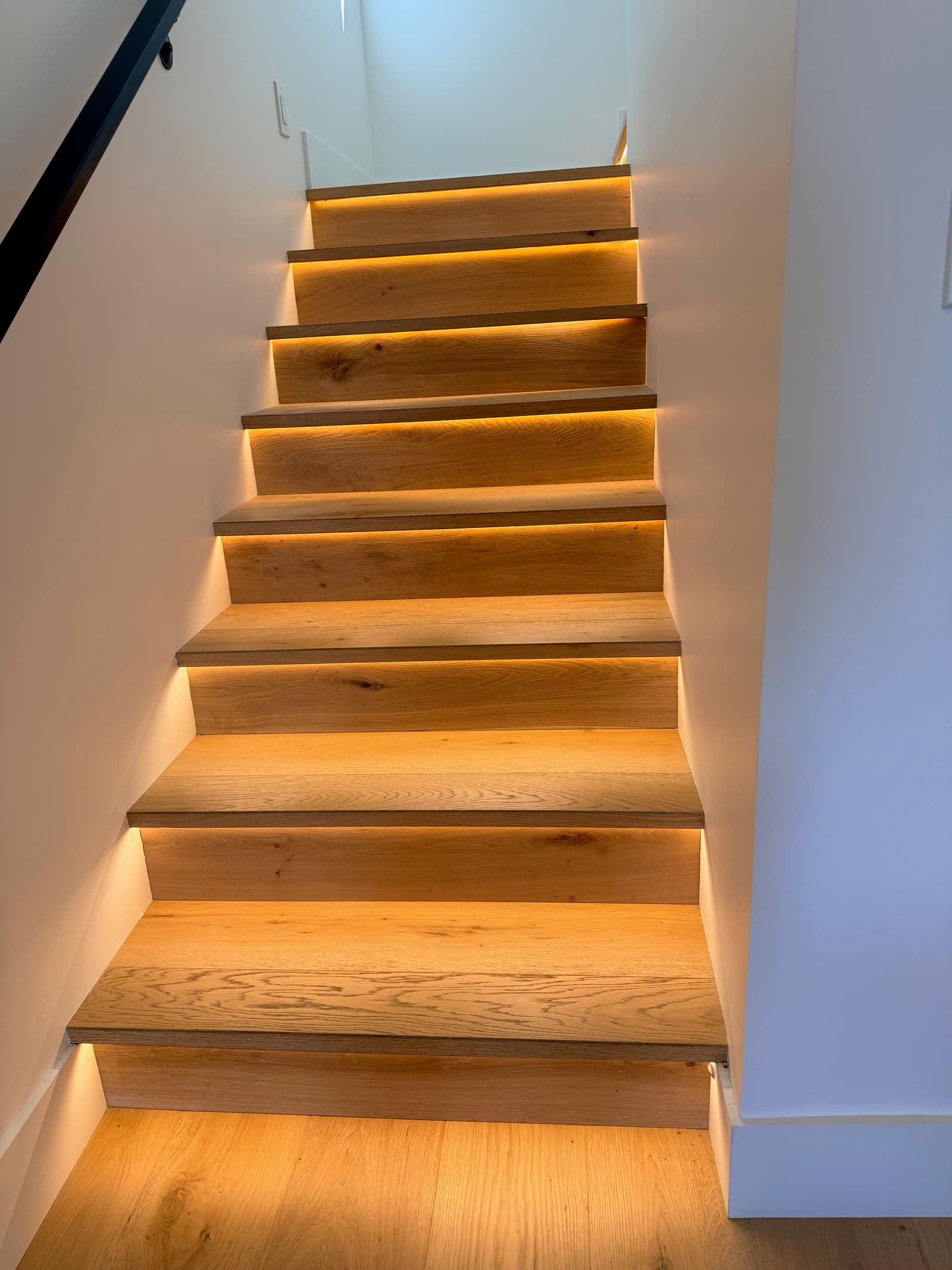
Treads and risers both replaced, so the flight is oak throughout rather than oak treads over painted risers hiding the old construction.
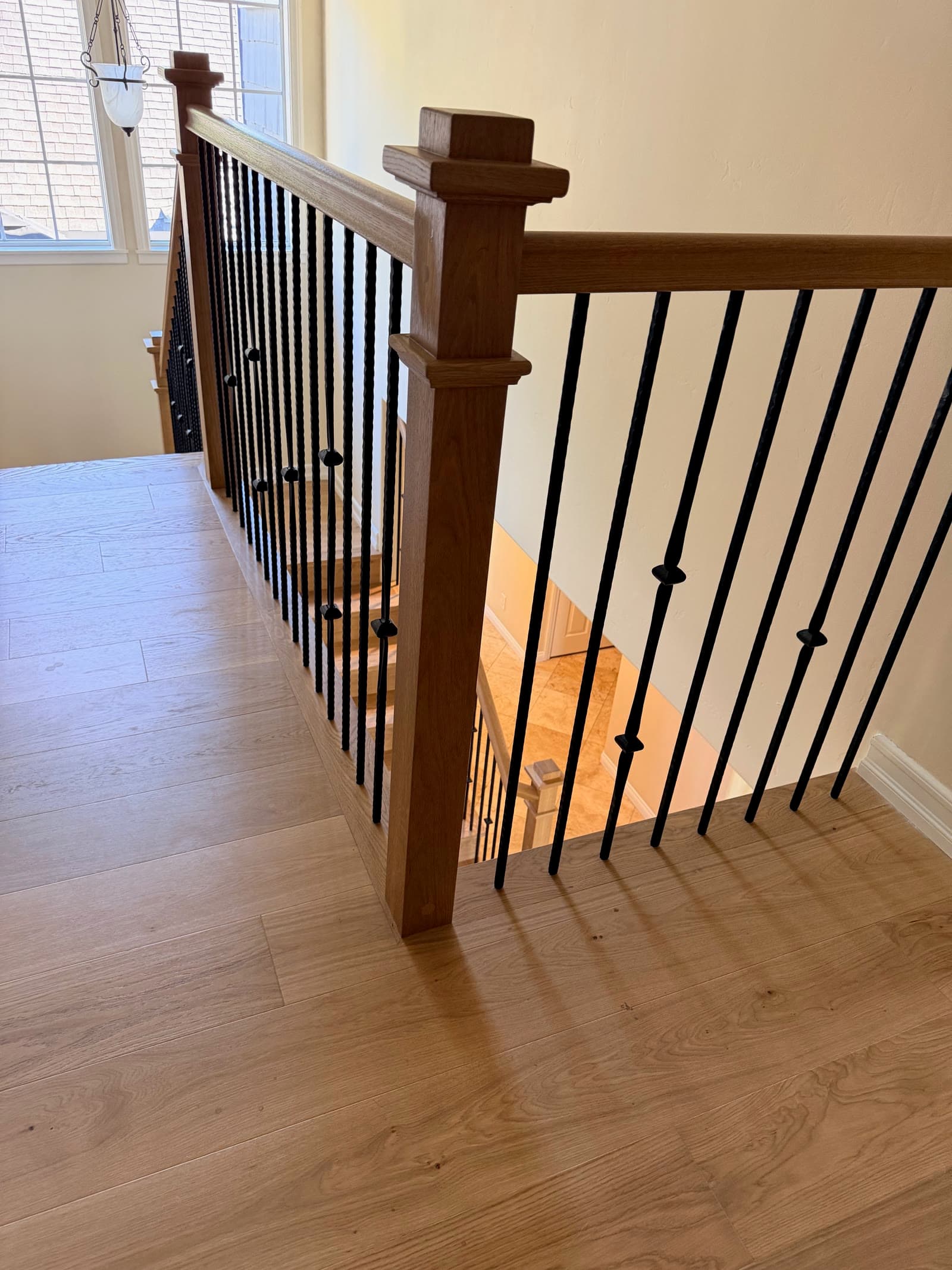
Mitered returns run the length of the flight, and the upstairs landing laid in the same oak so the two meet without a change of material.
How it came out
The staircase reads as one piece of joinery from the entry to the landing, and lands cleanly onto the travertine entry floor at the bottom.
Seen side-on, the mitered returns line up the whole way up the flight, which is the detail that separates this from a tread kit.