What made it difficult
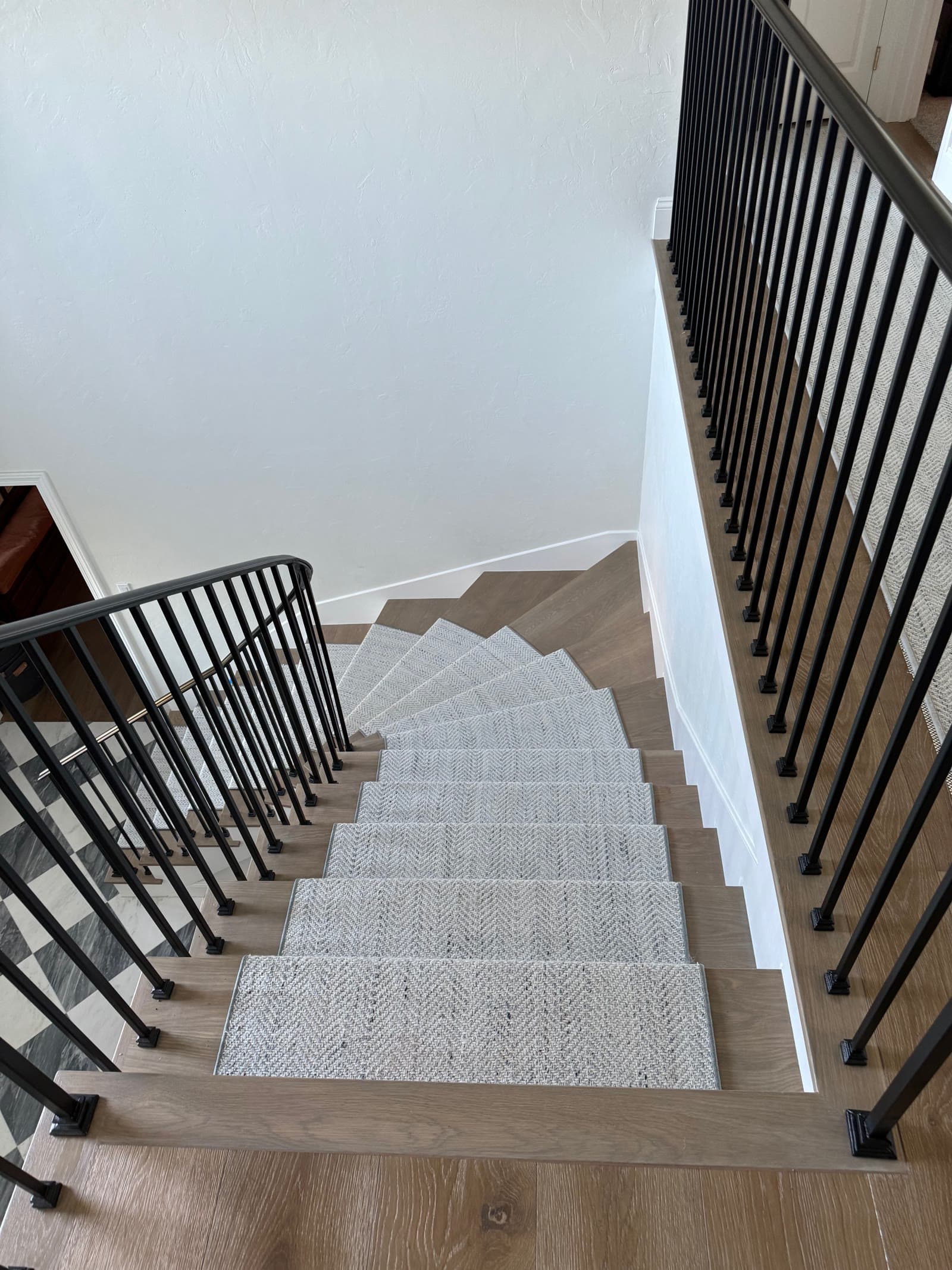
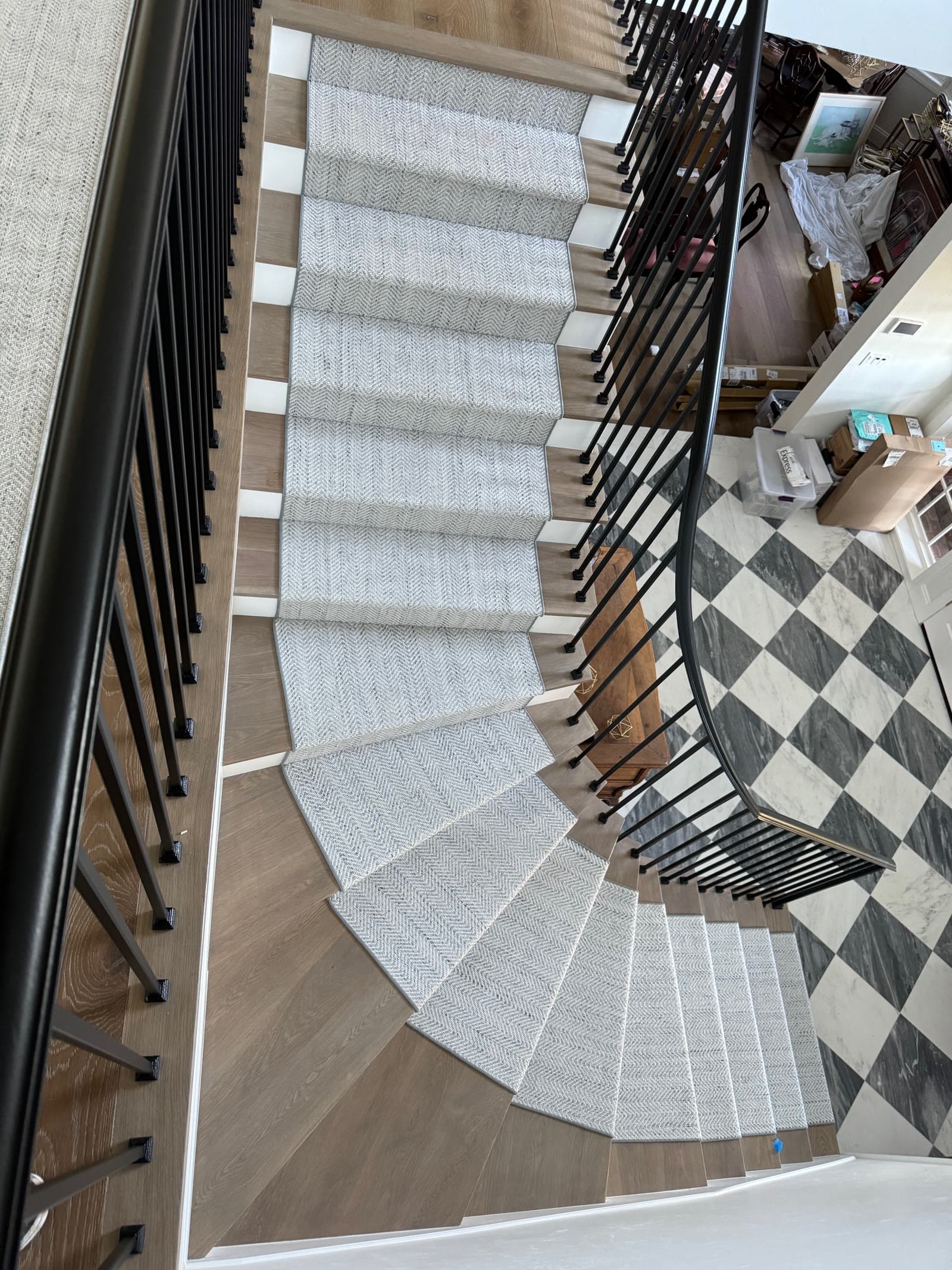
Winders are the hard part of any curved stair. They are wedge-shaped, they turn the flight, and no two of them are the same shape — so there is no template. Each tread is scribed to its own footprint.
A runner over winders compounds it. The runner has to be cut and bound to each individual tread rather than run as a continuous length, because a wedge-shaped step will not take a straight strip of carpet.
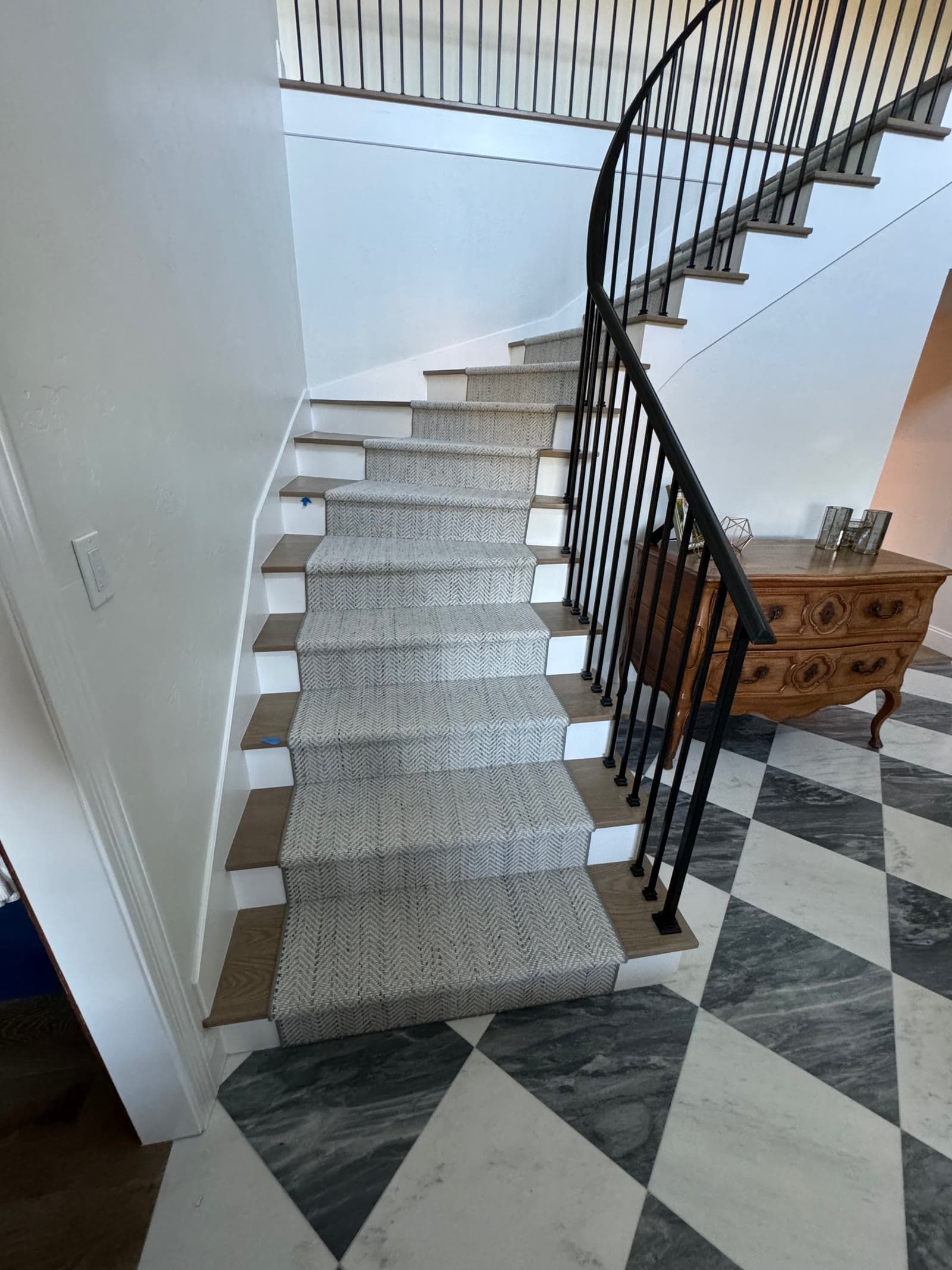
At the bottom the flight lands on a marble checkerboard floor, which is the least forgiving thing to land a staircase on: a checkerboard shows any deviation from square immediately, because the eye has a grid to compare against.
How it was done
Each winder scribed and cut to its own footprint, working up the turn.
The runner cut and bound tread by tread and fixed to follow the curve.
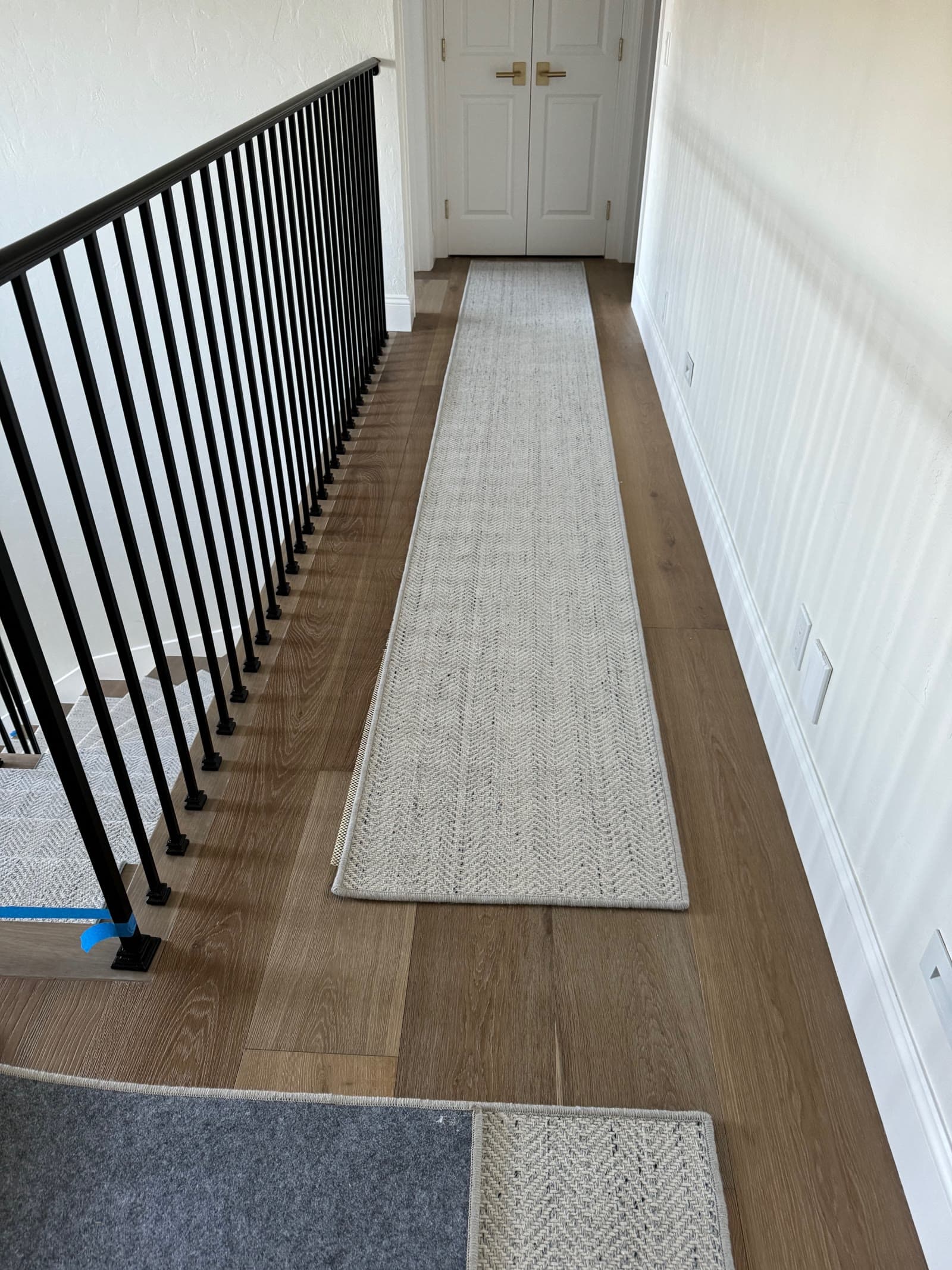
The upstairs hallway laid in wide-plank white oak so the material carries on above the stair rather than changing at the landing.
How it came out
The whole flight reads as one curve from the landing down to the marble.
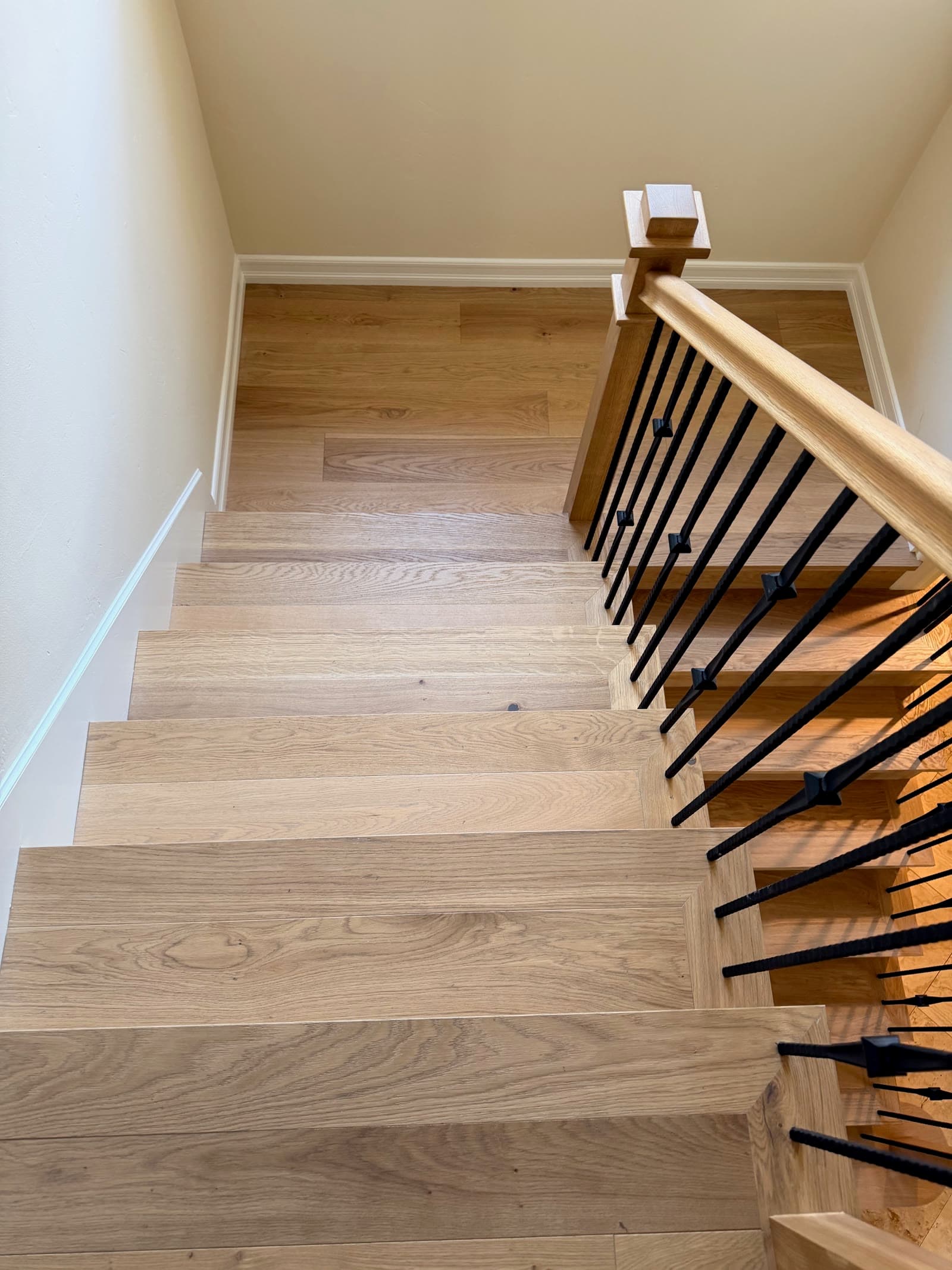
Looking down the winders from above is the view that shows whether the work was done properly, and it is the second photograph here.