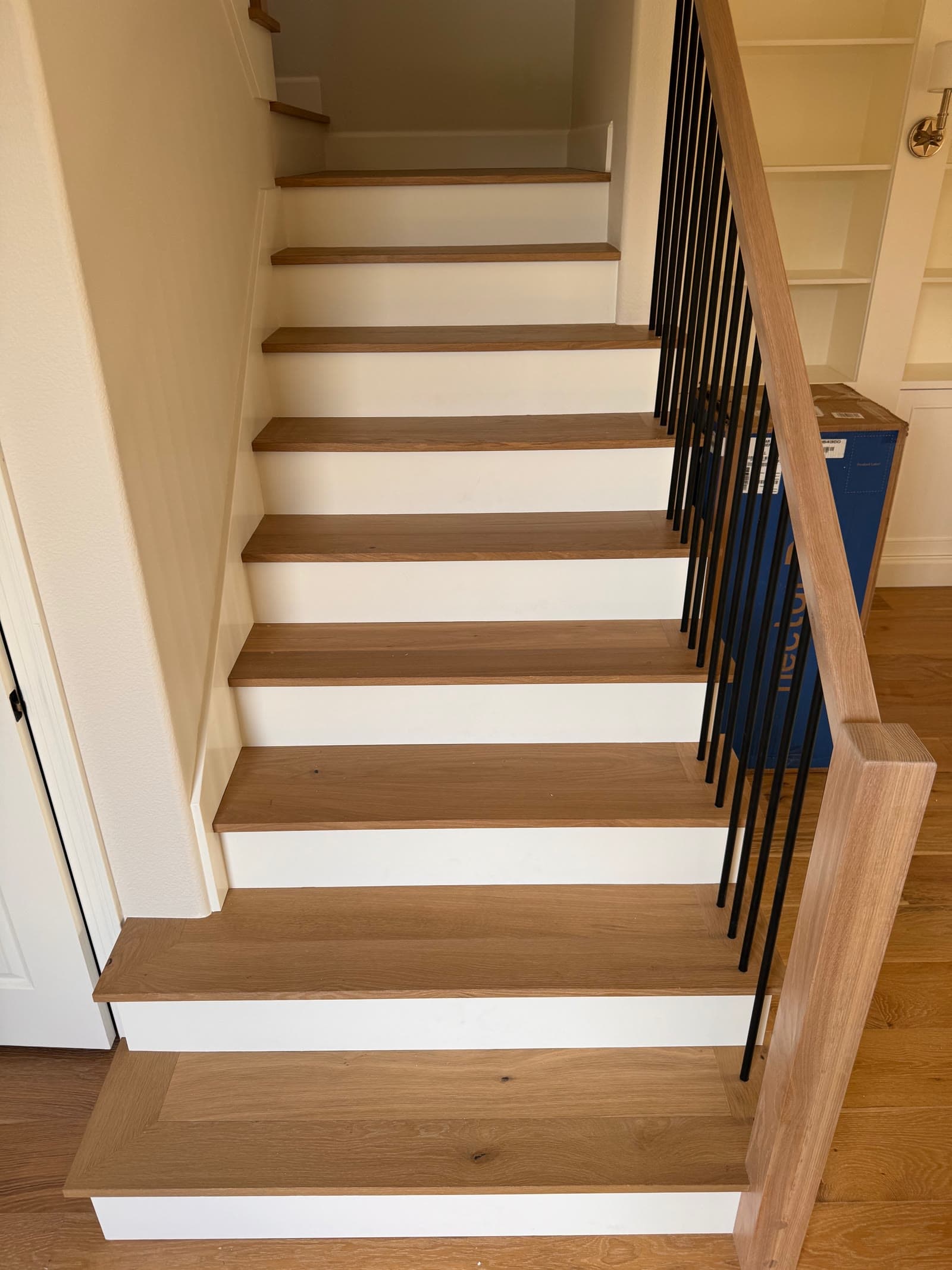
What made it difficult
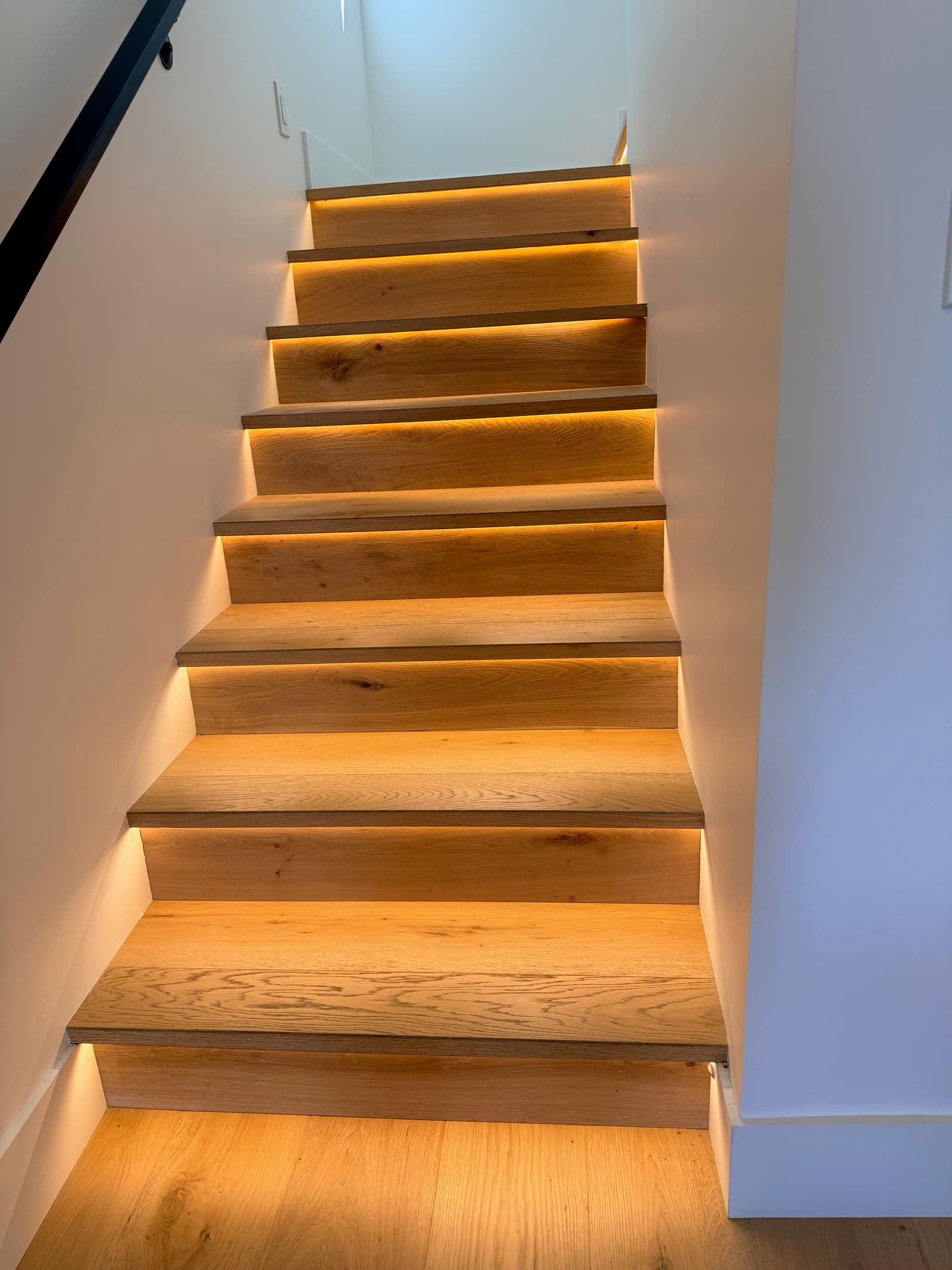
Carpet forgives. It compresses, so a riser a few millimeters out disappears under it and nobody ever knows. Oak does not forgive, and California code allows very little variation in riser height within one flight — so a conversion is where an uneven staircase gets found, and it has to be found at the measuring stage rather than three treads in.
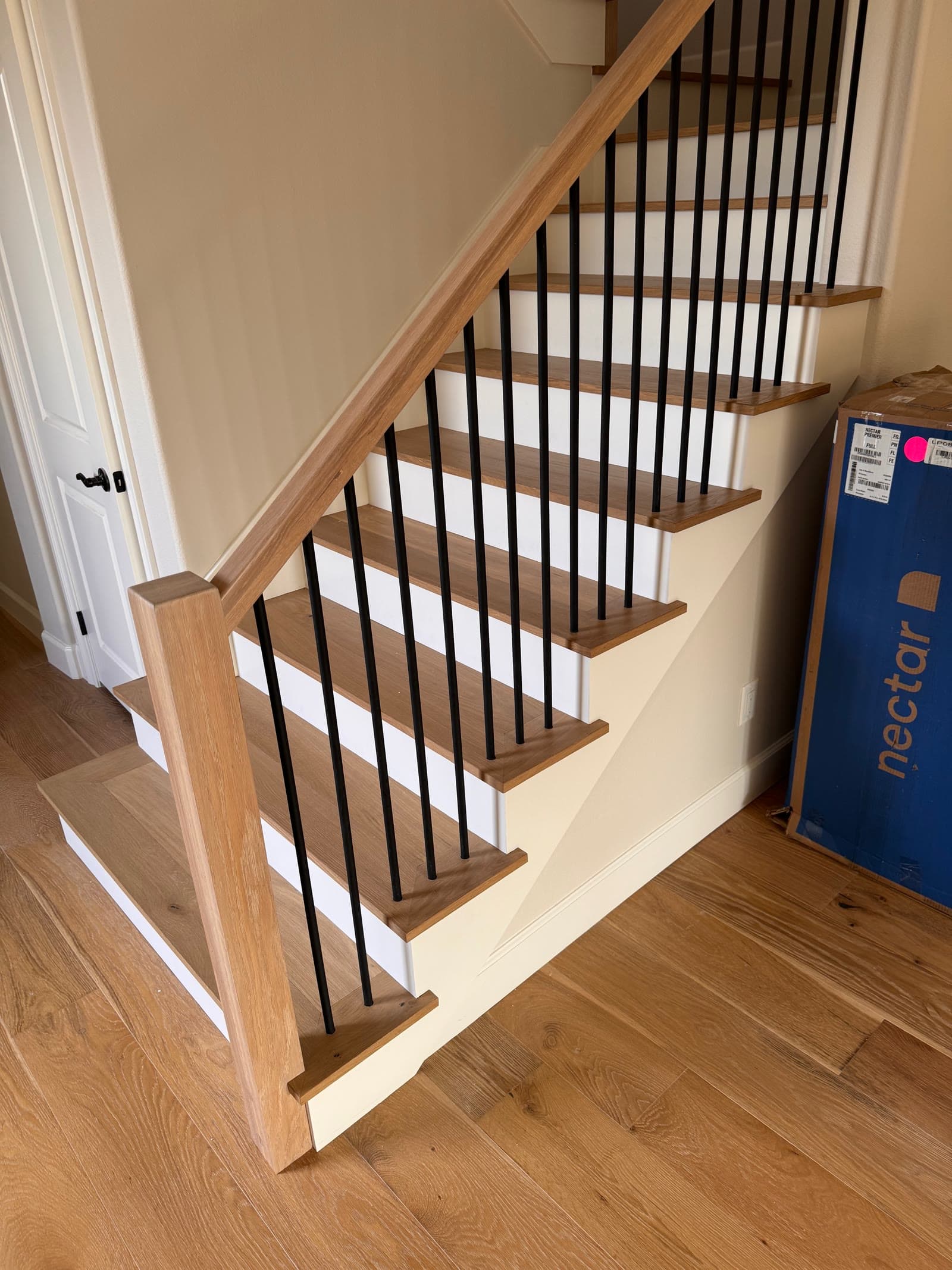
New treads laid over the existing frame change the step heights, and the change has nowhere to go at the very top and the very bottom of the flight, where there is no step above to absorb it. The bottom step is therefore carrying two problems at once: it is where the height discrepancy lands, and on an open flight it is also the most looked-at piece of joinery in the entry.
Two-tone raises the tolerance again. A natural oak tread against a white riser draws a hard line across the full width of every step, fourteen times up the flight, and a line like that has nowhere to hide an inconsistency. An all-oak flight is more forgiving of the same work.
How it was done
Every riser measured before a tread was cut, and what the measurements turned up reported before starting rather than discovered partway up.
The newel post and the first three treads set out first. On an open flight that is the reference for everything above it — get the newel plumb and those three steps right and the rest of the flight follows them; get them wrong and the error compounds all the way to the landing.
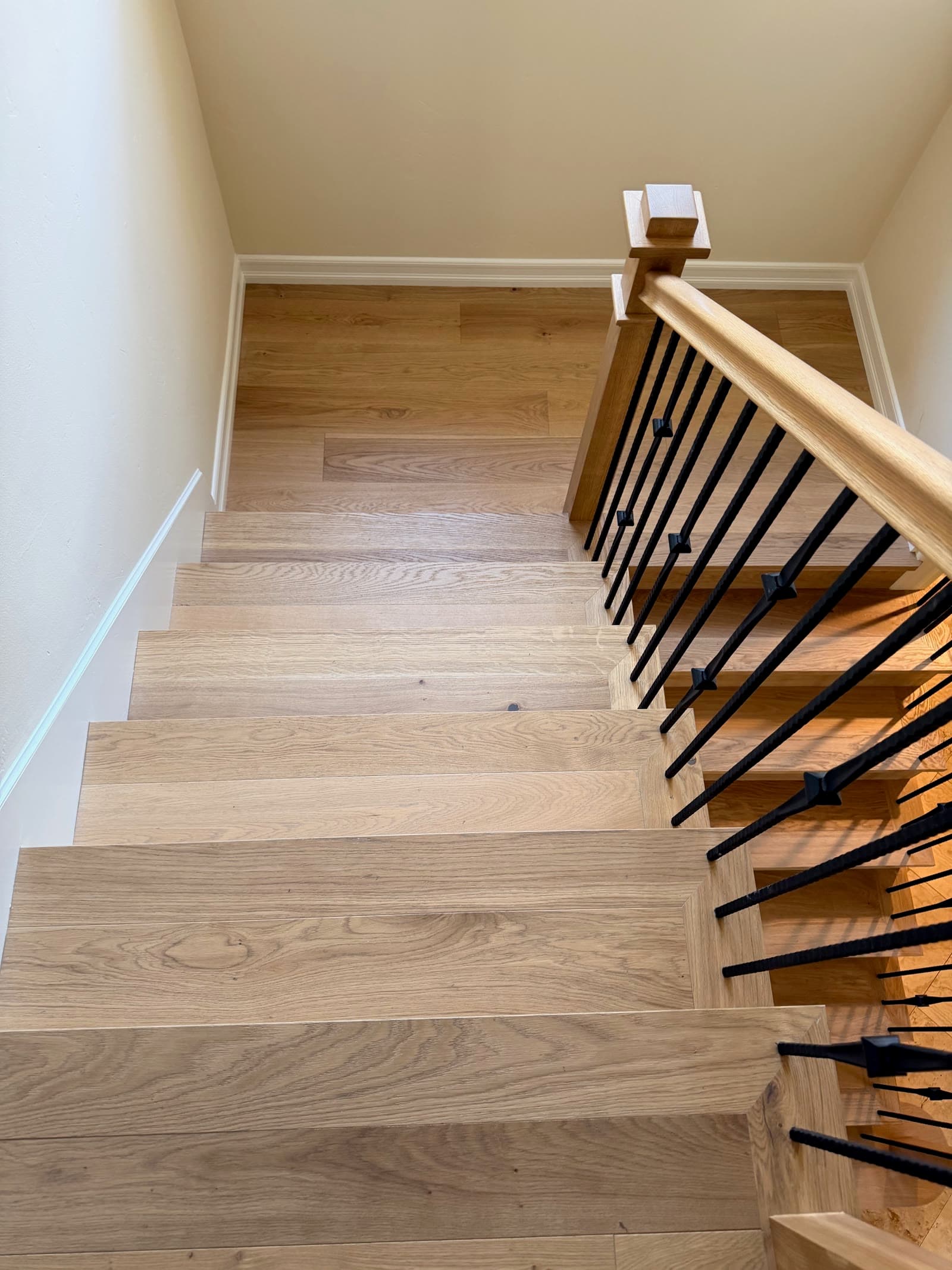
Each tread scribed to actual contact with the stringer rather than cut to a measurement, and set with adhesive as well as mechanical fastening, because a squeak that shows up the week after installation is a fit problem and not settling.
How it came out
Natural oak against white risers reads far lighter than an all-oak flight, and the black balusters and square oak newel are what keep it from reading as the builder-grade staircase it replaced.
From the entry, the newel and the bottom three treads are the first thing anyone sees, and they line up. That is what setting them out first was for.