What made it difficult
A room is one job repeated. A staircase is a set of individual pieces, each measured and cut on its own, and on a matched flight every one of them has to end up reading as the same material as the floor at the bottom of it. That is settled when the stock is chosen, not when the finish goes on.
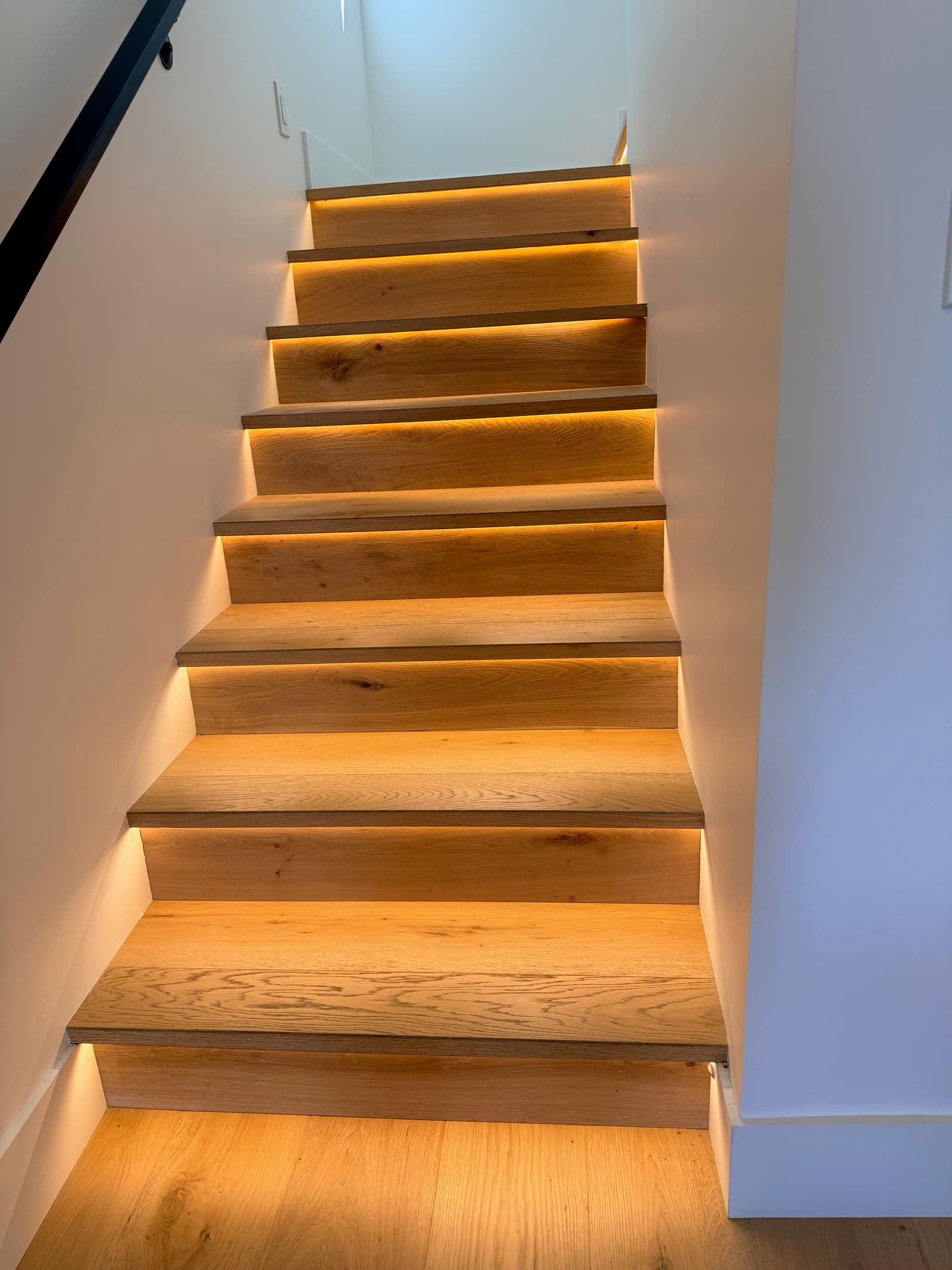
The front edge is where a mismatch shows first. The nosing is the piece you look straight down at from the top of the flight and straight across at from the room, so it is doing the comparison for you on every step.
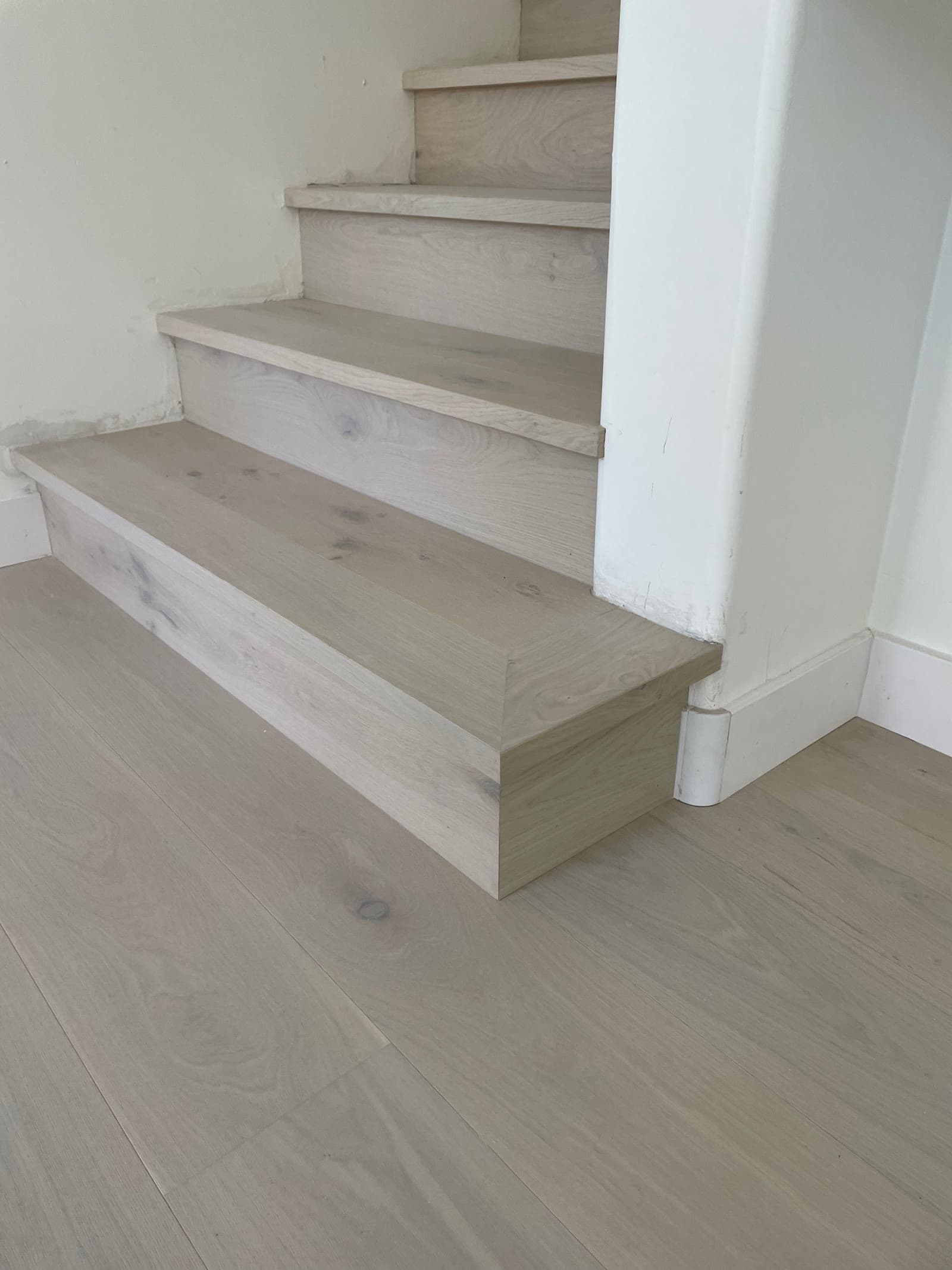
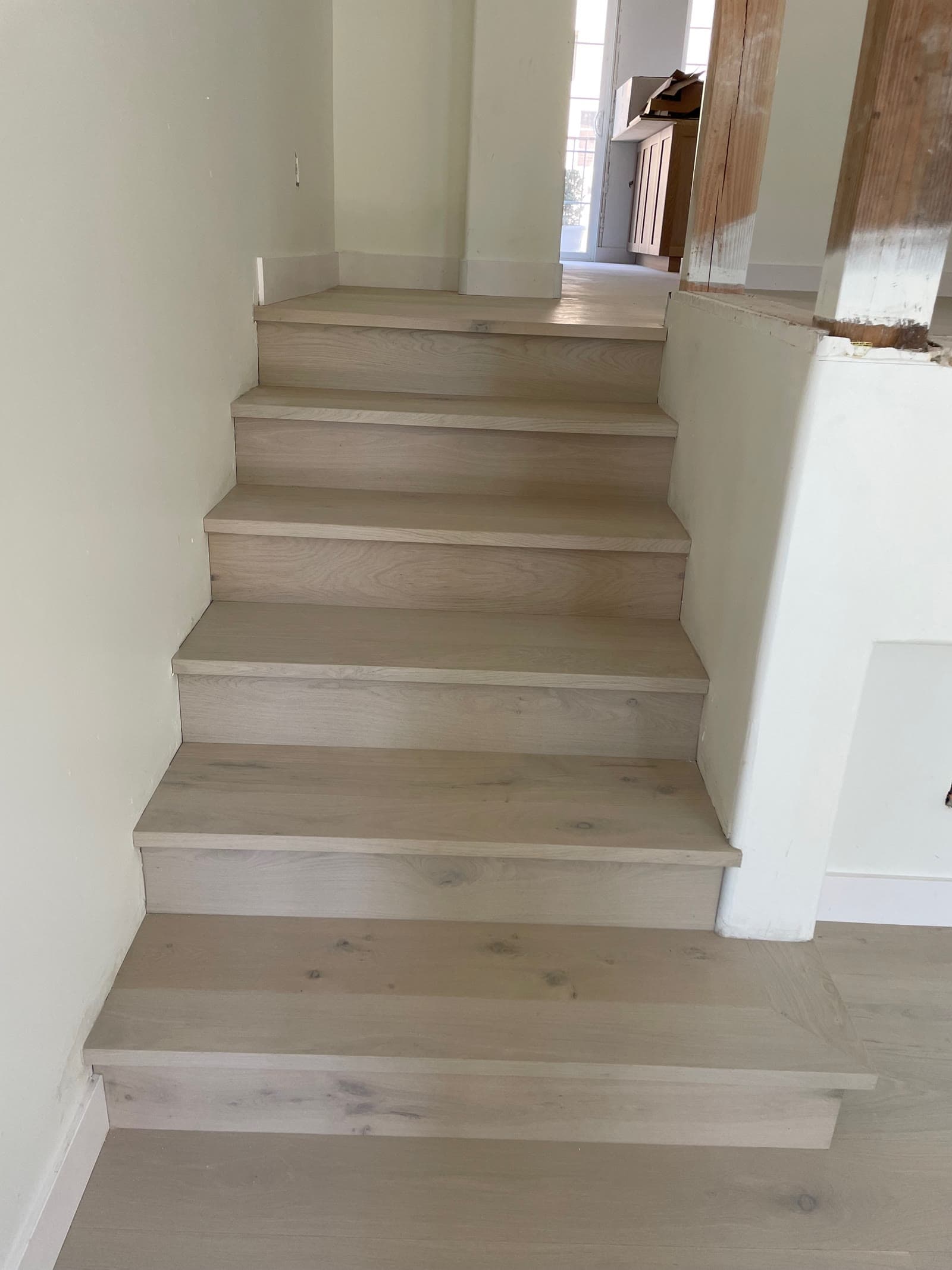
The bottom step is open at the end. Left alone, that leaves the end grain of the tread exposed at the most visible corner of the staircase.
How it was done
Treads and risers were cut from the same limed oak as the floor rather than bought as a stock tread and stained toward it. Matching a floor by staining a different piece of wood to it is the version that goes wrong, because two woods take a finish differently and the difference grows as both age.
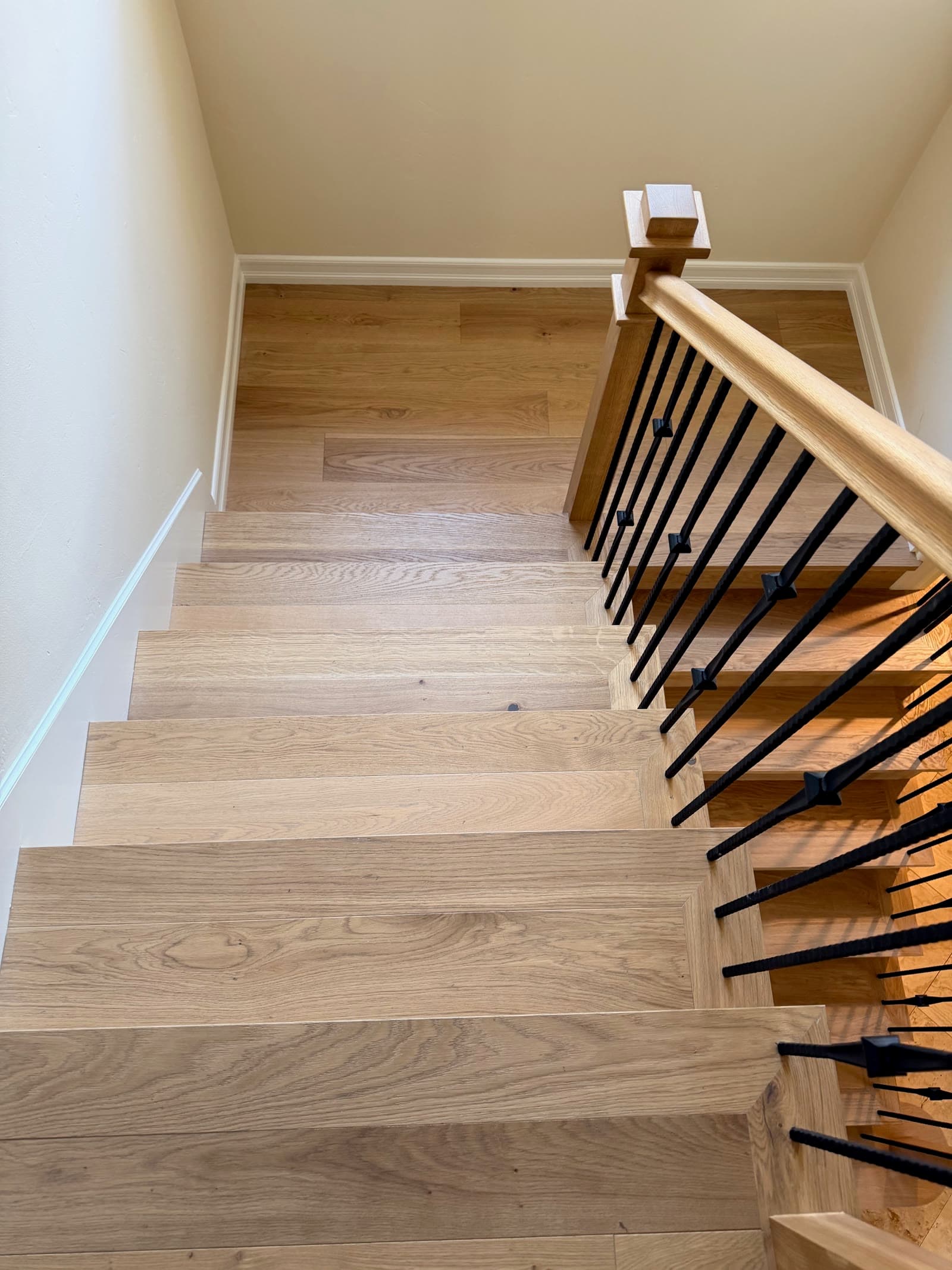
Every tread scribed to actual contact with the stringer instead of cut to a measurement, and set with both adhesive and mechanical fastening. Squeaks are movement, movement is a tread that is not fully bearing, and there is no fixing it later without taking the tread back off.
The open end of the bottom step was closed with a mitered return — the tread's front profile carried around the corner and mitered into the end, so the exposed side reads as solid oak instead of as a cut edge.
How it came out
Treads, risers and floor run as one continuous material down the flight and out into the room, without the shift in tone that gives away a tread kit.
From the side, the return on the bottom step shows no end grain. It is a small detail and it is the one that separates a fitted staircase from a covered one.