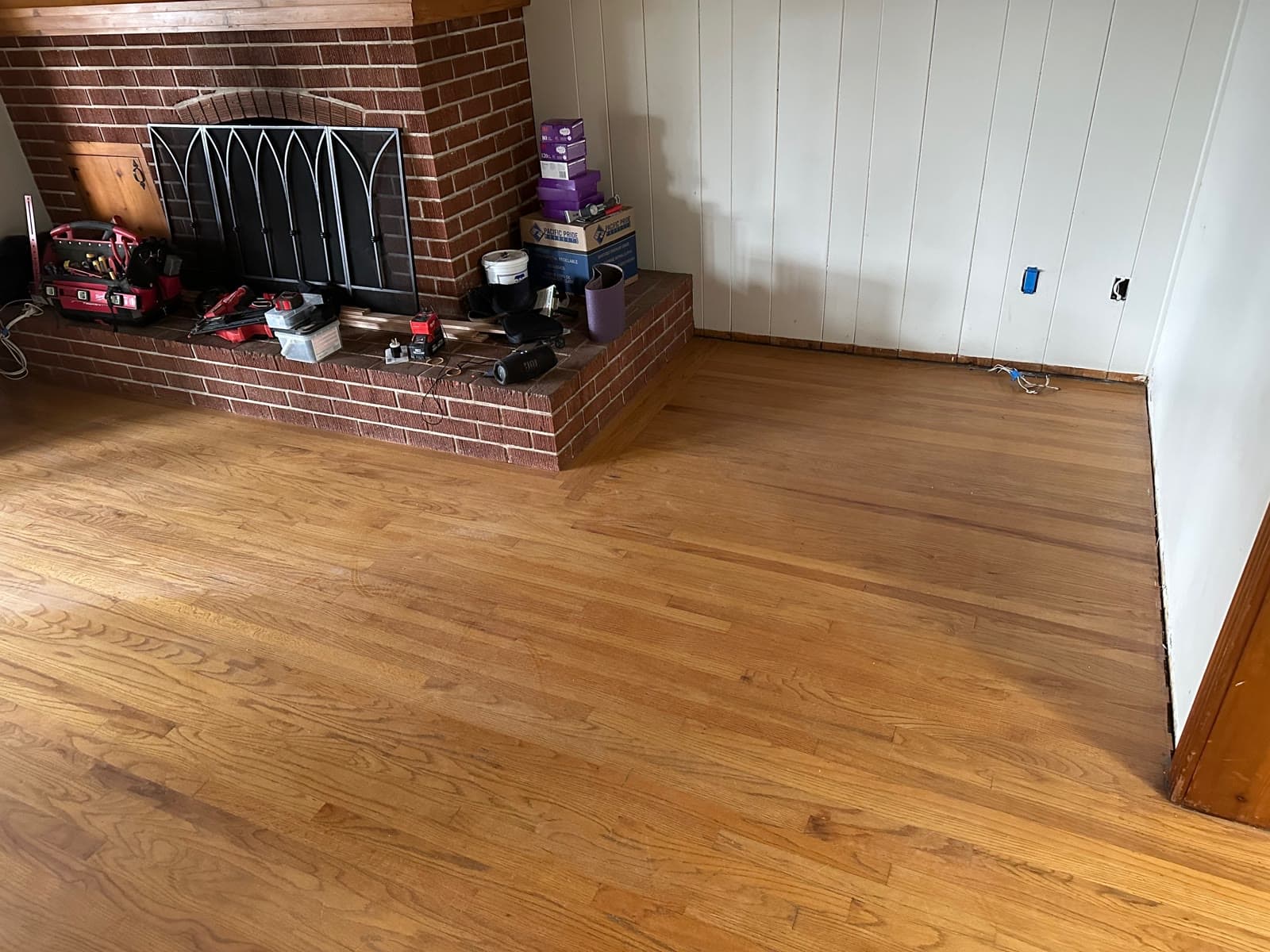
What made it difficult
Refinishing is only an option while there is enough wood left above the tongue to sand. A floor that has already been taken back three times looks identical to one that has never been touched, from standing height — the difference is a few millimeters, and it decides whether the answer is a refinish or a new floor.
So it gets measured rather than guessed: pull a heat vent, look at the board's actual section, and quote from that.
Where there is enough thickness, this is the best outcome available in an older La Jolla house. Old-growth red oak laid decades ago is denser and more stable than most of what is milled today. Sanding it back costs less than replacing it and leaves a floor that cannot be bought new.
How it was done
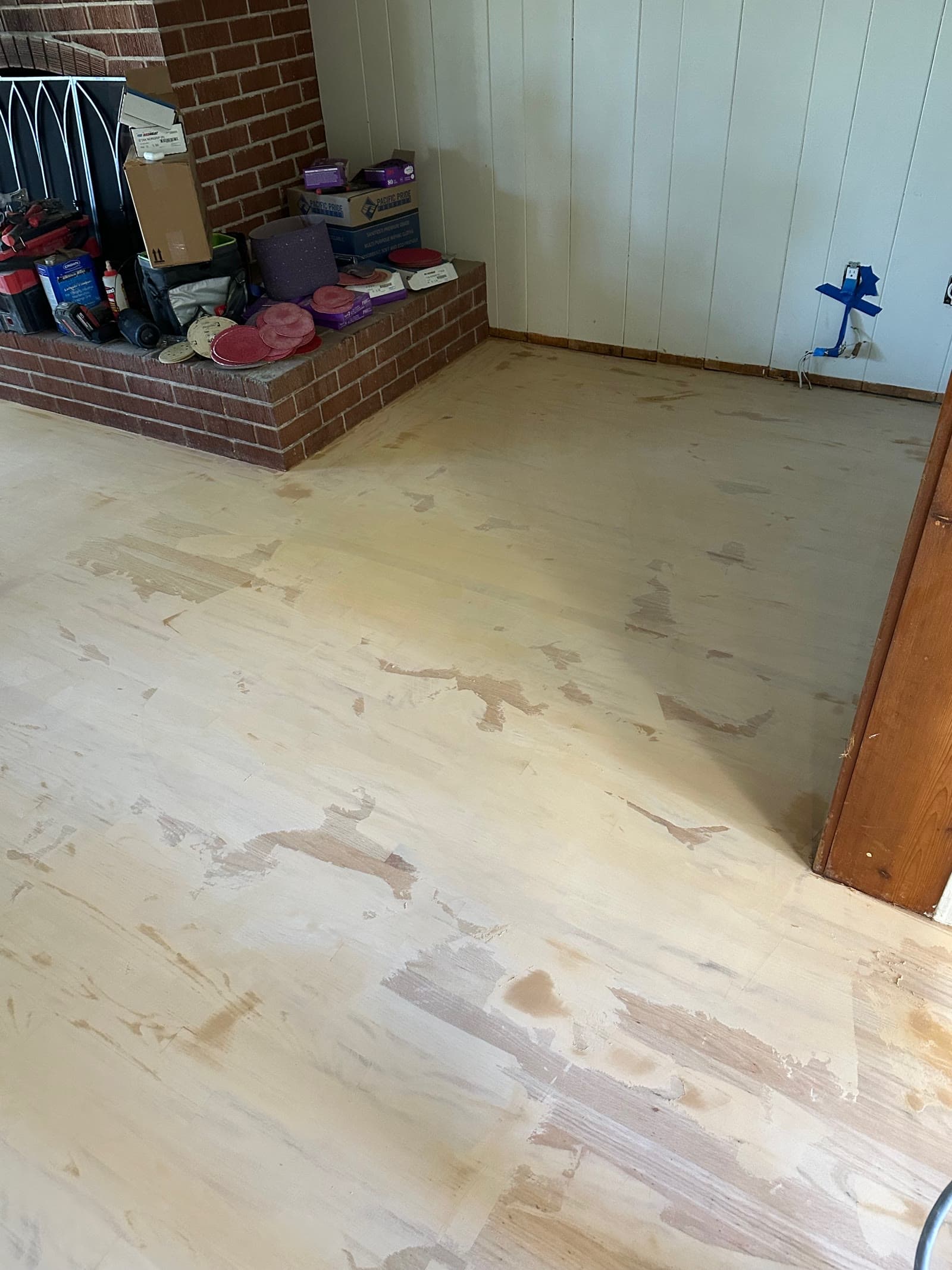
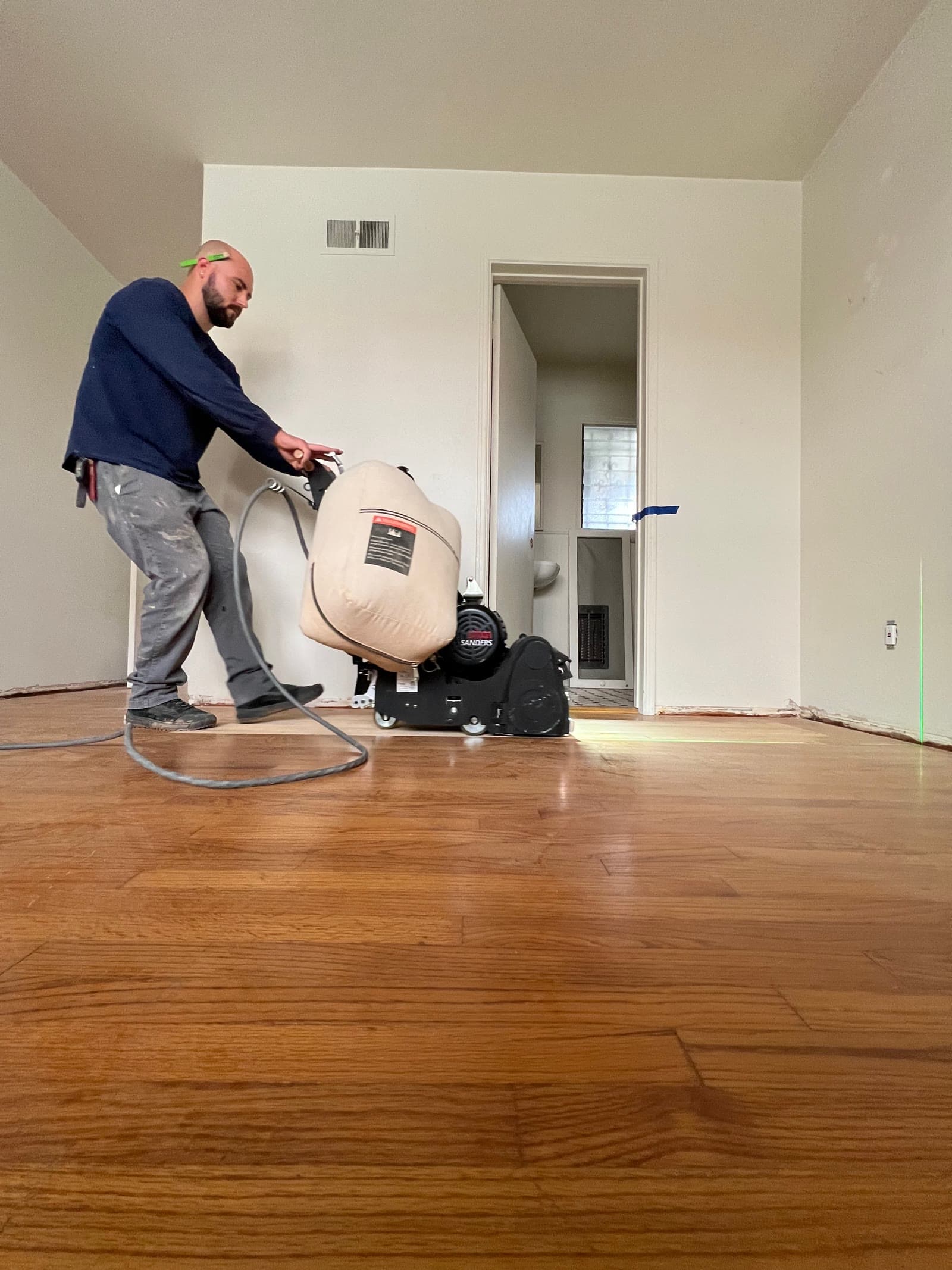
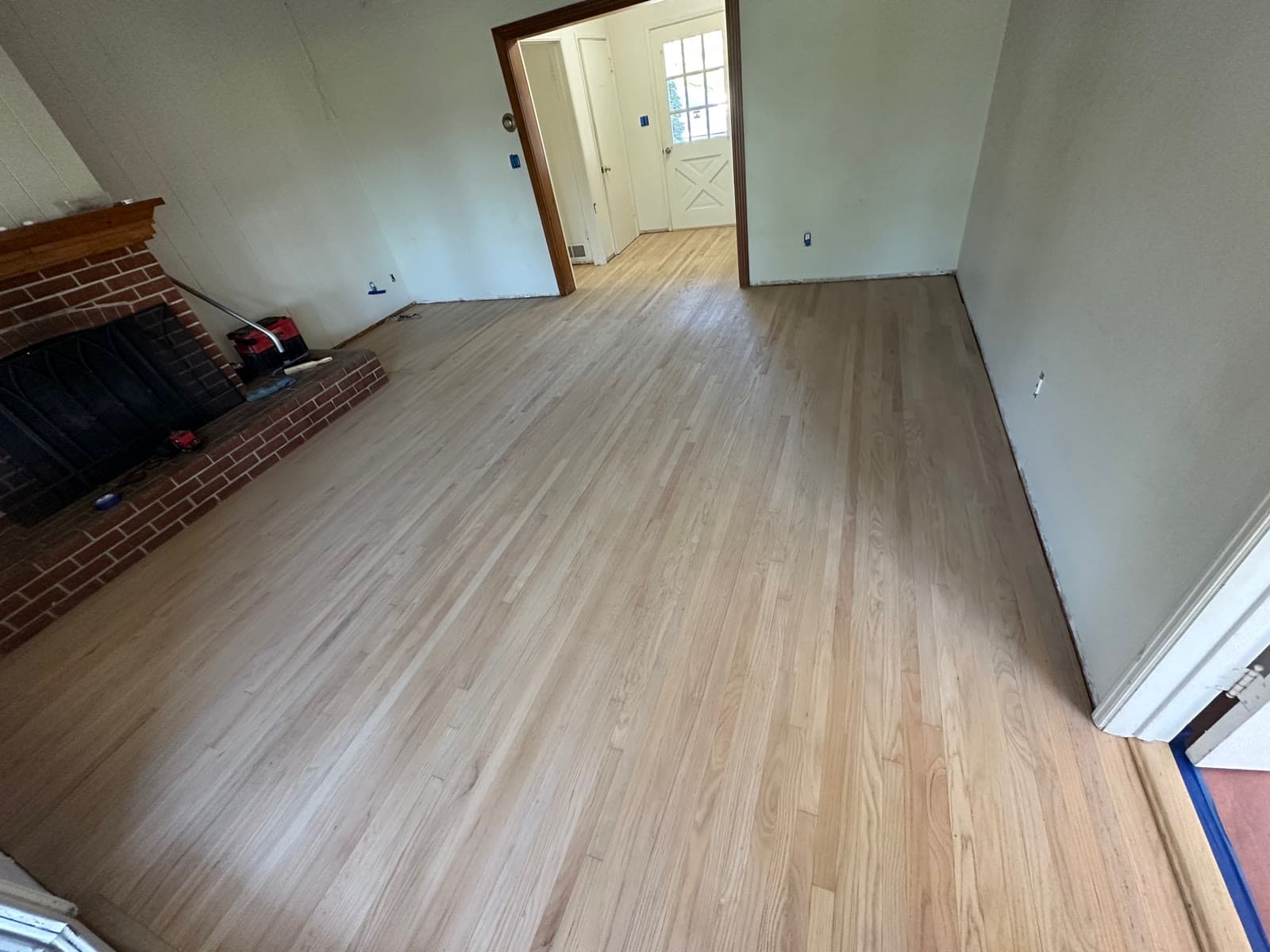
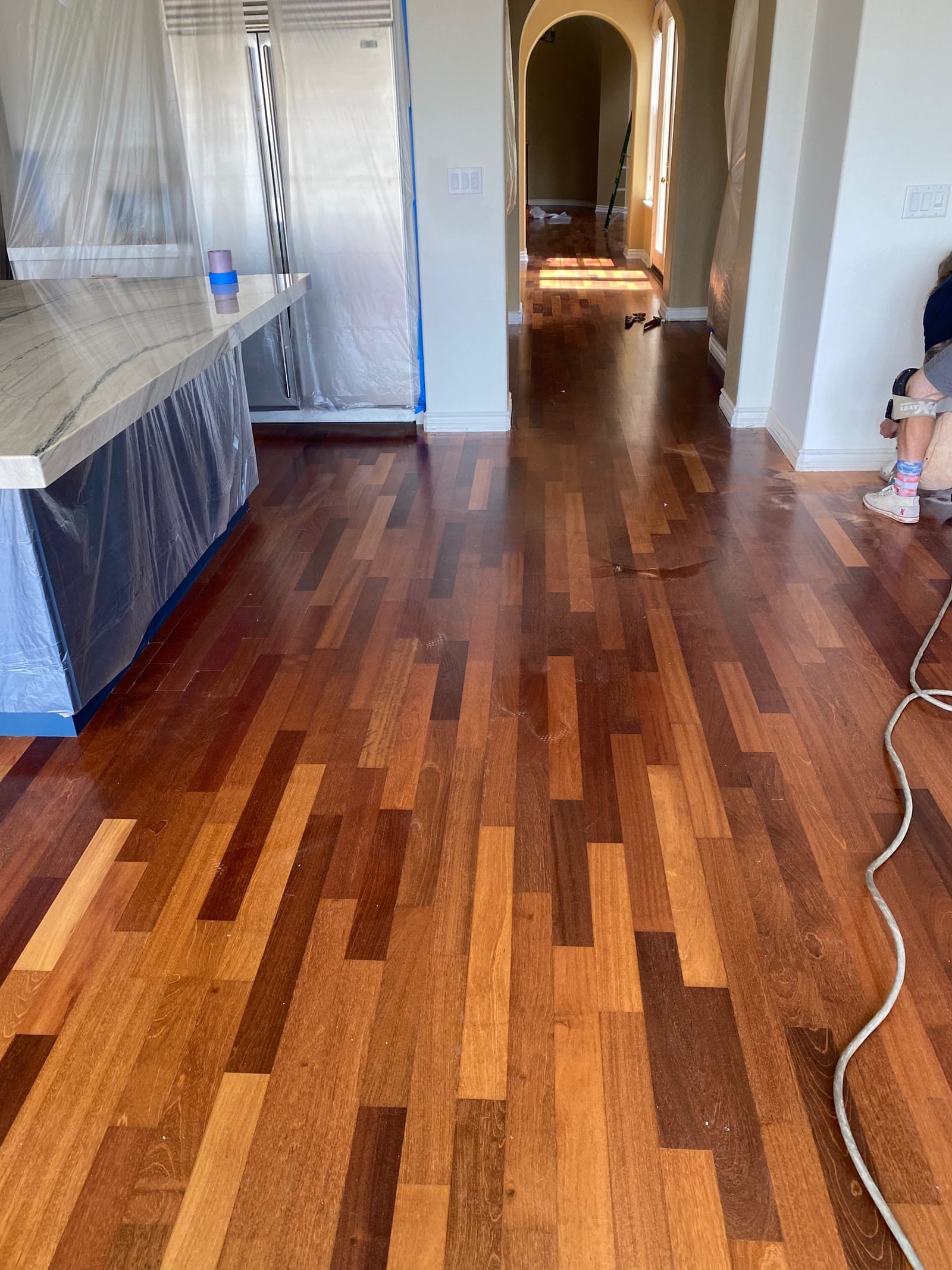
Three cuts, coarse to fine, with the drum sander doing the field and an edger taking the perimeter the drum cannot reach. The photographs midway through show the old finish still sitting in dark patches, which is what an incomplete first cut actually looks like.
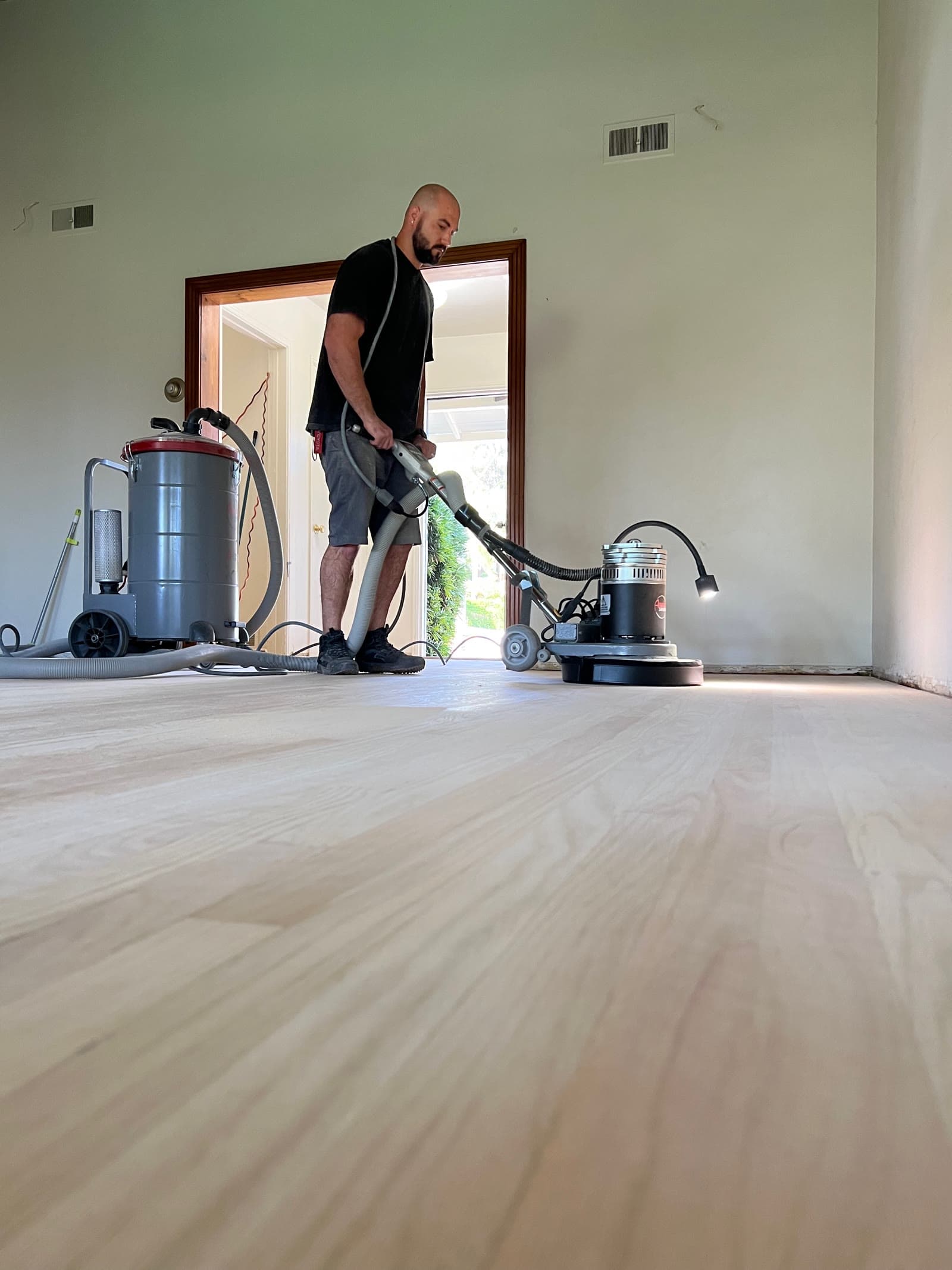
A screen between grits, with a vacuum running the whole time. Dust extraction is not housekeeping on a refinish — grit left on the floor from the previous cut is what puts scratches into the next one.
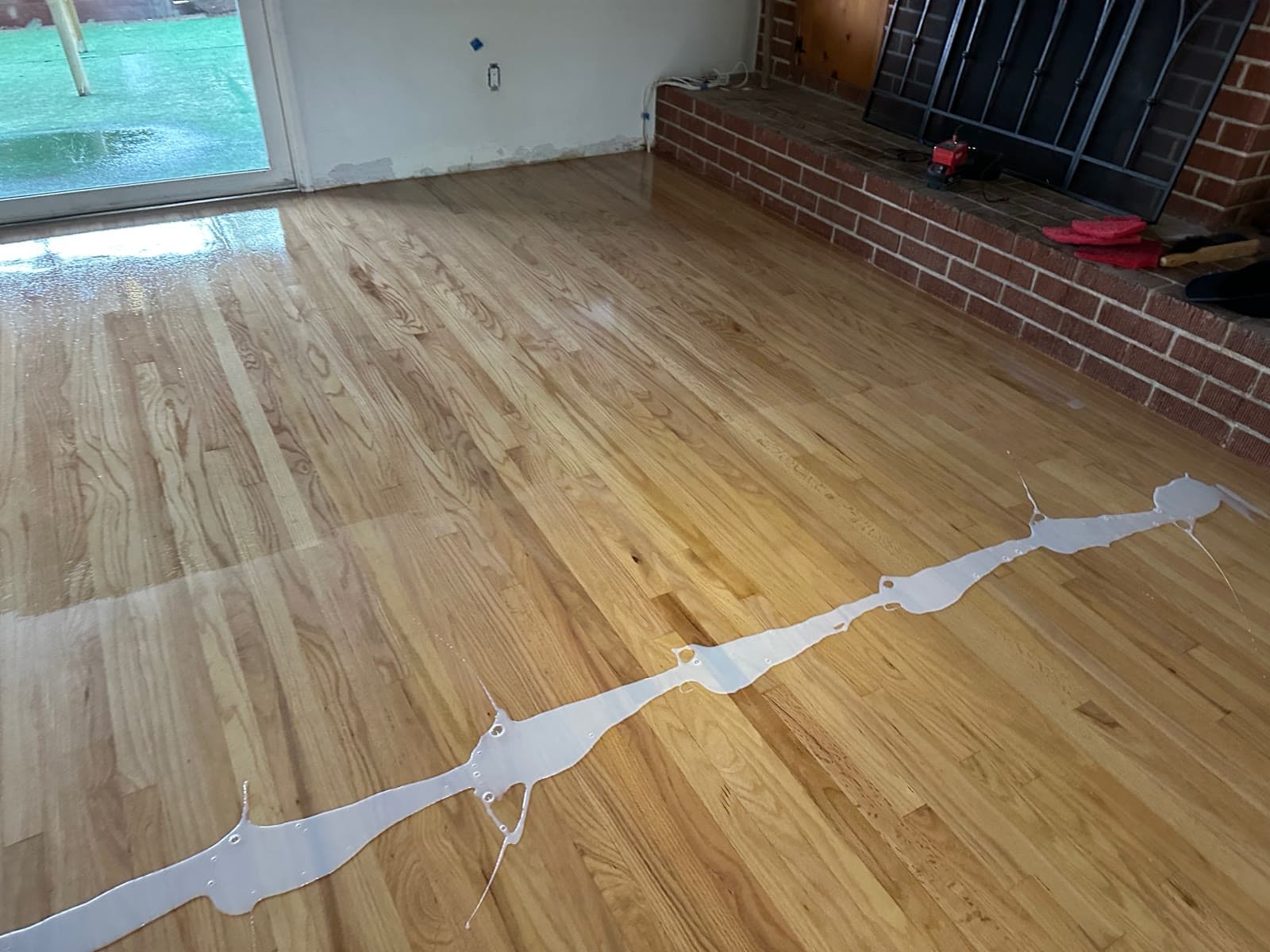
Then the finish, worked to a wet edge. The coating has to be kept moving: stop, and the lap line shows in the finished floor permanently.
How it came out
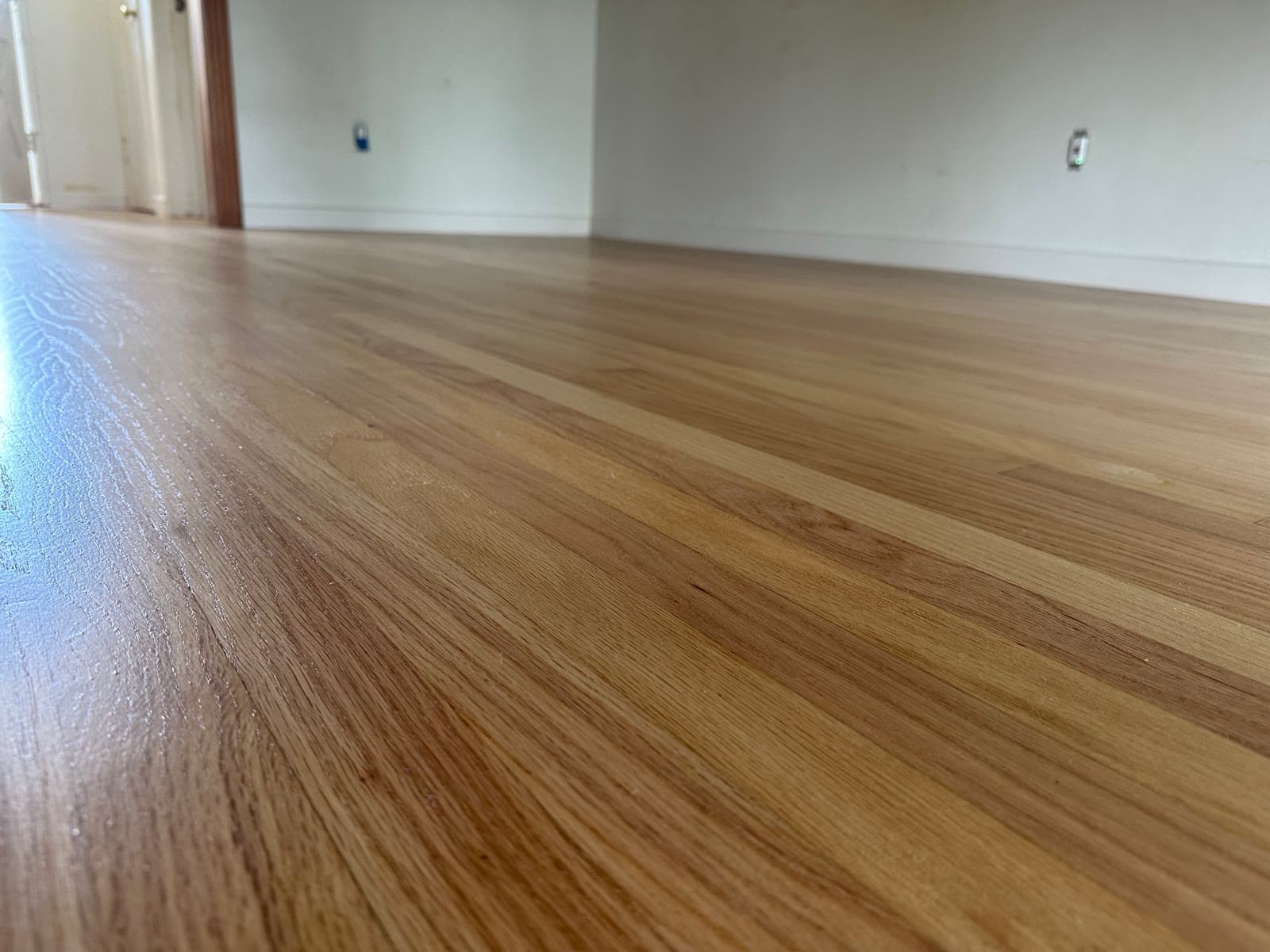
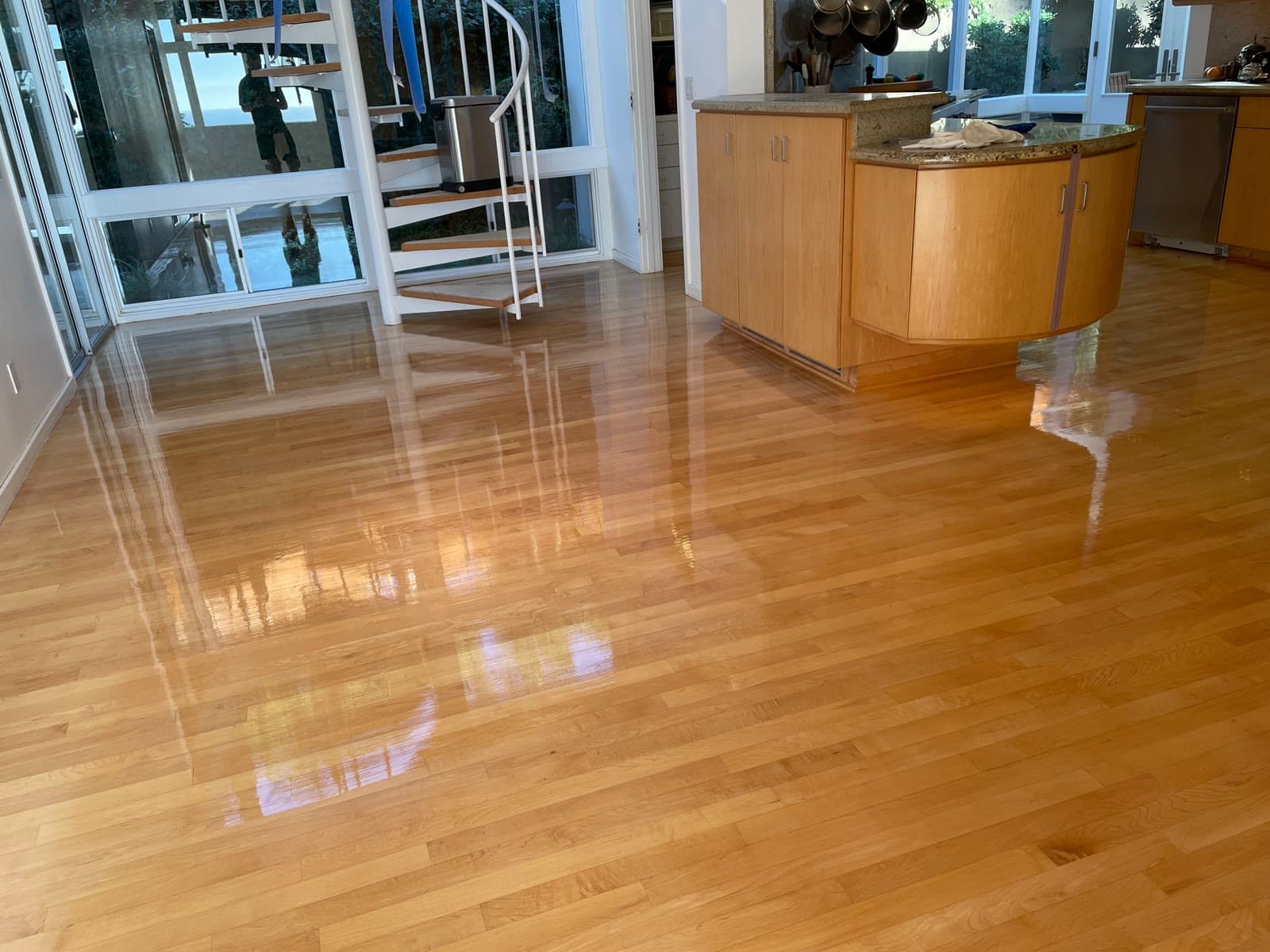
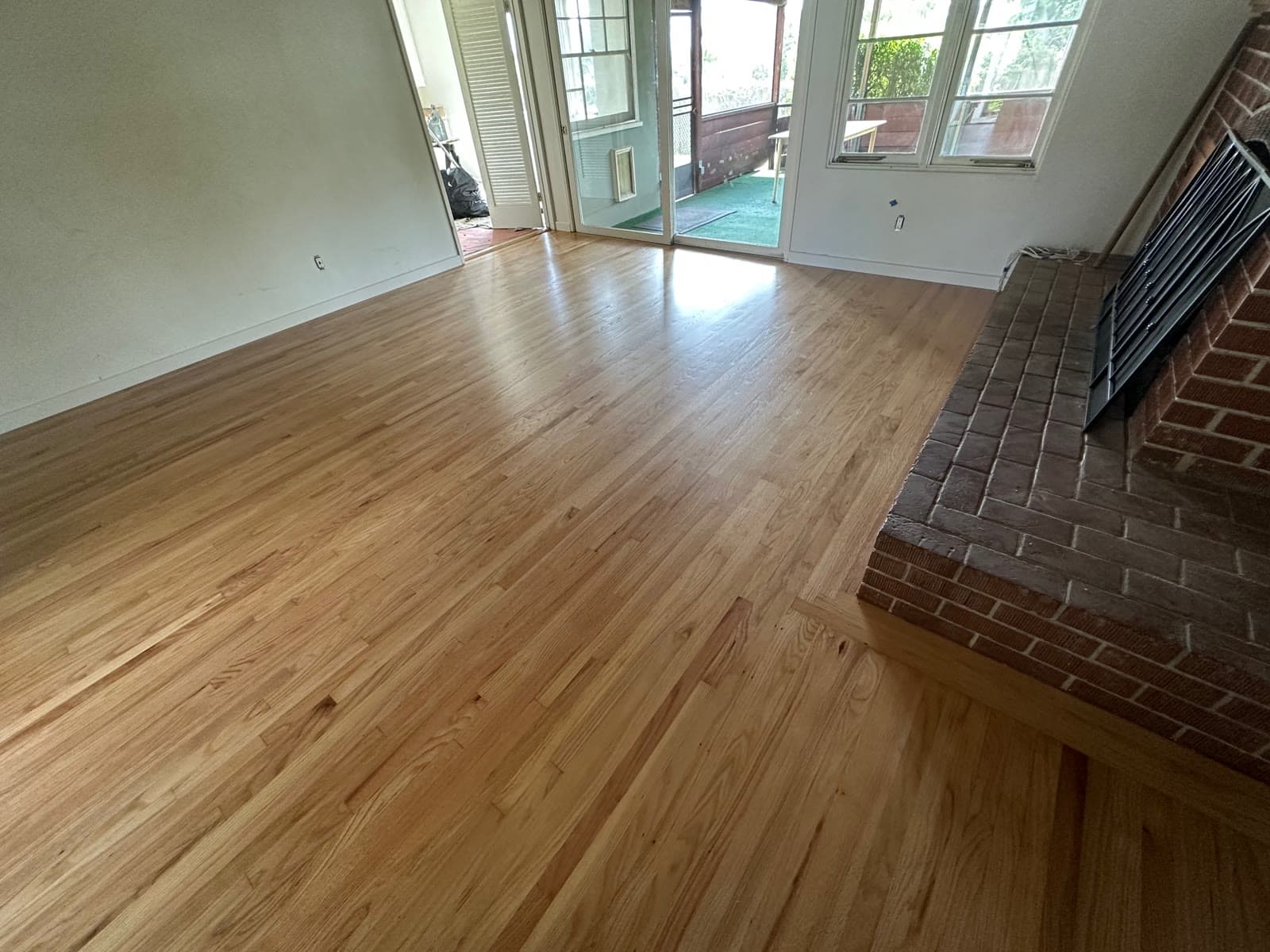
A natural tone, as the owners asked for, with the grain and the color range coming from the wood rather than from stain.
The last photograph in the set is taken from floor level on purpose. That is the angle where flatness and sheen either hold up across a whole room or do not.