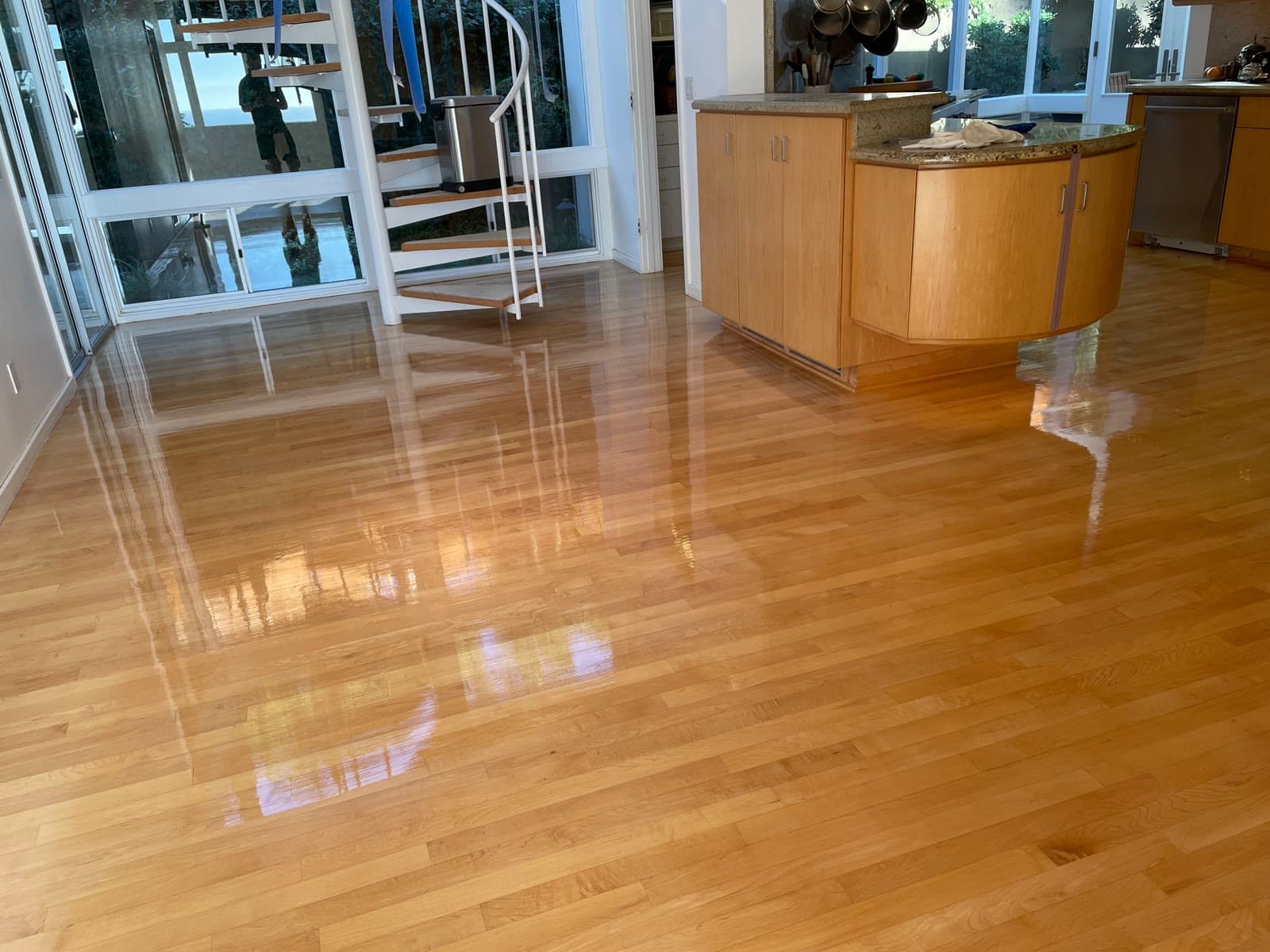
What made it difficult
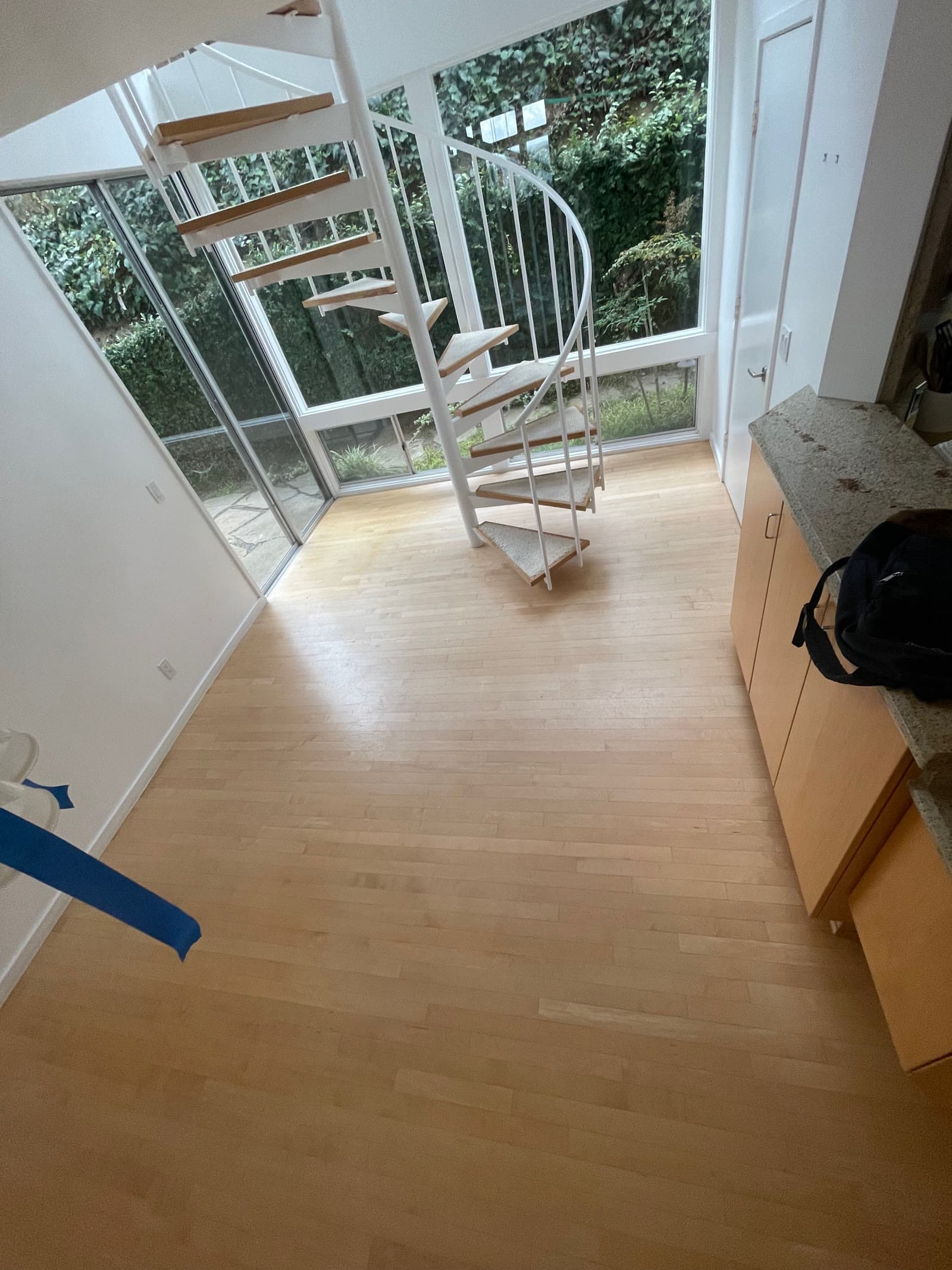
Maple is unforgiving. It is pale and close-grained, so every sanding mark, every stop, and every place the edger did not quite meet the drum shows up in raking light.
A high-gloss finish then magnifies all of it. Gloss is the least merciful sheen there is — it reflects the surface rather than diffusing it, so flatness is on display permanently.
The room has full-height glass and a spiral stair, which means raking daylight across the floor for most of the day.
How it was done
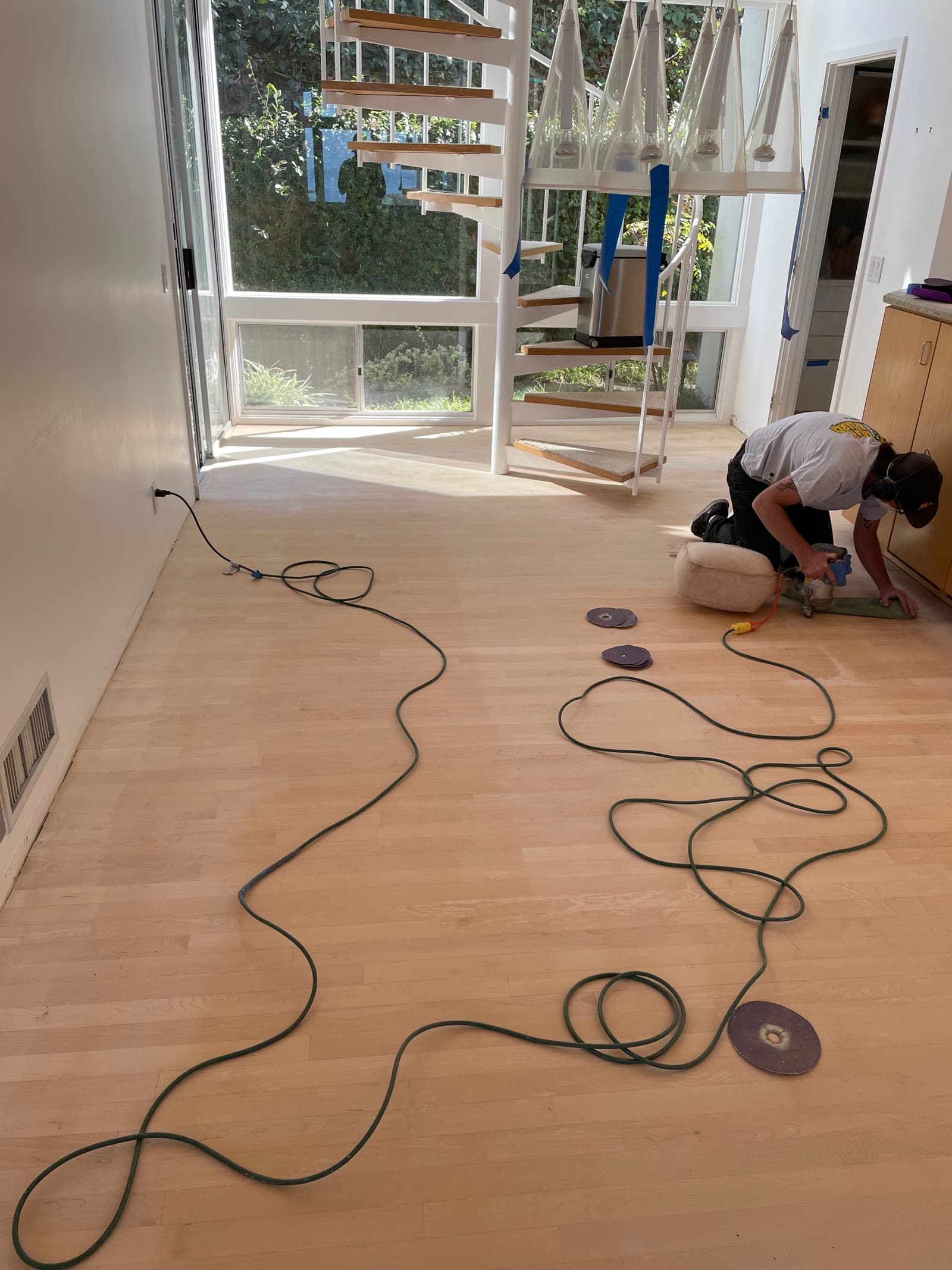
Drum for the field, edger for the perimeter, with the two blended so no line shows where they meet.
Three coats, worked to a wet edge.
How it came out
The same maple, kept rather than replaced, under a high-gloss finish in the kitchen and the room beyond it.
Refinishing was the right answer here for the reason it usually is: there was enough wood left to sand, and a floor of this age is denser than most of what would replace it.