What made it difficult
The client arrived with a picture rather than a product. They had generated an image of the floor they wanted and asked whether it could be built.
A generated image is not a specification. It does not know how resin moves, and it does not know which pigments exist. Some of what it showed was never going to happen in a real garage — an image can render a color no manufacturer sells, and it can render veining in a shape that wet resin will not hold. Most of it could happen, once the colors were matched to pigments you can actually buy.
The honest part of that conversation happens before any money is spent: saying plainly which parts of the picture the material can do and which parts it cannot. A client who is told that up front gets the floor they were promised. A client who is told yes to all of it does not.
How it was done
The slab came first, as it always does. Concrete has to be opened up mechanically — diamond ground or shot blasted — so the resin can grip it. Acid etching does not reliably open a smooth troweled slab, and that is the single commonest reason a garage coating peels off in sheets a year later. The slab was also moisture tested before any resin went down, because damp rising through concrete will push a coating off however well the surface was prepared.
Then a sample board, in the colors from the image, so the decision was made against something that could be held rather than against a picture on a phone.
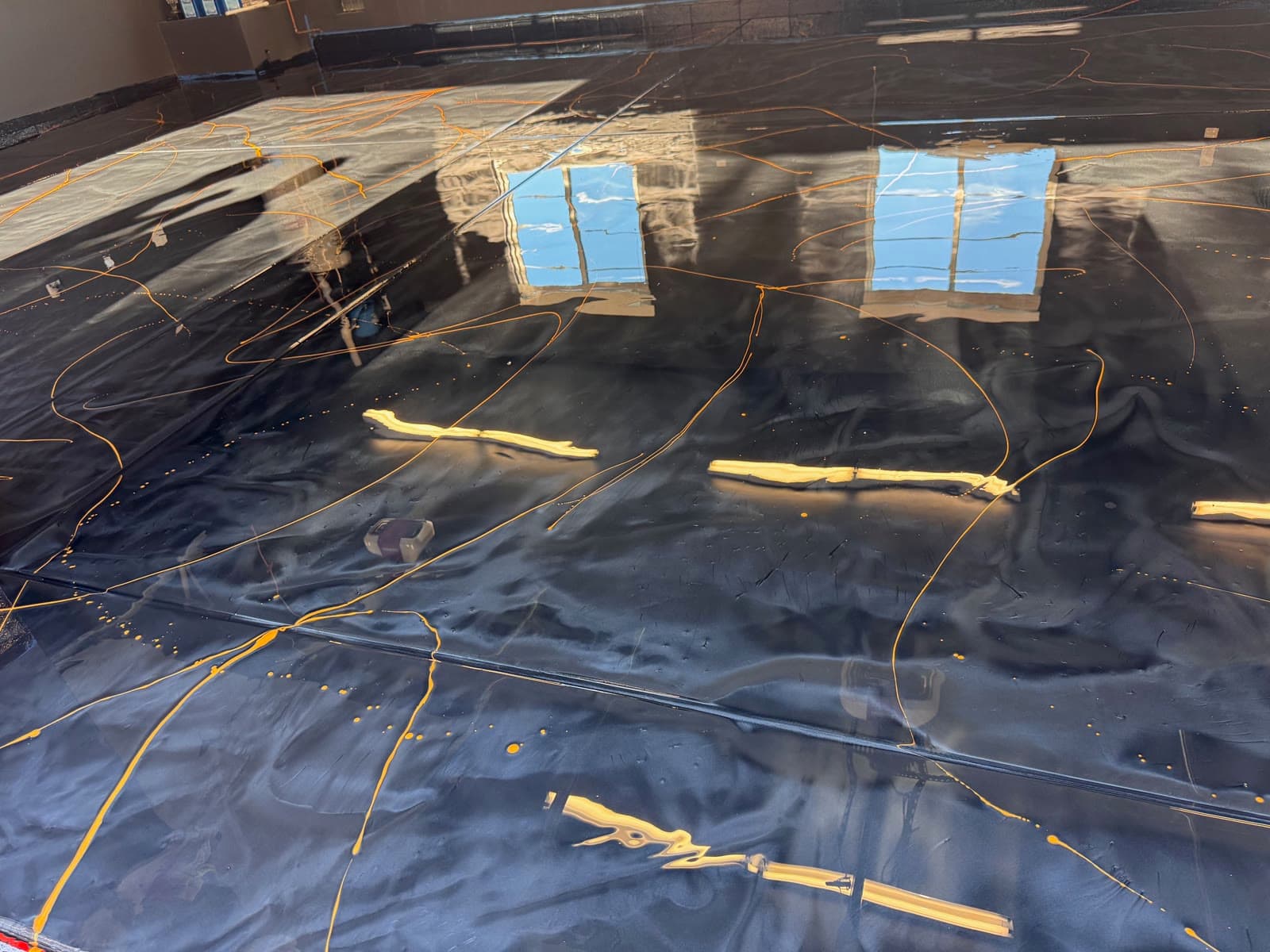
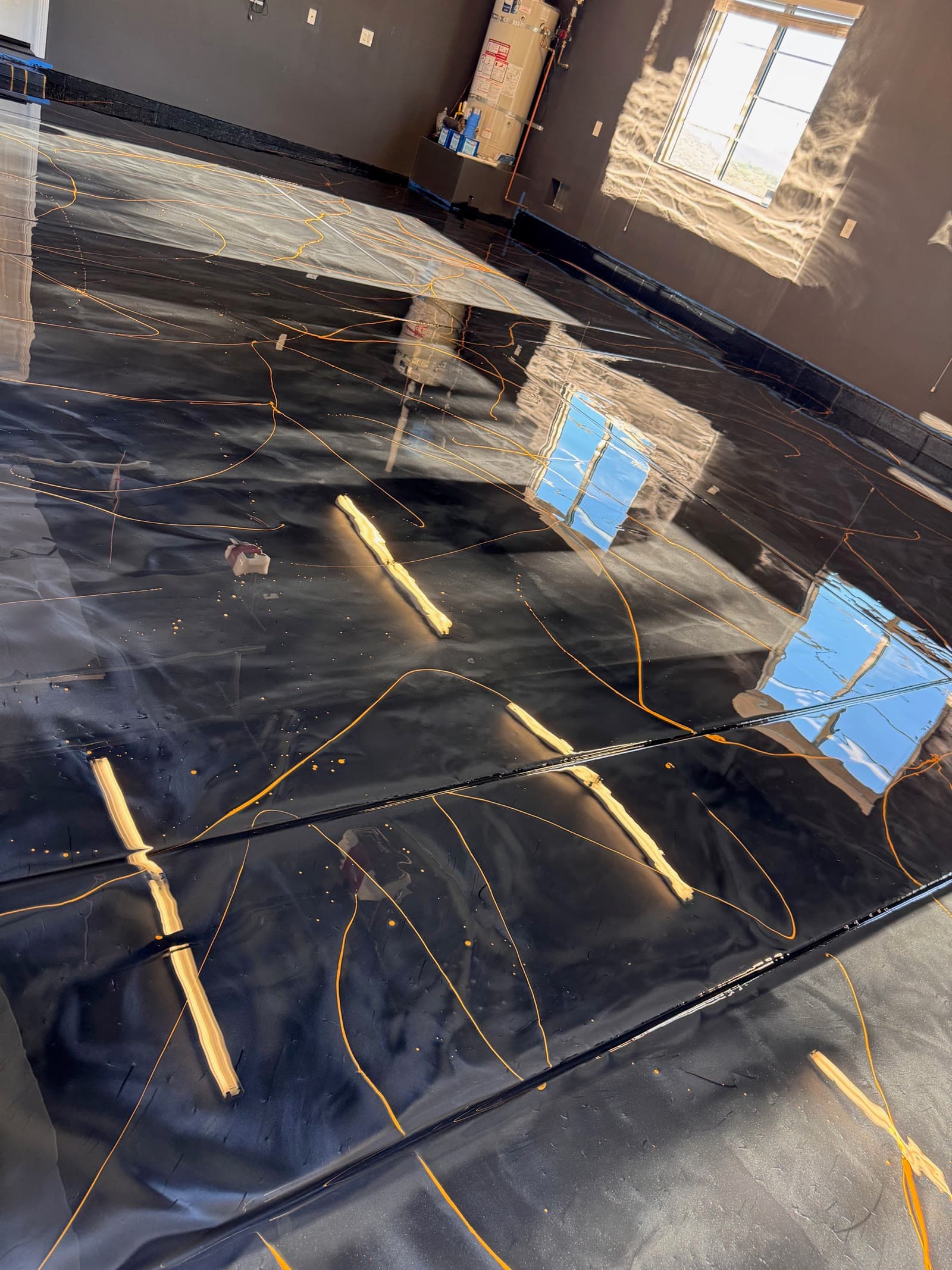
The pour is the part that cannot be redone. Gold pigment is dropped into the wet black base and moved with rollers, brushes and air while the coating is still live. What the floor does in the twenty minutes after the gold goes in is the design — there is no editing it afterward, and no two floors come out the same. A UV-stable topcoat went over the metallic layer, which is not optional in a garage that gets direct sun: plain epoxy ambers where the light hits it every day.
How it came out
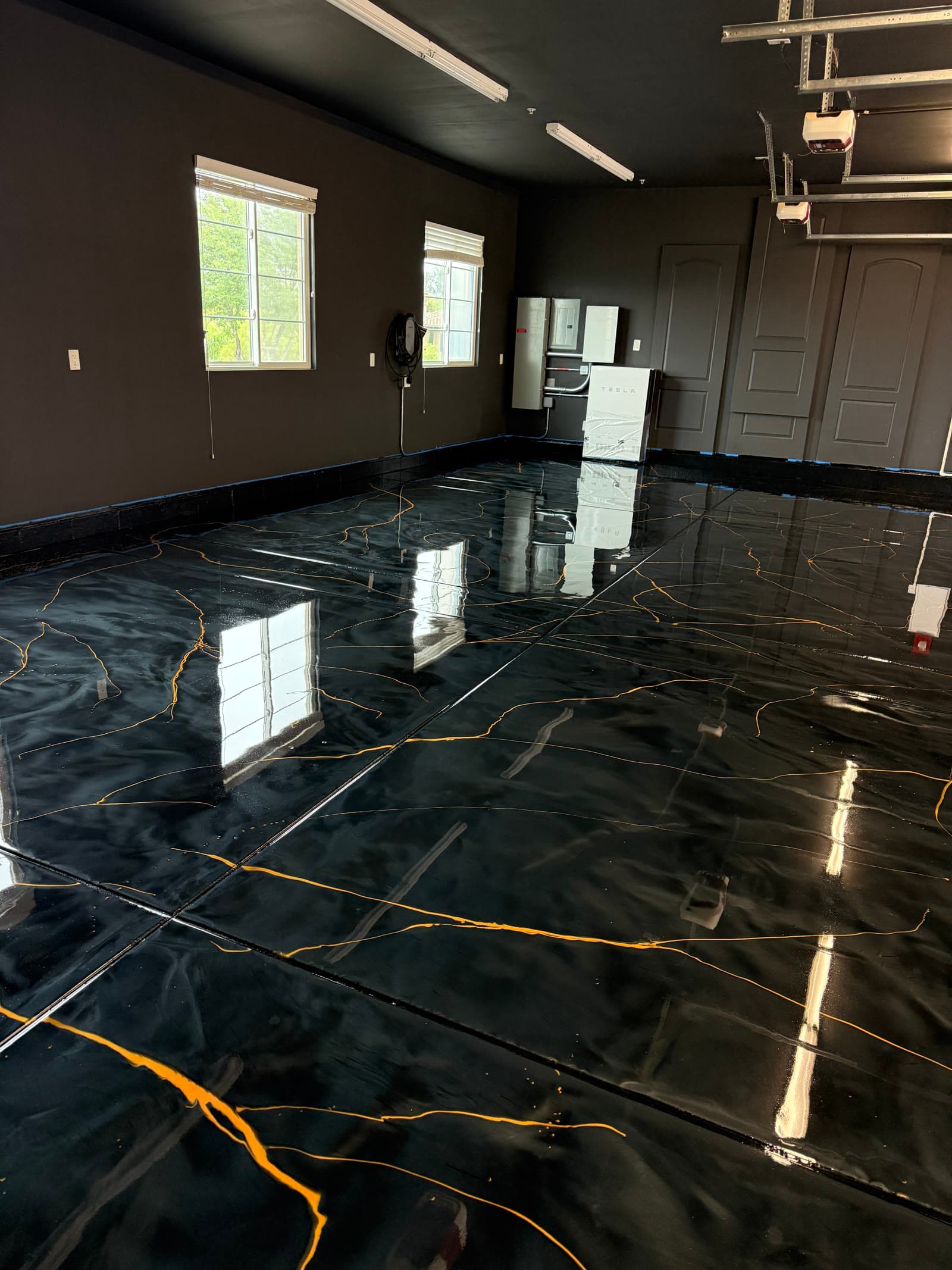
Black with gold veining running through it, seamless, reading much closer to polished stone than to paint. The photographs here are the pour, the floor still wet, and the finished slab two days later.
The estimate carried two separate dates, as every epoxy estimate here does: when the floor could be walked on, and when a car could be parked on it. They are not the same day, and driving onto a floor that is only hard on top leaves tire marks that never come out.